

Kawah Ijen Blue Fire From Bali: The Night Hike, Real Costs and Safety
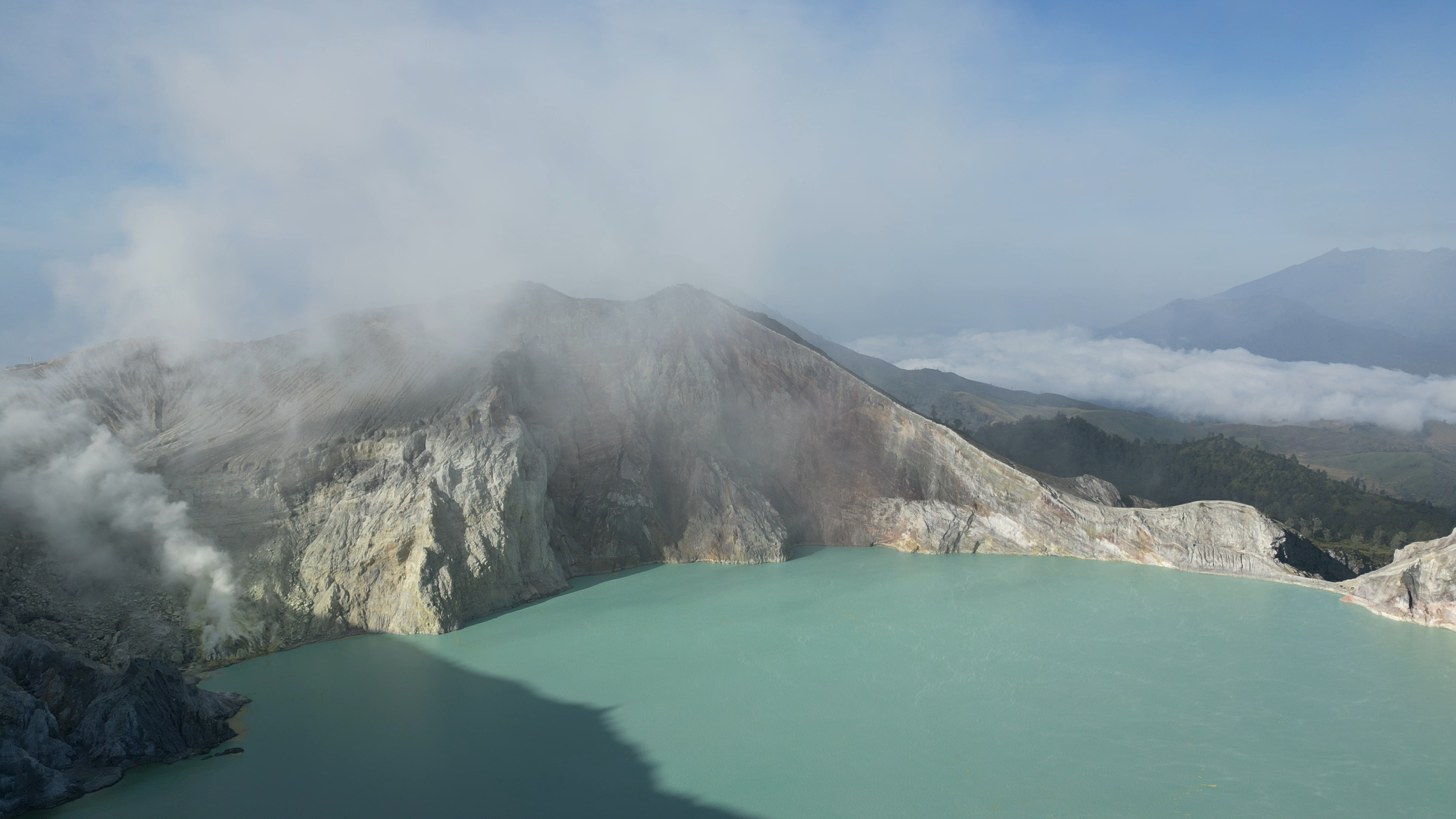
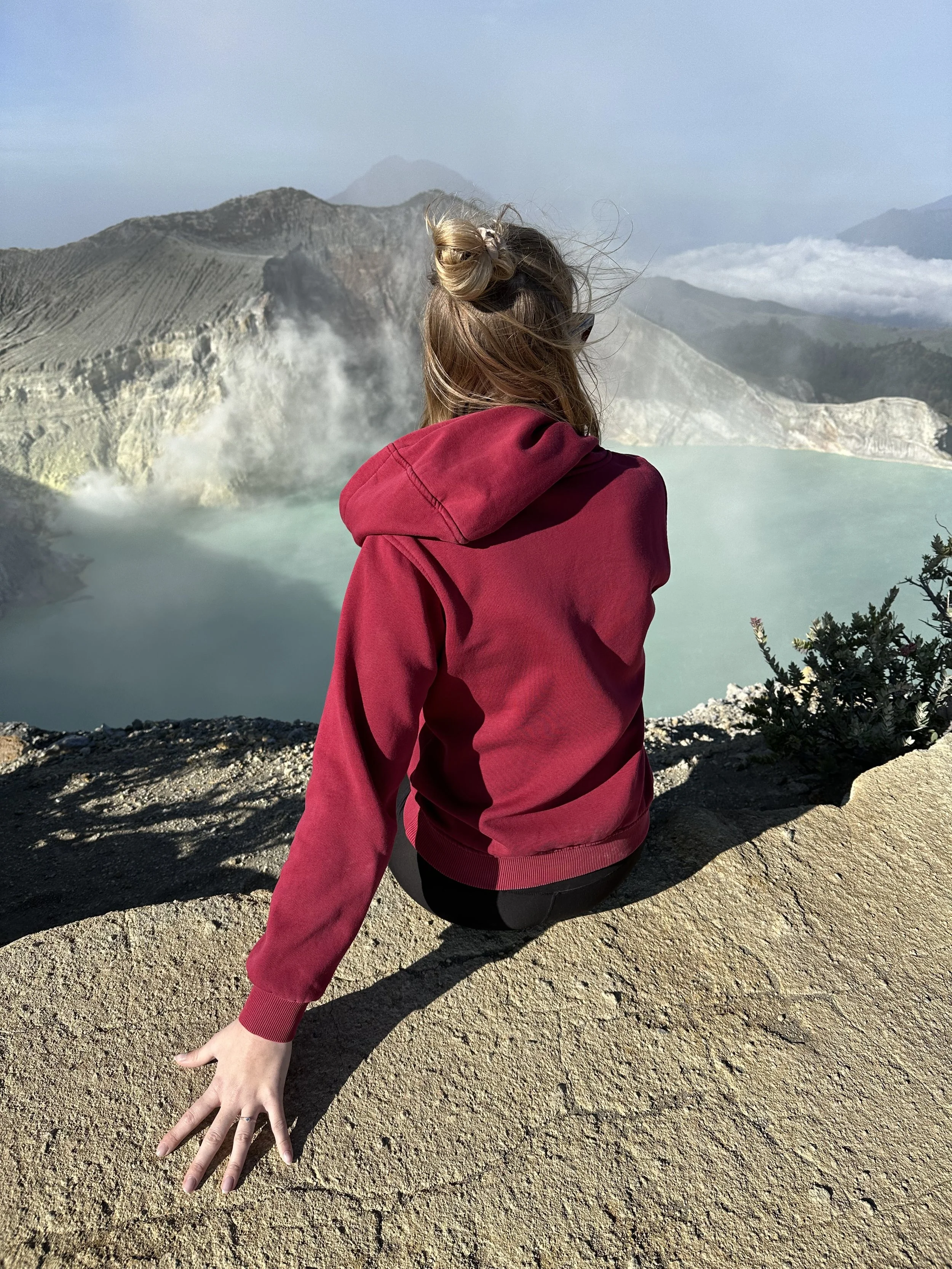
Sunrise over the crater: the turquoise acid lake below, and the sulphur cloud drifting off the water.
A volcano that burns blue in the dark, a 2am start, and the morning I got down on one knee on the crater rim.
September 2023. Our Bali route ran Canggu, Sekumpul, Kawah Ijen, Ubud, Gili Air, Nusa Lembongan and Uluwatu. Our full Bali itinerary
Kawah Ijen was the one stop on our Bali trip that isn't on Bali at all. It sits on Java, across the strait, and getting to it meant the hardest travel day of the whole three weeks. You start before 2am, you climb a volcano in the dark with a gas mask on, and if the timing is right you look down into the crater and see flames burning electric blue. I had also hidden an engagement ring in my drone bag for two weeks, waiting for exactly this spot.
If you're reading this because you've seen the blue-fire photos and you're trying to work out whether it's worth the brutal night from Bali, I'll be straight with you: it is a lot, and it is worth it. This is exactly how we did it, what it costs, how hard the hike really is, the safety you need to take seriously, and the one rule that has changed since we went. Real numbers, and the parts we'd do differently.
What the blue fire actually is
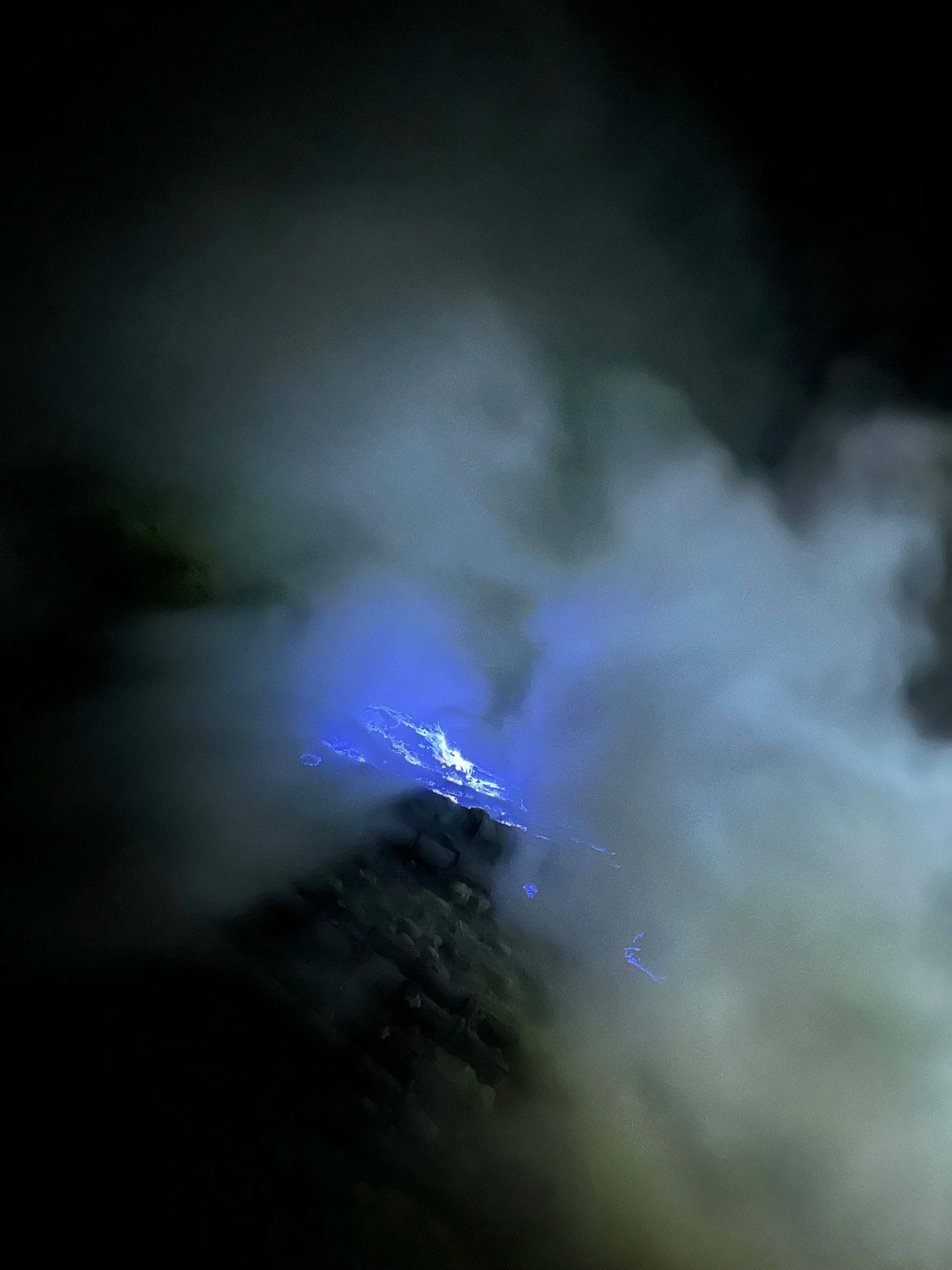
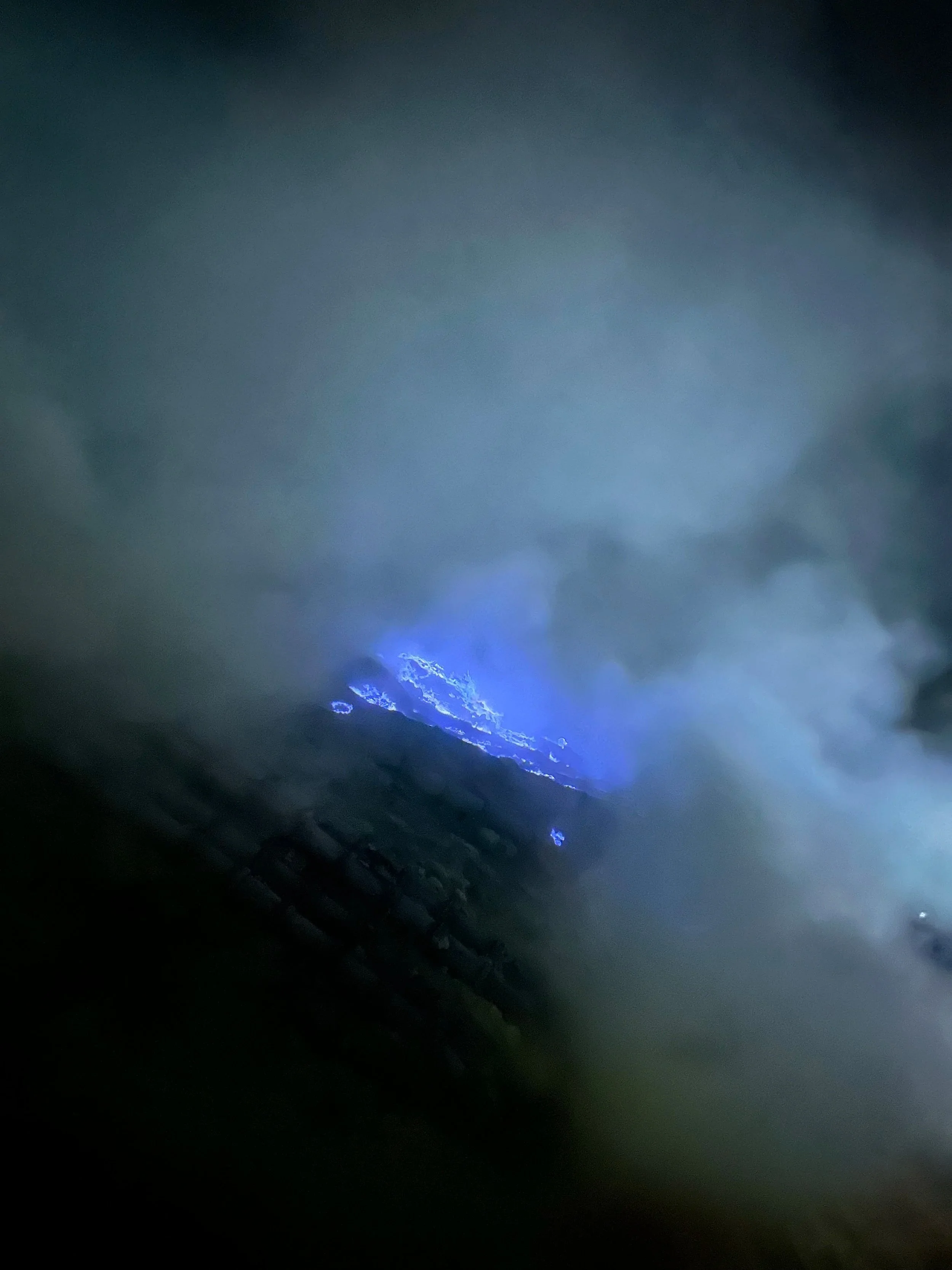
The blue fire is not lava. Kawah Ijen is one of very few places on earth where you can see it at all. Sulphuric gas escapes from cracks in the crater, and when it meets the air at high temperature it ignites, and the flame burns blue. It is only visible in the dark, which is the whole reason you climb in the middle of the night. When the sun comes up, it disappears.
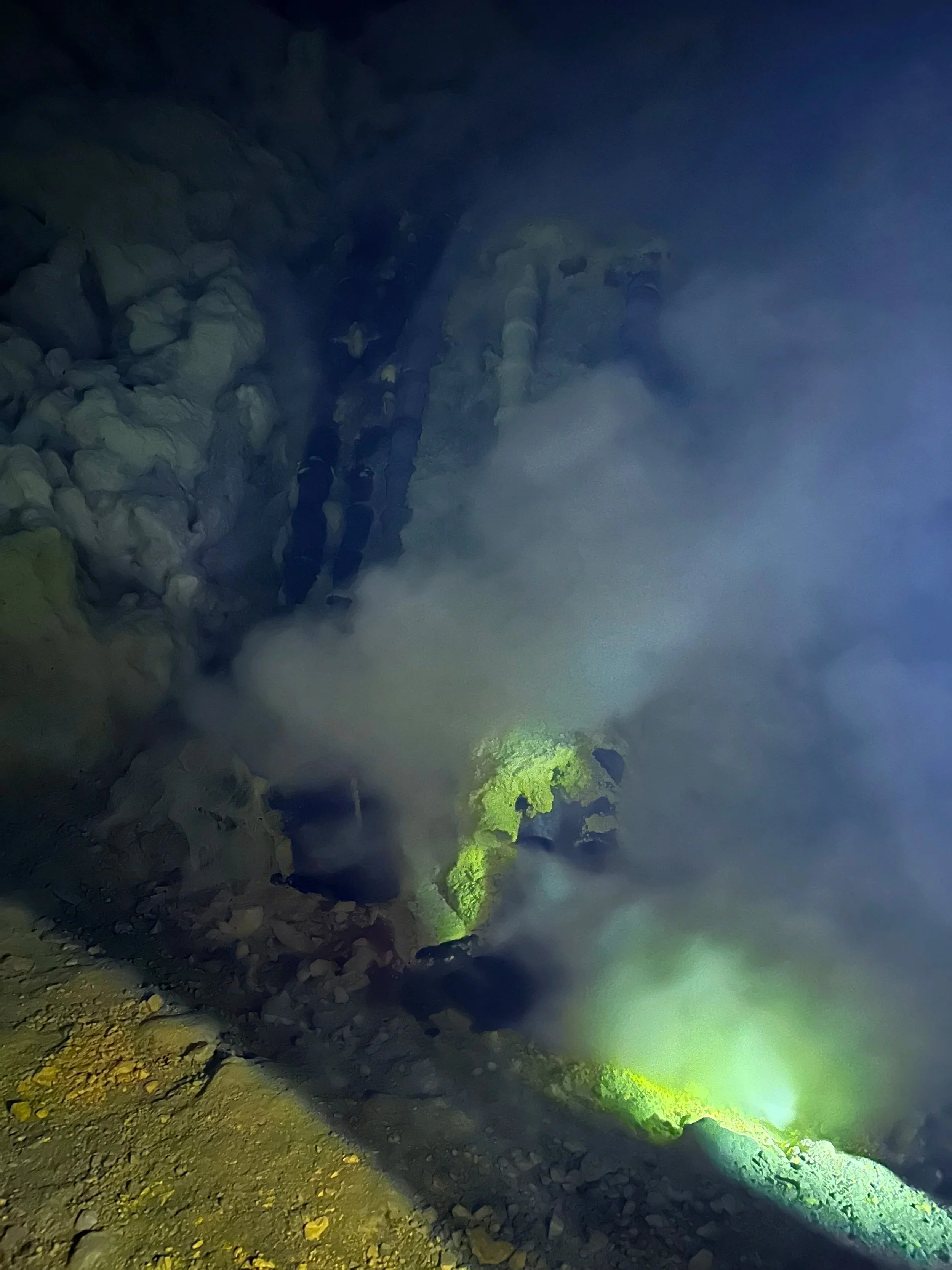
The men who work here mine that sulphur by hand. They break the yellow rock loose with steel bars and carry loads of around 90 kg up out of the crater and down the mountain, most of them without a mask, for a few cents a kilo. It is counted among the most dangerous jobs in the world, and the gases do lasting damage to their lungs, eyes and teeth. The volcano earns the reputation too: gas eruptions from the acid crater lake have killed workers here before. Our guide had done that job for years before he started leading hikes. Standing next to him with a rented mask on, watching him breathe the same air bare-faced out of habit, put the whole spectacle in perspective.
That mix of beauty and hard reality is the thing you carry down with you. But first you have to get there, and from Bali that is a trip in itself.
How to get to Kawah Ijen from Bali
Kawah Ijen is reached through Banyuwangi, the town on the eastern tip of Java. The gateway from Bali is the ferry across the Bali Strait: it runs 24/7, roughly every 15 minutes, from Gilimanuk on Bali's western end to Ketapang on Java, and the crossing takes about 30 to 45 minutes for a few thousand rupiah on foot. From Ketapang it is around 45 km by car or jeep up to Paltuding, the base camp where the hike starts. From the western ferry port, plan on roughly 2.5 hours to base camp.
Our day was longer than that, because we came from the north of Bali. We had a private tour arranged through a local contact I had kept since 2016, and from Lemukih near the Sekumpul waterfalls it was around five hours to the port, with a stop at the hot springs in Banjar to cool off, before the ferry across. We reached Banyuwangi in the evening, ate at a local market, and grabbed about two hours of sleep in the car before the hike. Java feels different from Bali the moment you land: more Muslim, far fewer tourists, and quieter.
Most people do this as an organised overnight tour rather than piecing the transport together alone, and after doing it, we'd agree. The transfers, the ferry, the timing and now the paperwork are a lot to juggle at 1am on no sleep. Which brings us to the one thing that has changed since our trip.
The medical certificate: new rule, do not skip it
This did not exist when we visited, so read it carefully if you're going now. Since 2024, a medical certificate confirming you are fit to hike is mandatory to enter Kawah Ijen. You get it at a clinic or hospital in Banyuwangi (travellers commonly use Klinik Shinta or Yasmin Hospital) within a few days of your climb, after a short check. It costs somewhere around 40,000 to 100,000 IDR, which is a couple of euros. A good tour will build this stop into the schedule, but confirm it when you book, because without the certificate you will not be allowed up.
When to go, and what it costs
Go in the dry season, roughly April to October. The blue fire needs a clear, dry night, and the crossings and the trail are far more reliable when it isn't raining. We went in September and had a clear night.
Rough costs, as a reference rather than a quote, because prices move:
- Park entrance for foreign visitors: around 100,000 IDR on weekdays, 150,000 at weekends (roughly 6 to 10 euro).
- Medical certificate in Banyuwangi: around 40,000 to 100,000 IDR.
- Gas mask rental at the entrance: around 45,000 IDR, if it isn't already included in your tour.
- Our private tour through a local contact, all in for the two of us: about 2.3 million IDR (around 140 euro), which included the guide and the gas masks. We bought head torches at home before the trip.
Tickets are now booked online in advance through the national park system, so sort that before you arrive rather than at the gate. With the logistics handled, the only thing left is the climb itself.
The night hike, step by step
The gate opens at 2am and you want to be moving close to then, because the blue fire only shows while it's still dark. Our hike started around half past one after the drive.
The climb to the rim takes about 45 to 60 minutes on a real path, so it is doable for most people with a reasonable level of fitness. Wear proper hiking shoes. We were in trainers with worn soles and slid the whole way, up and down, which turned an easy path into a nervous one. Bring water, a head torch so your hands stay free, and a proper warm layer, because the wind at the top is cold in a way you won't expect from Indonesia.
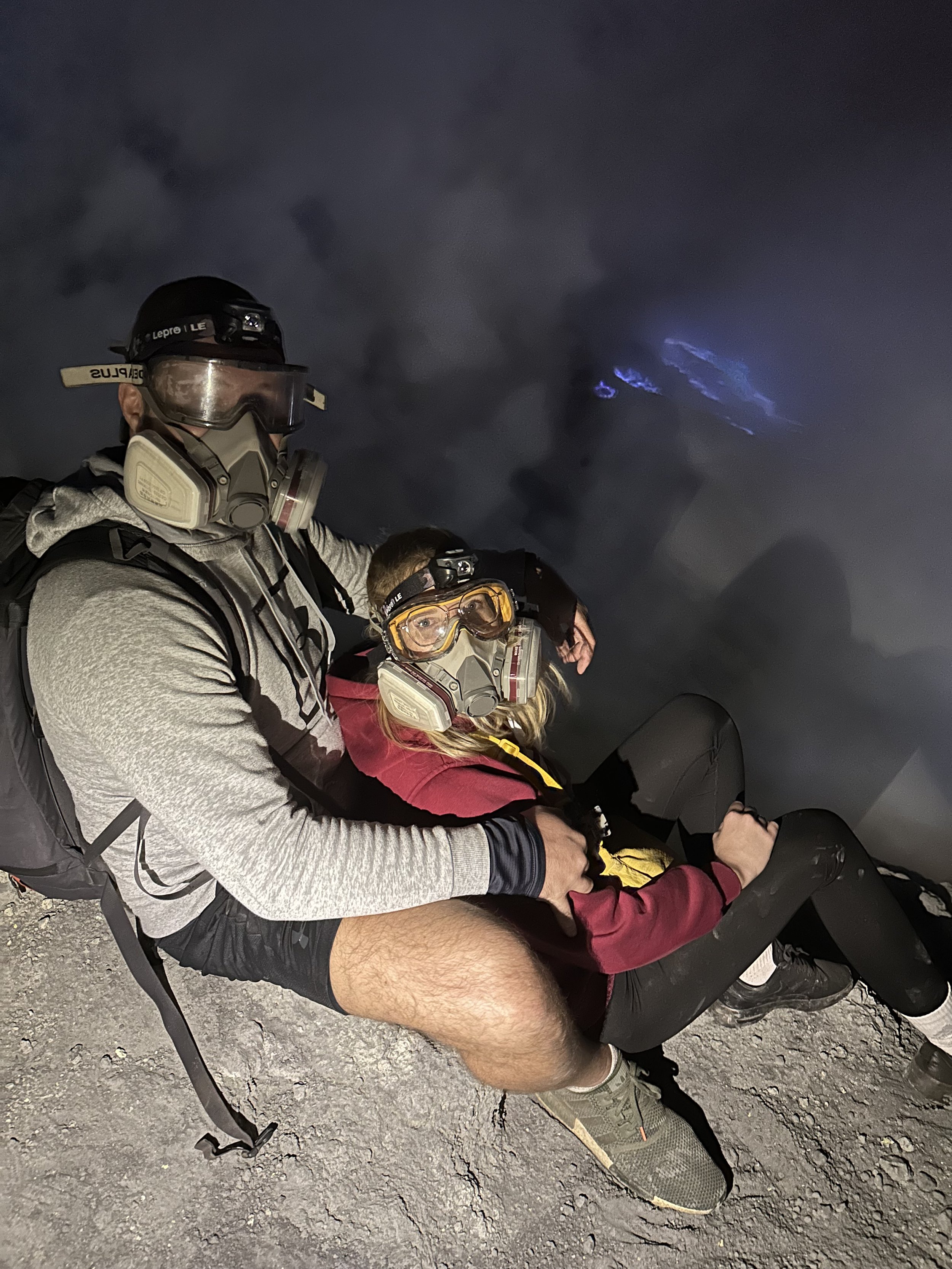
Near the summit your guide hands you the gas mask, because you smell the sulphur long before you see anything. Then you go down into the crater, and this is the part to take slowly. The descent is steep and slippery, and it is where the risk is. If you have asthma or any breathing condition, do not go down: even with a mask on, some of the sulphur gets through. When the wind shifts and a cloud of it rolls over you, you understand why the masks matter.
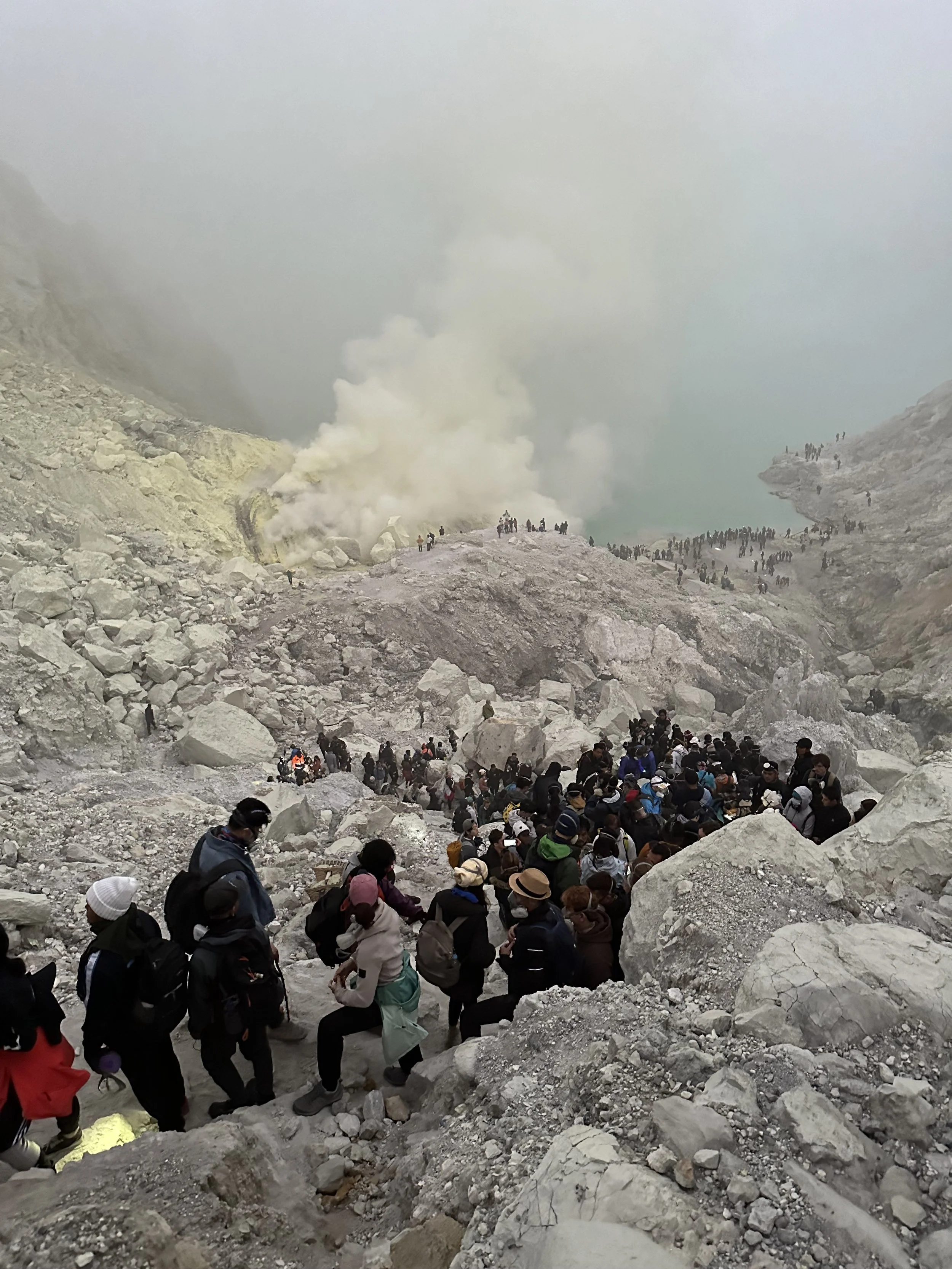
At the bottom you finally see it, the blue flames against black rock, close enough to feel unreal. Take your photos and don't linger, because you want to be climbing back out as the sky starts to lighten. One thing we'll flag honestly: the tourism here has exploded. When I first came in 2016 there were a handful of people; now there are crowds, and you can even pay to be pulled up and down the outer slope in a wheelbarrow by three local men. We found that hard to watch and would rather walk.
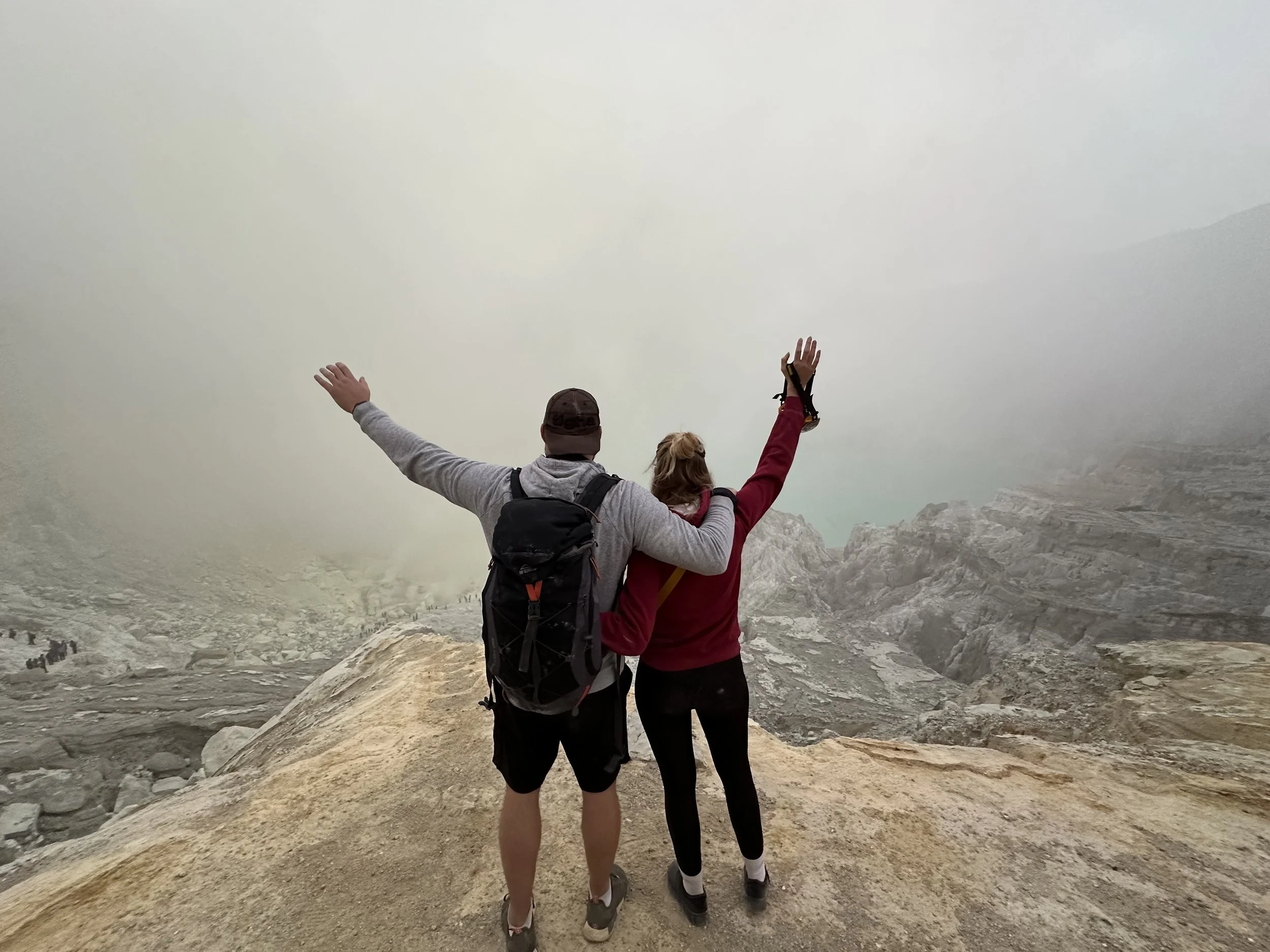
When the sun comes up and you look back at the path you came down in the dark, you are glad you couldn't see it. And from the rim, in daylight, the reward opens up: the turquoise crater lake below, the largest highly acidic lake in the world, with the sunrise behind it. We stood there catching our breath. And then the trip took a turn only one of us knew was coming.
The morning I proposed on the crater rim
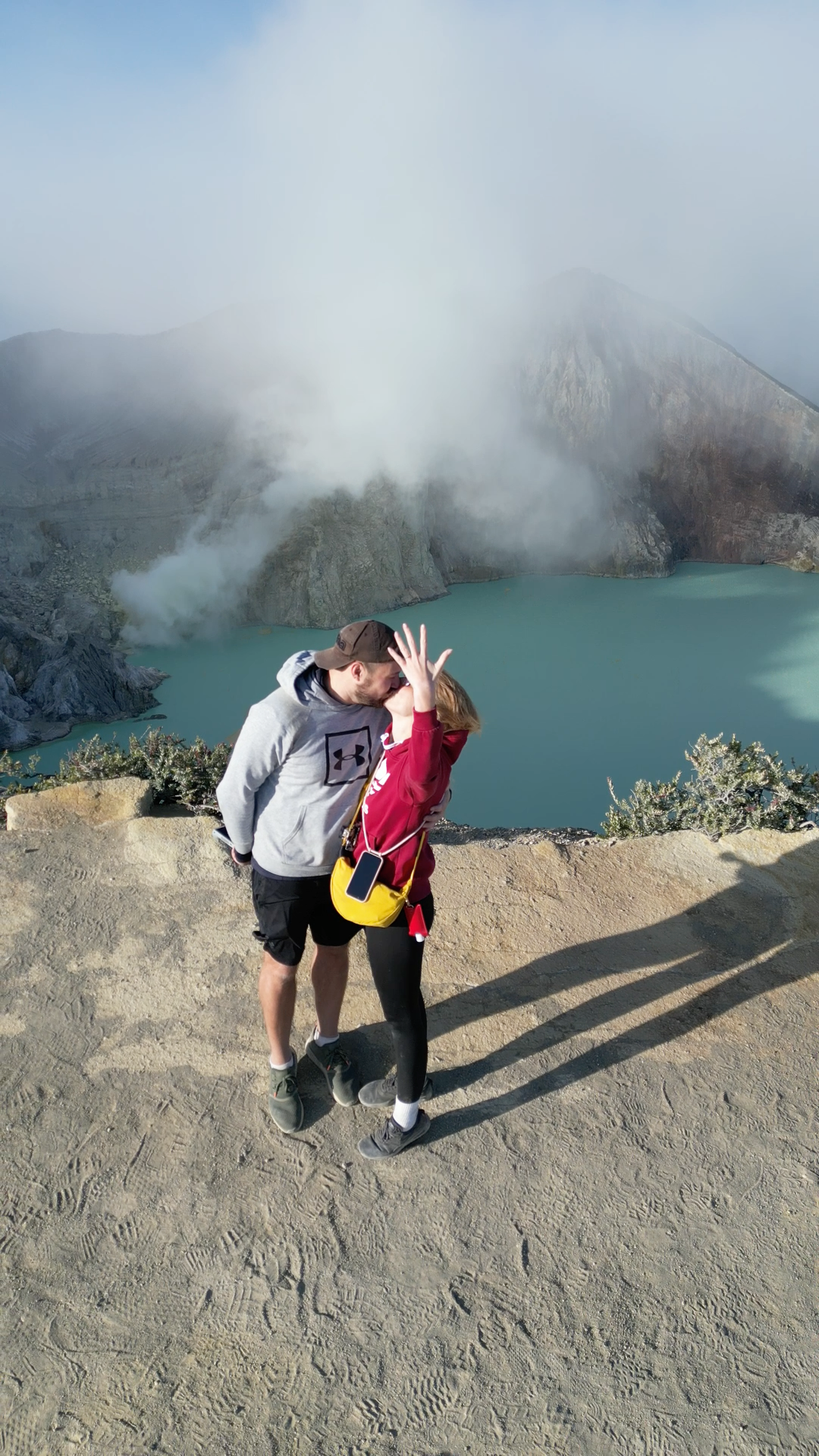
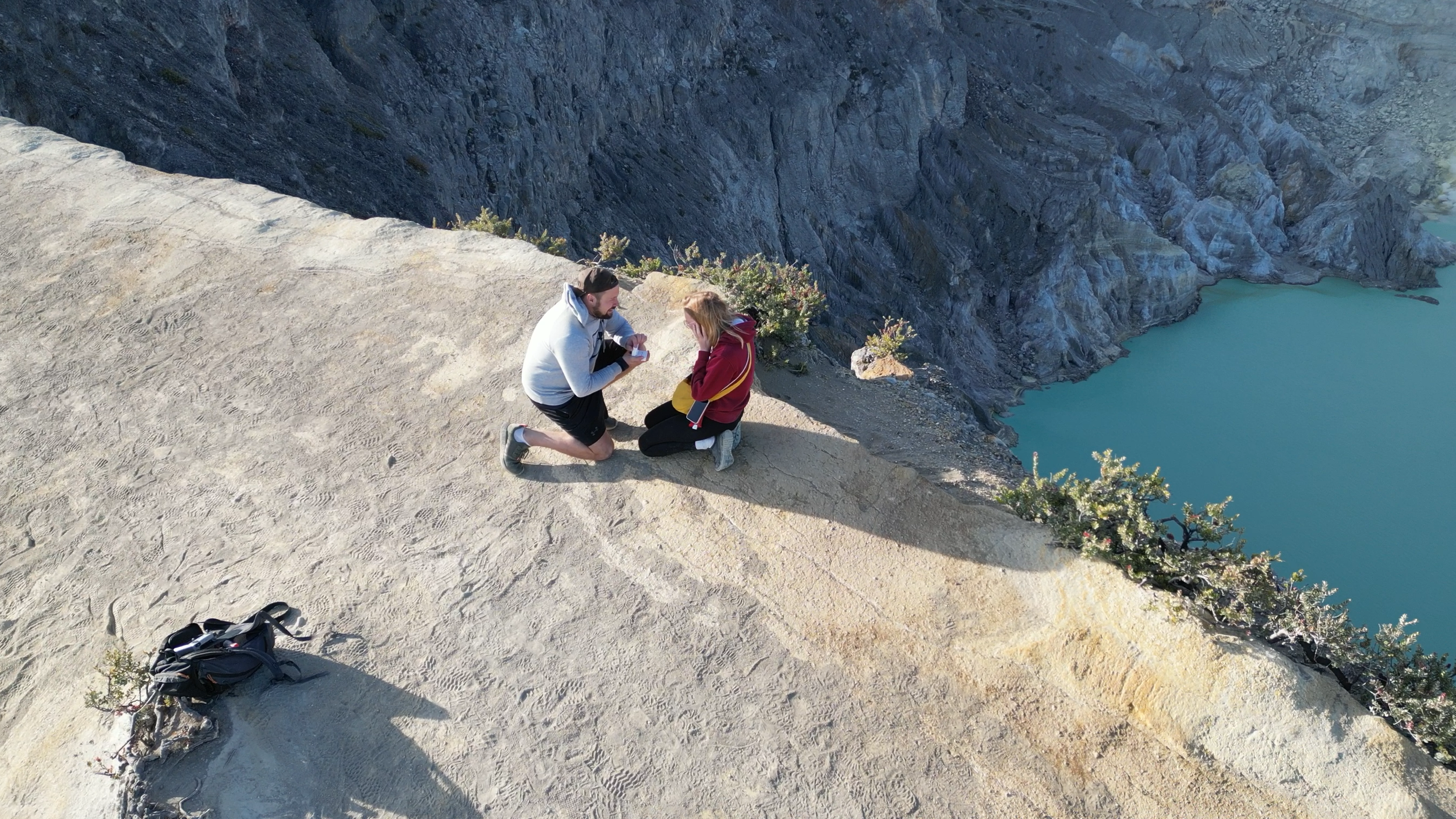
The ring had been in my drone bag the entire trip. Leni had no idea. By this point she was running on empty, worn down by a stomach bug she'd picked up in Canggu and by a night with almost no sleep, and I still asked her to wait while the crowds thinned out. We gave it about two hours, until the rim was nearly ours. She was sitting at the edge, quiet and exhausted, looking down into the crater, when I sent the drone up to circle us and got down on one knee. She said yes before I'd really finished asking, and we stood there on the edge of a volcano and cried.
It was a hard, long, uncomfortable trip to get to that spot. I would do every hour of it again.
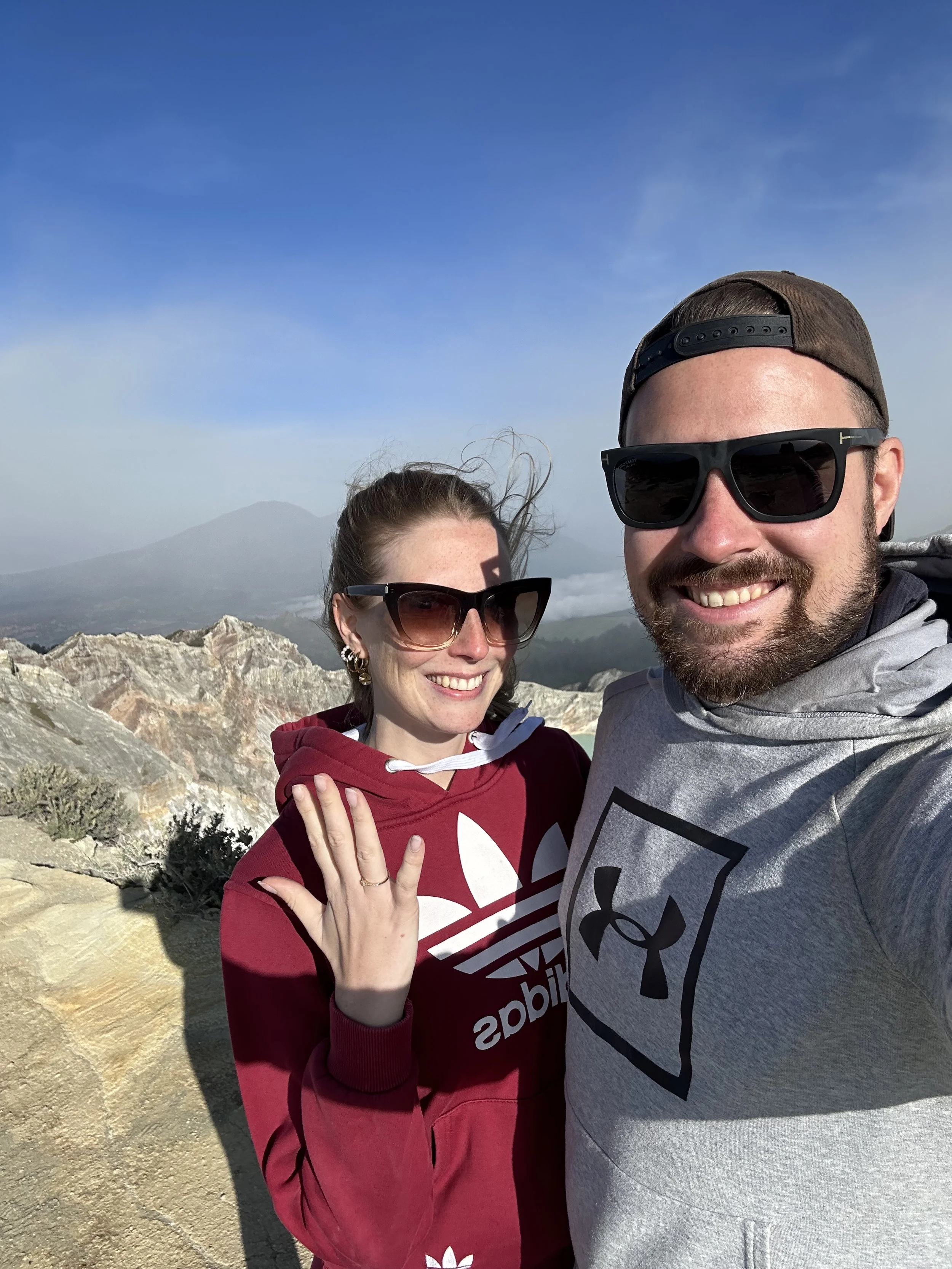
Afterwards it was noodle soup at the base, a shower at a friend of the driver's, because the sulphur does not come out of your clothes for several washes, and then the long drive back to Bali to celebrate. If you want the full route this was part of, it's in our Bali itinerary.
Tips we wish we'd had
- Wear real hiking shoes, not trainers. The path is fine; worn soles on it are not.
- Buy a head torch at home and bring it. You want your hands free on the climb.
- Pack a warm layer. The rim is cold and windy before sunrise, more than you'd think.
- Sort your medical certificate in Banyuwangi before the climb. No certificate, no entry.
- Book park tickets online in advance, not at the gate.
- If you have asthma or breathing issues, enjoy the rim but skip the descent into the crater.
- Go in the dry season, and don't dawdle in the crater. The blue fire fades the moment the sky lightens.
- Bring tissues and a little cash for the base. There's nothing up there.
Frequently Asked Questions: Kawah Ijen
Can you see the Kawah Ijen blue fire from Bali? Yes, but the volcano is on Java. You cross the Bali Strait by ferry from Gilimanuk to Ketapang, then drive to the Paltuding base camp and hike at night, usually as an overnight tour from Bali. Plan on a long, tiring day.
Do you need a medical certificate for Kawah Ijen? Yes, since 2024 it is mandatory. You get it at a clinic in Banyuwangi within a few days of your hike for a couple of euros. Without it you will not be allowed to enter.
Is Kawah Ijen dangerous? It carries real risk. The sulphur gas can harm your lungs and eyes, the descent into the crater is steep and slippery, and gas eruptions have killed workers in the past. Wear the mask, move slowly, and skip the crater descent if you have any breathing condition.
When can you see the blue fire? Only in the dark, which is why the hike starts around 2am. It disappears as the sky begins to lighten before sunrise.
How much does it cost? Beyond your tour, budget for the park entrance (around 100,000 to 150,000 IDR), the medical certificate (around 40,000 to 100,000 IDR) and gas mask rental (around 45,000 IDR) if not included. Our private tour for two was about 2.3 million IDR all in.
How fit do you need to be? Reasonably fit. The climb to the rim takes 45 to 60 minutes on a path. The harder part is the steep, slippery descent into the crater, which is optional.
Was it worth it?
Kawah Ijen asked more of us than any other stop on our Bali route, and it gave back the most. If you only want easy beaches, skip it. But if you're willing to lose a night's sleep for something few people ever see, and you take the safety seriously, it is the kind of morning you plan a whole trip around. For us it became the morning we got engaged, which settles the question for good.
Next in our Bali series: Ubud, the Monkey Forest, and a jungle quad tour that turned into the best afternoon of the stop. Read the Bali itinerary →
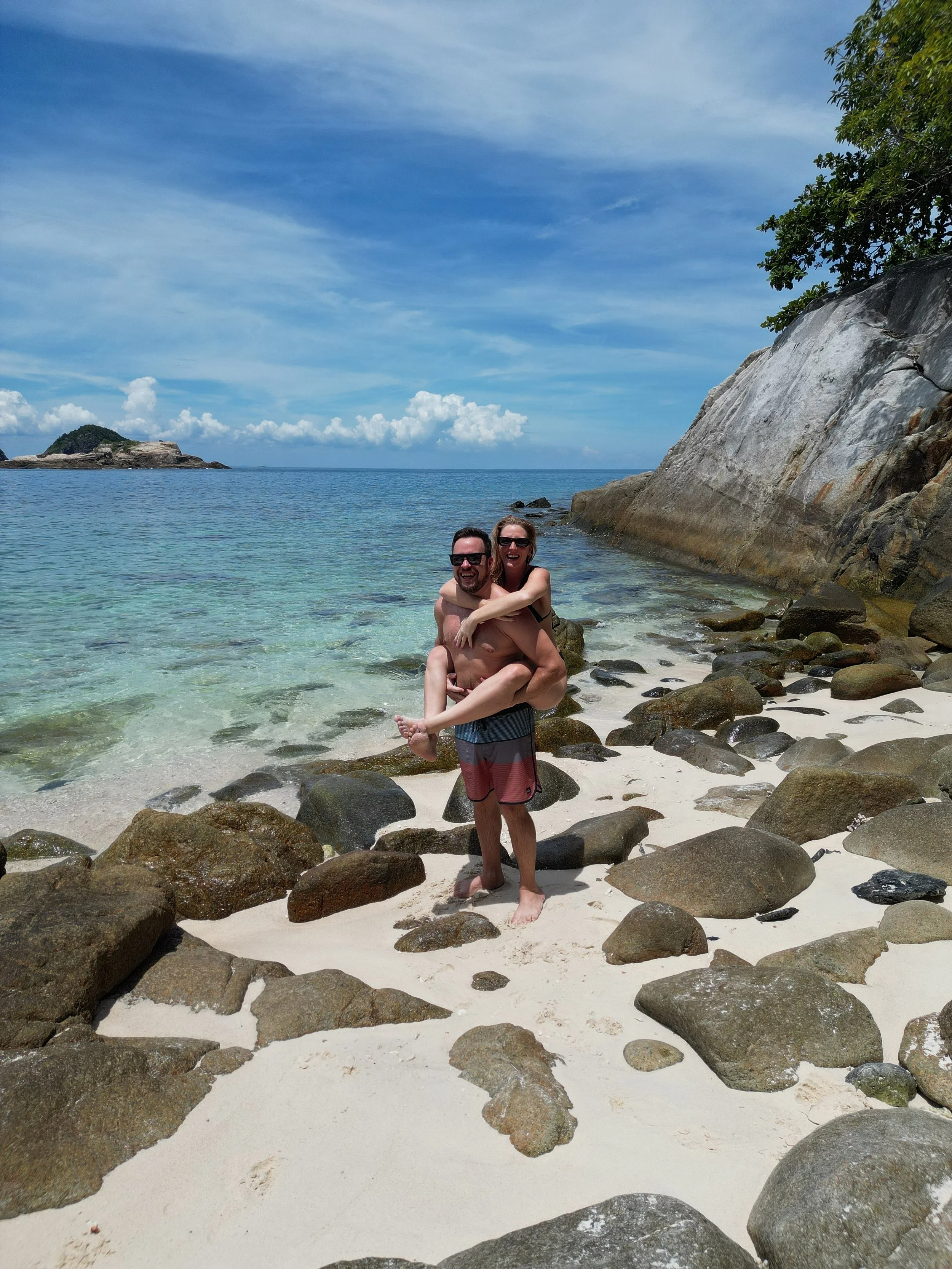
Who we are: We're Marcel and Kathleen, a couple with corporate jobs, one big trip a year and a drone that comes everywhere with us. I (Marcel) plan every route down to the ferry timetable, Kathleen trusts the plan, and everything on this blog is something we did and paid for ourselves. More about us →
Some links in this post are affiliate links. If you book through them, we may earn a small commission at no extra cost to you. We only recommend places and services we've used and paid for ourselves.