Bali Itinerary: 3 Weeks Across Bali, Java and the Gili Islands
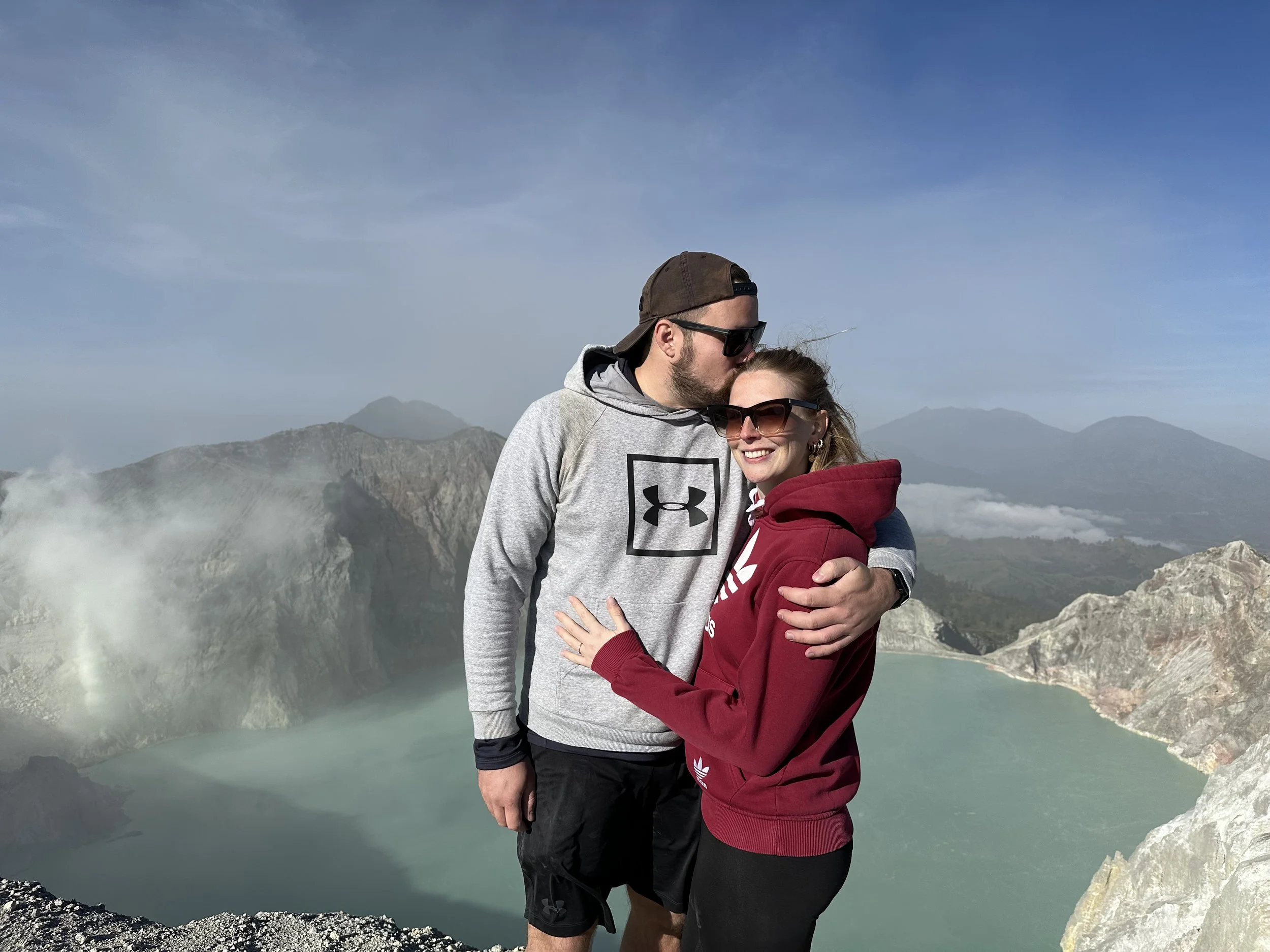
Just engaged on the edge of Kawah Ijen, the crater lake behind us. Worth every hour it took to get here.
We went back to Bali expecting to be let down. One sunrise on a volcano changed that.
September 2023. Three weeks as a couple, from Bali across to Java and back: Canggu, the Sekumpul waterfalls, Kawah Ijen, Ubud, Gili Air, Nusa Lembongan and Uluwatu.
I (Marcel) lived on Bali for a semester in 2016, and that is where I fell for Southeast Asia. So when we planned this trip, I wanted Leni to see the island I remembered. I'll be straight with you: in parts, it let us down. Seven years turned Canggu into a wall of scooters and day clubs, and a couple of my old spots were gone. If you're reading this because you're worried Bali has been loved to death, you're not wrong, and this guide won't pretend otherwise. What it does instead is give you the exact route we took, which places still hold up, and where we'd send you for something quieter. Real prices, real travel times, and the one morning that made the whole trip matter more than any of it.
The route at a glance
We flew in and out of Denpasar and moved mostly by Grab, with a rented scooter in each area and two ferries for the islands. Here is the full order:
- Canggu, 4 nights. Arrival, beach, the busy south.
- Sekumpul and Lemukih, 1 night. Waterfalls, off the tourist track.
- Kawah Ijen on Java, overnight tour. The blue fire.
- Tegallalang, 1 night. A jungle rest stop.
- Ubud, 2 nights. Monkey Forest and a quad tour.
- Gili Air, 2 nights. Turtles and no traffic.
- Nusa Lembongan and Nusa Ceningan, 3 nights. Cliffs and beaches.
- Uluwatu, 6 nights. Temple, surf bars, the far south.
Three weeks in total, from 21 September to 12 October.
When to go
Bali has a dry season from roughly April to October and a wet season the rest of the year. We went in late September, which sits at the quieter end of the dry season. You get the blue skies without the peak-summer crowds of July and August, and prices sit a little lower. If you can pick your month, September or May are a good bet. One thing to plan around: the Kawah Ijen blue fire needs a clear, dry night, so the dry season is not only nicer, it makes the trip below more reliable.
Getting around
For longer transfers we used Grab, the local ride app, and it was cheap and easy almost everywhere. For the Ubud run to the harbour we booked the car a day in advance through the app so we were not stuck waiting in the morning. In each area we rented a scooter to explore on our own, which ran about 70,000 IDR a day (around 4 euro). Two notes worth knowing: in Canggu the traffic is the worst on the island, and our Grab from the airport took over two hours. And on Gili Air there are no motor vehicles at all, so you walk, cycle or take a horse cart.
Visa and entry
German and most European passport holders get a Visa on Arrival for 30 days. It costs 500,000 IDR (around 29 euro) and you can extend it once for another 30 days. Since 2024 there is also a Bali tourist levy of 150,000 IDR (around 9 euro) that you pay online before you fly or at the airport. Three weeks fits inside the 30-day window with room to spare.
What it cost
We came out at roughly 3,000 euro per person for the three weeks, flights included. Some of the line items, so you can plan yours:
- Flights, Munich to Bali with Singapore Airlines, economy with 25 kg: about 800 euro per person.
- Scooter rental: around 70,000 IDR a day (about 4 euro).
- Kawah Ijen private tour through our local contact, all in: about 2.3 million IDR (around 140 euro), guide and gas masks included.
- Accommodation ran from a 21 euro homestay night near the waterfalls to a 225 euro jungle villa in Ubud. Full breakdown in the hotel section below.
Canggu
We started here, and I'll keep it short, because Canggu was the part that sold me least. In 2016 there was one bar on the beach and not much else. Now it is bars, day clubs, cafes and a permanent crowd, with more choice than you could work through and, for me, less of the charm it used to have. We stayed at The Soul House, a small boutique place about five minutes on foot from the beach at Old Man's, for 377 euro over four nights. We chilled by the pool, walked out for sunsets, and spent one full day on reserved loungers at Finns Beach Club, which has good service and runs as a party from morning on. We enjoyed it, but you have to be in the mood for it. By midday we were already stepping around people who had peaked too early. If Canggu is your scene, you'll love it. If it isn't, do what we did next and head north. The traffic thinned out, and so did the noise.
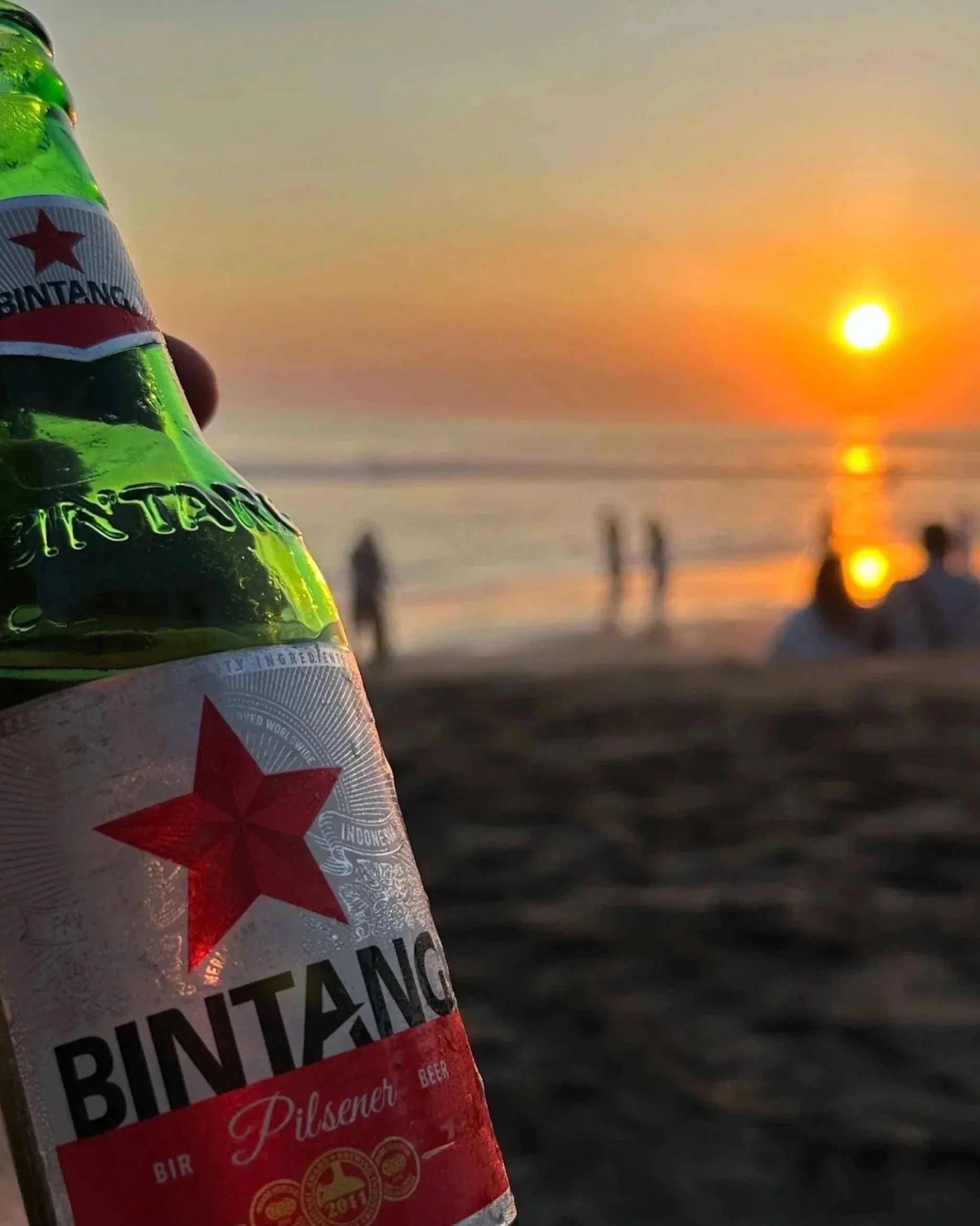
Bintang and sunset in Canggu is all you need after arrival.
Sekumpul and Lemukih
A driver arranged by our next guesthouse picked us up early and drove us up to Lemukih, for the Sekumpul waterfalls. This was my favourite place on Bali in 2016, and it was the one spot that had barely changed. We stayed at Budha's Homestay for 350,000 IDR (around 21 euro), simple and very clean, and Budha guided us himself. There were almost no other tourists. We walked past rice fields, stopped for a fresh coconut, and Budha talked us through his village and how the money from the homestay and tours goes back into it. The waterfalls were the reason we came, but the part we still talk about is the natural water slide nearby, where you ride down a smooth rock channel sitting in a ring cut from an old tyre. It is as fun as it sounds. We slept well, because the next day was the one we had built the trip around.
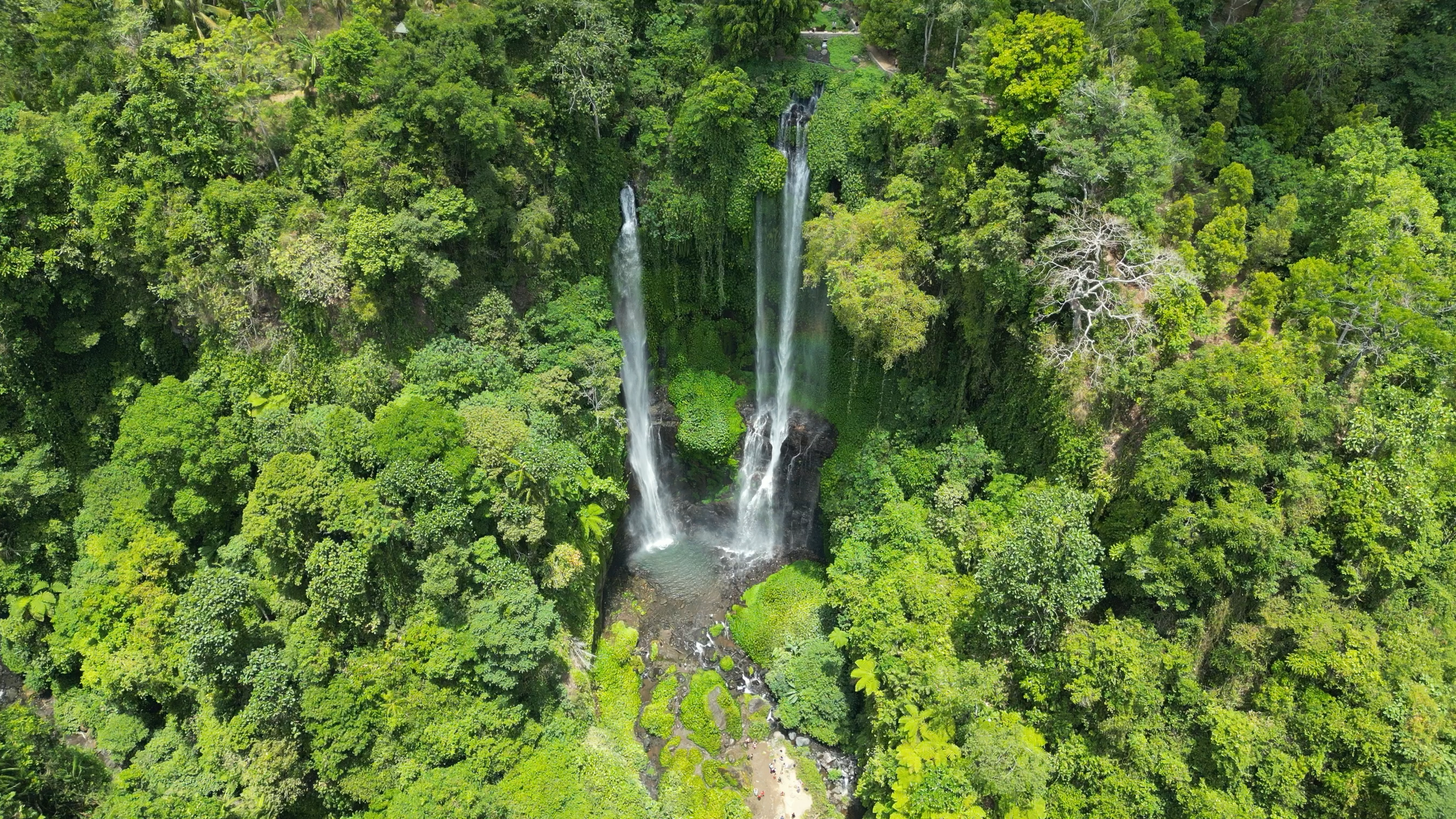
The most beautiful waterfall in Bali.
Kawah Ijen, the blue fire and the morning that mattered
This is the part I will remember for the rest of my life.
Kawah Ijen is a volcano on Java, not on Bali, so getting there is a trip in itself. We had a private tour arranged through Bernie, a contact I had kept since 2016. From Lemukih it was around five hours to the port, with a stop at the hot springs in Banjar to cool off, then a ferry across to Java and on to Banyuwangi. Java feels different from Bali straight away, more Muslim, far fewer tourists, and we ended the evening at a local market before grabbing two hours of sleep in the car. The hike starts around half past one in the morning.
The reason you climb in the dark is the blue fire. Kawah Ijen is one of very few places on earth where you can see it: sulphuric gas escapes from the crater and ignites, and the flames burn blue, but only in the dark. The men who work here mine that sulphur by hand, breaking it loose with steel bars and carrying loads of around 90 kg down the slope, often without a mask, for a few cents a kilo. It is counted among the most dangerous jobs in the world, and the volcano earns it: gas eruptions from the acid crater lake have killed workers here before. Our guide had done that job. Near the top he handed us the gas masks, because you smell the sulphur long before you see anything.
The climb up takes about 45 to 60 minutes on a real path, but wear proper shoes. We were in trainers with worn soles and slid the whole way, up and down. Bring water, a headlamp so your hands stay free, and something warm, because the wind at the rim is cold. The descent into the crater is steep and slippery, so take it slowly, and skip it entirely if you have asthma, because even with a mask the sulphur gets through. Down at the bottom you finally see it, the blue flames against black rock, and then you turn and climb back out. When the sun comes up and you look at the path you just came down in the dark, you are glad you couldn't see it. From the rim you look out over the turquoise crater lake, and if the timing is right, a sunrise behind it.
Then the part only Leni knew nothing about. The ring had been sitting in my drone bag the whole trip. She was exhausted by this point, run down with a bad stomach from Canggu, and I still asked her to wait while the crowds thinned. We gave it about two hours, until the volcano was nearly ours. She was sitting at the edge, worn out and quiet, looking down into the crater, when I sent the drone up to circle us and got down on one knee. She said yes before I had really finished asking, and we stood there on the rim and cried. It was a hard, long, uncomfortable trip to get to that spot, and I would do every hour of it again.
Afterwards it was noodle soup at the base, a shower at a friend of the driver's, because the sulphur smell does not come out of your clothes for several washes, and then a long drive to a place I had booked to celebrate.
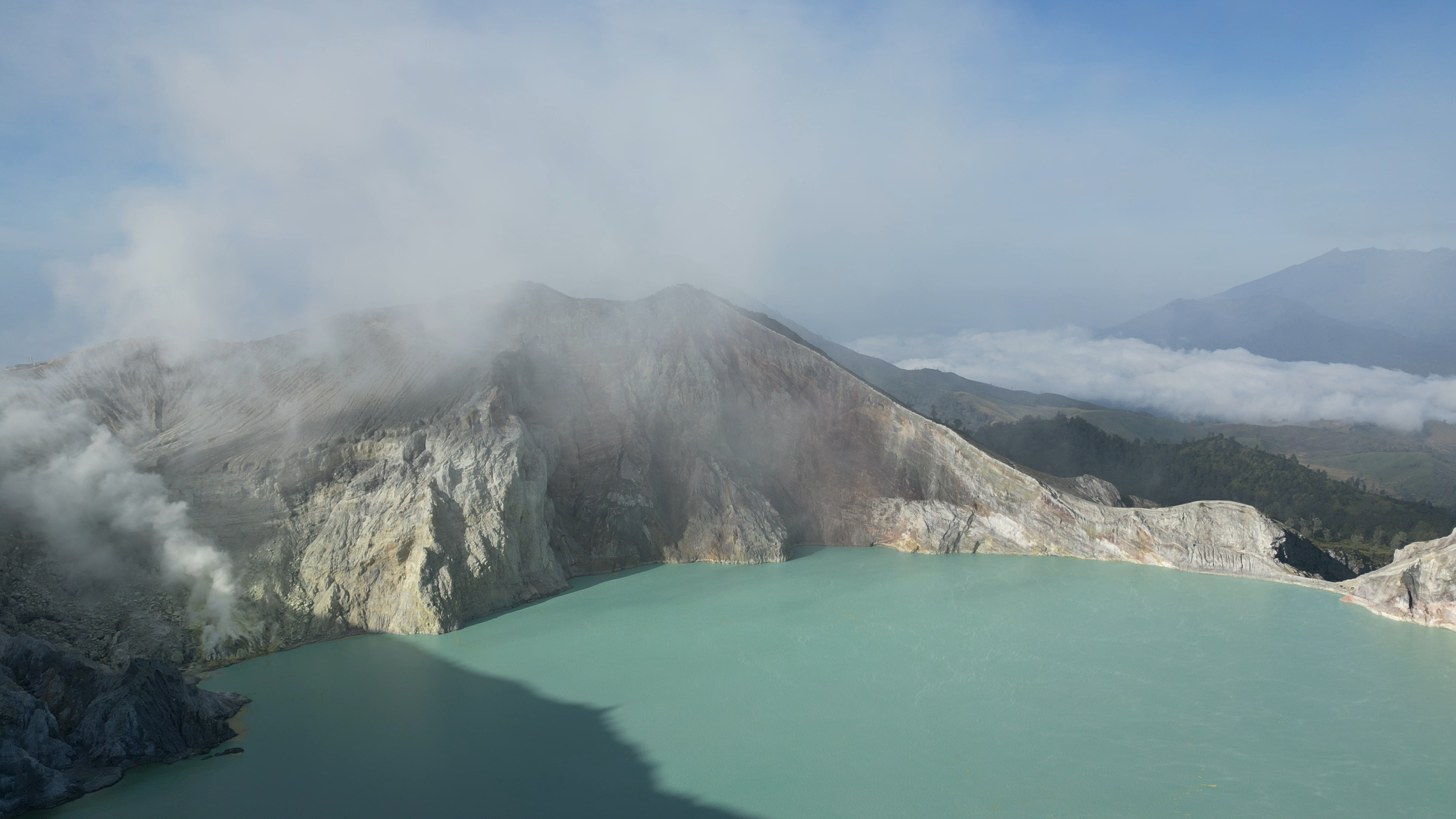
The breathtaking view from the edge of the crate on the sulfur lake
Tegallalang
I had reserved one night at a jungle stay in Tegallalang on purpose (119 euro), somewhere to stop and let the engagement sink in. We had a hammock hanging out over the trees, a bed we could roll onto the terrace, and a small private pool. After the Ijen marathon we did nothing at all, and it was exactly right. If you run the same waterfalls-to-Ijen stretch, build in a soft day like this on the other side. You'll need it.
Ubud
From Tegallalang we moved into Ubud for two nights, at the Jannata Resort & Spa (450 euro), in a room with a private infinity pool that looked straight into the jungle and rice terraces. On our first evening we walked the sunset ridge path that starts near the hotel, a quiet stretch away from the traffic with the sun dropping over the terraces, and ended up wandering Ubud for dinner. The next morning we took the scooter to the Monkey Forest. I didn't want to go, Leni talked me into it, and my read stands: the park has a mixed reputation, one monkey followed her closely enough to scare her, and you see monkeys all over Bali anyway once you get up into the hills. Save your time. What we would send you to instead was our afternoon: a private quad tour we booked last minute through GetYourGuide. Rubber boots, our own guide, and hours of riding through jungle, over rough track and through water, including straight under a waterfall. Leni took a solo lap or two through it, and by the last flooded loop I was faster and braver than I had any right to be. Book a private tour if you can, so nobody sets your pace. For all that, Ubud itself is not for me. It is loud and packed, and I would take somewhere calmer like Kintamani over it any day. From here we swapped the mainland for the islands.
The Quad tour was so much fun.
Gili Air
An early start took us to the port at Padangbai and onto the Wahana fast boat to Gili Air, about 90 minutes and comfortable. Padangbai can get hectic, but Wahana met us at the harbour, tagged our bags, and it ran smoothly. Be on time, because the boats leave earlier or later depending on the swell. Gili Air has no cars or scooters, so you walk, cycle, or take a horse cart to your hotel. We stayed at the Tipsea Turtle, in a private room rather than a dorm, with a good breakfast and a guest WhatsApp group for planning trips together. This is the part of the trip I loved most: the simple pace. We snorkelled with turtles straight off the beach, where there are always plenty, and I flew the drone over water so clear I filmed turtles from the air without knowing it until we got home. On our second day we booked a snorkelling boat with about eight others and did the usual spots. Gili Air has changed since 2016 in the right way. The partying still sits over on Gili T, while Air has landed on a good mix of sunset bars and quiet. We ate most nights at Mama Pizza, right on the beach, sourdough from a stone oven, and it was very good. The catch is that it was so busy the local warungs around it sat half empty, and even as walk-ins we waited about 30 minutes. Worth it for a beach table, but worth knowing. Then the sea decided to make the next leg interesting.
Golden sunsets over Gili Air
Nusa Lembongan and Nusa Ceningan
The ferry ran to Nusa Penida first, then a short boat hop across to Nusa Lembongan, and this crossing had real swell. A few people started to panic, everyone felt a bit green, and we were glad to step off. A driver took us to The Niti Huts, a tidy little bungalow set-up (111 euro for three nights) that looked lovely. They had a double booking and no room for our first night, but the place next door had a spare, near-identical bungalow, and threw in a free scooter for our three days, which more than made up for it. We rode over the Yellow Bridge to Nusa Ceningan for drone shots at the Blue Lagoon, then out to the beaches. Lumbung Bali did not do much for us with all the boats sitting in the water, so we carried on, parked, walked, and landed at Ohana's Beach Club, where we took beanbags right on the sand and stayed the whole day. The sunset that evening turned the whole sky solid gold, and we still bring it up. The following day we took loungers at Dream Beach, where the waves come in hard but the setting is worth the day, and closed it at Devil's Tears for sunset, where the swell explodes up the cliffs. If you fly a drone there, keep it high, because the spray is unpredictable and comes up by the metre. One more thing worth flagging: Leni came down with tonsillitis here, and the Nusa Medica clinic saw us fast, with a friendly doctor who took his time. She was nervous about a doctor abroad, it passed quickly, she had the right medicine, and she was much better within a few days. Good to know these islands have proper care.
Devils Tears in Nusa Lembongan is pure magic at sunset.
Uluwatu
Back on the mainland, we finished in Uluwatu, and this was the stretch that reminded me why I loved Bali. We split it across two very different stays. First, two nights at a bubble hotel on Nyang Nyang beach (327 euro, bookable through Airbnb), where a staff member drives you down from the road and walks you the last ten minutes to a clear dome under the stars, with a swing, a hammock and an infinity pool, and the sea 30 metres away. You leave your luggage at reception and carry only what you need. Food comes by WhatsApp, one morning as a floating breakfast in the pool, and if you want something specific they fetch it or you order via Gojek to reception, delivered down by a little cable lift. It is remote and quiet, and lying in a hammock over an empty beach at sunset is the kind of thing you plan a trip around.
For the last nights we moved to Le Cliff (627 euro for four nights), built into the slope right on the beach. A word of warning: getting to your room means stairs down to the sand, a walk along the beach, and stairs back up, so do not leave anything in the scooter, because the climb back to the car park is a workout. There are porters if you would rather not carry your bags. Our cabin sat right over the sea with a hammock on the sand, and it was worth the effort.
From here we filled the days. Dreamland Beach is a nice spot but crowded, with massage sellers who push a little hard. We rode out to Thomas Beach along a road cut through the cliffs, a lovely drive even if the beach itself was ordinary. And from 2016 I can still recommend Green Bowl Beach, but you need to be fit for the 350-odd steps down and back up, with no scooter option. For food, there are more breakfast and dinner spots than you can try, and our favourites were SUKA, Ours Cafe and La Terraza. We also went up to the Uluwatu temple for sunset. The view is worth it, though it gets very crowded, and we missed the Kecak dance by being too late. Two warnings there: dress for a temple, with shoulders covered and no low necklines, and a sarong is handed out at the gate. And watch the monkeys, which are bold and will take glasses, phones and water bottles, then trade them back for food, so stow everything. Best of all was Single Fin for the sundowner, one of my favourite places on the whole island, and it did not let us down. It gets packed, so get there at least two hours before sunset.
On our last day we checked out early, and with an evening flight to fill, we spent the day at the Ulu Cliffhouse beach club, had a slow breakfast, sat by the pool, showered there, and drove out to the airport relaxed. We flew home on 12 October.
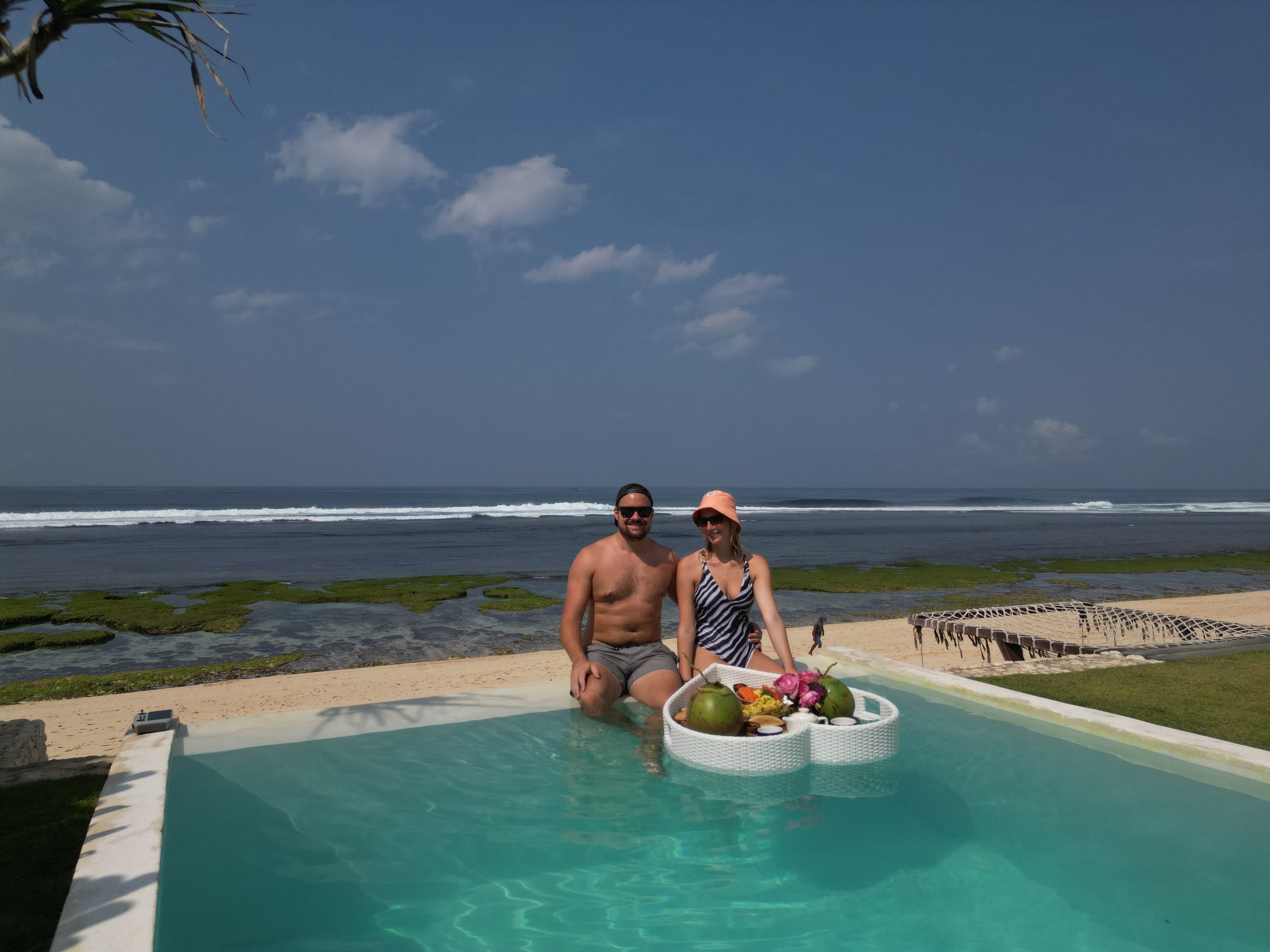
Slow mornings with breakfast in our infinity pool at the bubble hotel
Tips we wish we'd had
- Fly the Kawah Ijen trip in the dry season and wear real hiking shoes, not trainers. Pack a headlamp, water and a warm layer, and buy a cheap headlamp at home before you go.
- If you have asthma, skip the descent into the Ijen crater. The sulphur gets through the mask.
- Book the Ubud-to-harbour car a day ahead in the Grab app so you are not stranded on the morning of a ferry.
- Get to Single Fin in Uluwatu at least two hours before sunset. It fills up fast.
- On Gili Air there are no vehicles, so pack light enough to carry or cycle from the boat.
- At the Uluwatu temple, cover your shoulders, take the free sarong, and keep glasses and phones out of the monkeys' reach.
- Budget around 70,000 IDR a day for a scooter, and use Grab for the longer hops.
FAQ
Is three weeks enough for Bali? Yes, and it lets you add the Gili Islands and the Nusa islands without rushing. If you only have two weeks, cut Gili Air and shorten Canggu.
Has Bali been ruined by tourism? Parts of it, honestly. Canggu and central Ubud are loud and crowded now. But the north around Sekumpul, the Nusa islands and quieter corners like Kintamani still feel like the Bali we came for.
Can you see the Kawah Ijen blue fire from Bali? Yes, but it is on Java. You travel across by ferry and hike at night, usually as an overnight tour from Bali. Plan on a long, tiring day, and go in the dry season.
Do you need a scooter in Bali? For getting around each area, yes, it is the easiest way. For longer transfers, Grab is cheap and saves the stress. On Gili Air you need neither, since there are no vehicles.
What did three weeks cost? Around 3,000 euro per person including flights, with flights about 800 euro of that.
Would we go back?
Bali is not the quiet island I lived on in 2016, and I won't tell you it is. If you come expecting untouched beaches everywhere, the south will disappoint you. But go north to the waterfalls, cross to the Nusa islands, make the hard trip to Ijen, and it gives you back everything the crowds take. For us it gave more than that. We flew home engaged, and every uncomfortable hour on that volcano was worth it. Next time we would trade a few of the busy days for somewhere slower, and we would tell you to do the same.
Next up, we are writing the full guide to doing the Kawah Ijen blue fire from Bali, with the timings, the crossing and what to pack. If you want the exact hotels, ferries and prices for any part of this route, the detailed island guides are on their way.
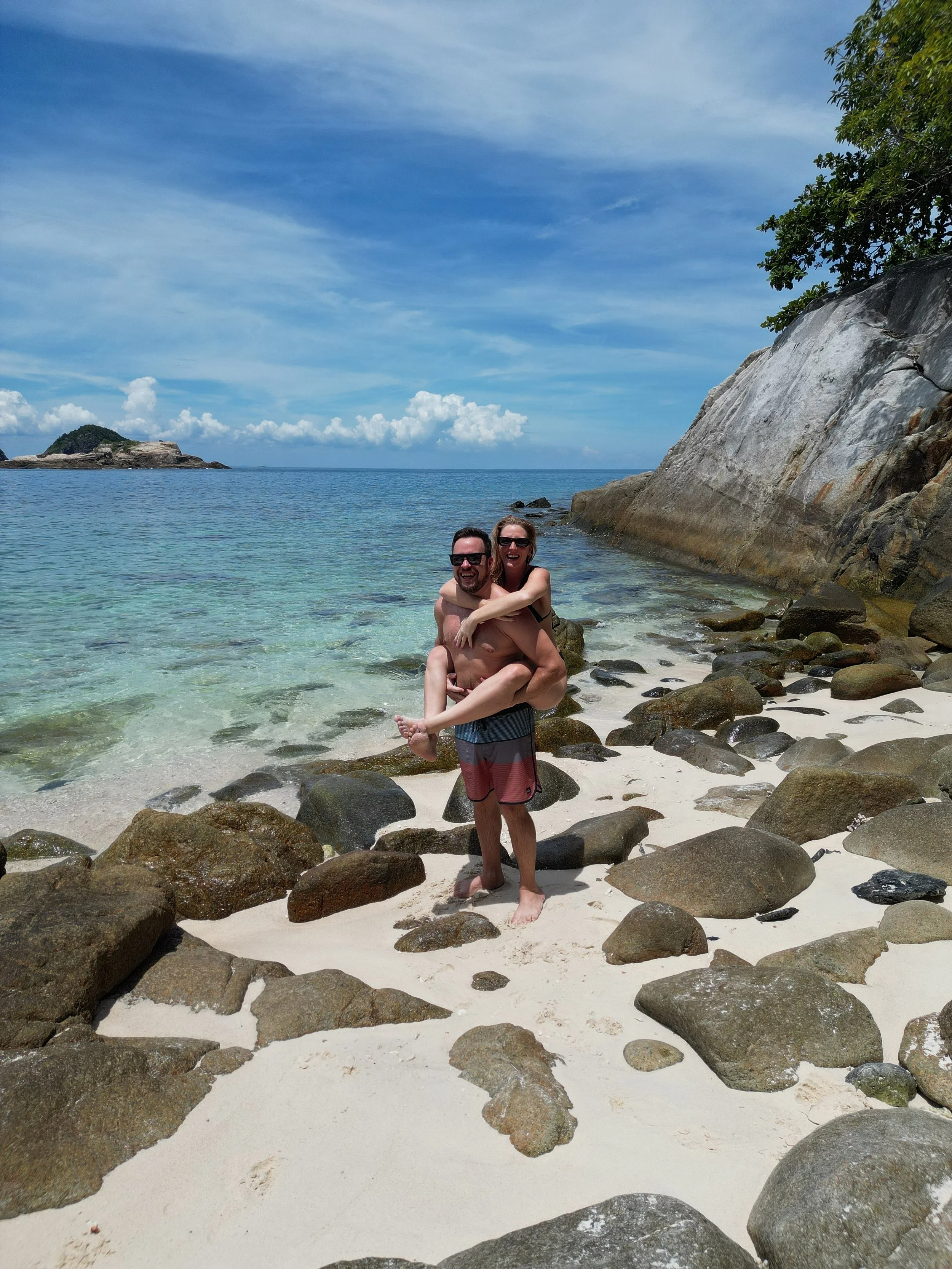
Who we are: We're Marcel and Kathleen, a couple with corporate jobs, one big trip a year and a drone that comes everywhere with us. I (Marcel) plan every route down to the ferry timetable, Kathleen trusts the plan, and everything on this blog is something we did and paid for ourselves. More about us →
Some links in this post are affiliate links. If you book through them, we may earn a small commission at no extra cost to you. We only recommend places and services we've used and paid for ourselves.