

The Perfect 3-Week Philippines Itinerary: Siquijor, Bohol, Palawan, El Nido & Coron
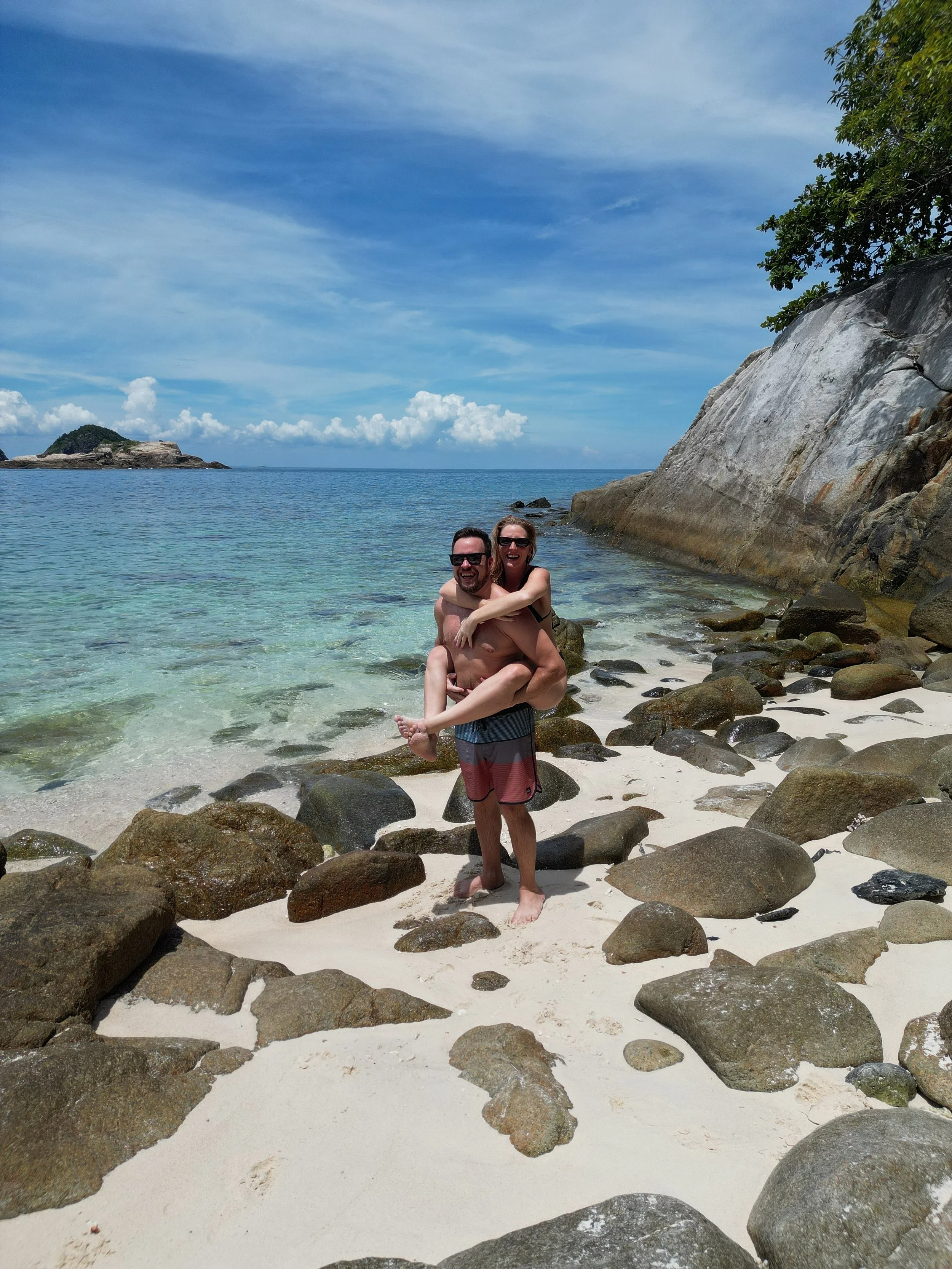
One of the most beautiful islands we have ever been. Onok Island, Balabac, Palawan.
This is our full 3-week Philippines itinerary — island hopping through Siquijor, Bohol, Balabac, El Nido and Coron — written by two people who assumed the ferries would be the easy part.
We travelled the Philippines for 3.5 weeks in March 2026 in this order: Siquijor, Bohol, Balabac, El Nido, Coron.
We thought we'd done our research. Then we stood on a dock in Dumaguete with a ferry ticket in hand, watching the departure board change three times in twenty minutes. It took us a day or two to stop expecting things to run the way they would at home. Once we did, this turned into one of the best trips we've taken, even if a few stretches of it still felt like guesswork right up until they worked out.
Over three and a half weeks we moved through six islands and passed through Manila twice. Waterfalls in Siquijor. The Chocolate Hills in Bohol. A multi-day boat tour through Balabac that we nearly skipped. The lagoons of El Nido. The limestone islands around Coron.
This is the route we took, what we'd do again, and the details that would have saved us a few headaches if someone had told us beforehand.
Our 3.5-Week Philippines Route at a Glance
- 1 night, Manila: Arrival, straight to the airport hotel
- 3 nights, Siquijor: Waterfalls, beach hopping, scooter exploring
- 3 nights, Bohol: Chocolate Hills, tarsiers, island-style pace
- 1 night, Puerto Princesa: Transit stop before Balabac
- 3 nights, Balabac: Multi-day island and sandbar tour
- 1 night, Puerto Princesa: Transit stop before El Nido
- 5 nights, El Nido: Lagoons, island hopping tours, beach time
- 3 nights, Coron: Wreck diving, Kayangan Lake, limestone cliffs
- 2 nights, Manila: Final stretch before flying home
We flew out on March 11th and got back on April 3rd 2026. Each destination gets its own guide, linked below as we publish them.
Why We'd Recommend the Philippines
People talk about Thailand and Bali far more than they talk about the Philippines, and we're still not sure why. The water on the islands we visited was some of the clearest we've seen in Southeast Asia, the limestone scenery rivals anything in the region, and the pace felt slower than the region's big-name destinations we'd seen before.
The catch is logistics. Getting between islands takes planning. Ferries run on something closer to a suggestion than a schedule, and you'll spend more time in transit than you would hopping between, say, the Greek islands. If you can live with some unpredictability, it pays off.
Best Time to Visit the Philippines
We travelled in March, right at the edge of the dry season, and the weather held for almost the whole trip.
November to May is the dry season and generally the better window, with December to February being the coolest and driest stretch. March and April get hotter, but rainfall stays low across most of the islands we visited.
June to October is wet season, with typhoon risk picking up from July onward. Some boat tours and island crossings get cancelled outright during this stretch, especially in exposed spots like Balabac and parts of Palawan.
If your itinerary leans on ferry crossings and boat tours the way ours did, the dry season isn't a nice-to-have. The Balabac tour in particular doesn't run reliably once the weather turns.
Arriving in the Philippines: Manila First
Almost every Philippines trip starts in Manila. Ours did too, though only for one night on the way in.
We stayed at the Holiday Inn Express Manila Airport, a five-minute walk from Terminal 3. After a long flight, walking straight to a clean hotel without touching Manila traffic felt like the right call, and we'd book it again for an early departure the next morning.
We flew Philippine Airlines from Manila to Dumaguete the next morning, the gateway to Siquijor. More on that route in our Siquijor guide.
Getting Around: Flights, Ferries & Staying Flexible
The Philippines is an archipelago. Getting between destinations almost always means a domestic flight or a ferry, sometimes both in the same day.
Domestic flights connect the major hubs (Manila, Cebu, Dumaguete, Puerto Princesa) and are affordable and frequent. We used several to cover longer distances quickly instead of losing a day to buses or boats.
Ferries take over for the shorter island-to-island hops, mainly through the Visayas (Dumaguete, Siquijor, Bohol, Cebu) and around Palawan. These run looser than flights, sometimes loosely enough that "schedule" feels like a generous word for it.
We want to be honest about this rather than pretend everything runs like clockwork, because it doesn't always. Ferry departure times are approximate. Weather can affect a boat tour with little warning. Connections sometimes mean a bit of improvising on the spot.
Even so, everything worked out for us. Every flight, every ferry, every tour we'd booked went ahead. We didn't lose a day to cancellations or missed connections. A flexible mindset rather than a rigid hour-by-hour plan made the difference, and we'd build in a little buffer rather than stacking everything back to back.
Island Hopping by Ferry: The Basics
This is the part of Philippines travel that trips up most first-time visitors, so here's the short version. The full breakdown, with prices, booking platforms and a route-by-route guide, is in our Philippines Ferry & Transport Guide. Book through 12Go Asia. It gave us a clear overview of available crossings and operators, and was the most reliable platform we found for ferry tickets between islands.
Get to the port early. Departure times listed online are approximate, and ferries run circular routes between multiple islands (Dumaguete, Siquijor, Bohol, Cebu and others), so a delay at one stop ripples through the rest of the day.
Budget for extra fees. Beyond the ticket price, expect a port fee, sometimes an ecological fee, and a separate luggage charge. On our crossing out of Dumaguete we paid a 50 peso ecological fee per person, a 14 peso port fee, and 145 pesos for two backpacks, on top of the ticket itself.
OceanJet is the largest operator and usually the safer bet when you have a choice on a given route.
Money in the Philippines
Cash matters more here than almost anywhere else we've travelled in Southeast Asia. Card acceptance outside larger hotels and malls is limited, and on smaller islands like Siquijor or Balabac, it's close to nonexistent.
Keep a steady supply of smaller bills. Vendors, tricycle drivers and small restaurants often can't break a large note, and you'll need exact change more often than you'd think.
For withdrawing cash, we used an ATM at the airport and paid a 250 peso fee to take out 10,000 pesos on our DKB card. Worth comparing against currency exchange before you commit, the fees vary a lot.
A quick comparison from our own trip: exchanging €400 at the airport got us roughly 27,000 pesos for a €5 fee. A €450 transfer through a Moneygram pawn shop cost €36 in fees, at a rate of about €1 to 63.11 pesos.
Pawnshops double as money changers here. Chains like Palawan Pawnshop or M Lhuillier are everywhere and can be a convenient way to receive transfers or exchange currency outside normal banking hours.
GCash is the dominant mobile payment app locally. It's built mainly for residents, but it's worth knowing it exists, since plenty of smaller businesses run on it as their main digital payment method.
Stock up on cash before the more remote stretches of your trip. We made sure to withdraw enough before heading to El Nido specifically, since ATM access there is limited and not always reliable.
Philippines Trip Cost: Our Real Numbers
We tracked every expense of this trip via Splitwise, 24 days, two people. Here are the real numbers, including one that needs an explanation:
- International flights: €3,548 total / €1,774 per person (not a normal price, read below)
- Domestic flights (4 legs): €598 total / €299 per person
- Ferries (3 crossings): €147 total / €74 per person
- Hotels (all stops, including one extra night we had to add in El Nido): €2,429 total / €1,215 per person
- Balabac tour (4 days, premium beachfront bungalow, all meals and transfers): €650 total / €325 per person
- Daily expenses (food, massages, entrance fees, local transport, cash): €2,155 total / €1,078 per person
- Total: €9,527 / €4,764 per person
noticeably more than our Malaysia route
About those flights: one week before departure, the conflict between the USA and Iran closed the airspace over Bahrain, Qatar, Abu Dhabi and Dubai. Our original flights, around €1,700 for both of us, were cancelled and fully refunded, and we rebooked last minute with Lufthansa for €3,548. Under normal circumstances, plan with roughly €1,700 for two from Europe. Our price was a lesson in how world events can hit your travel plans a week before you fly, and why a financial buffer belongs in every trip budget.
With normal flight prices, this trip works out to around €160 per person per day all-in, or about €125 per person per day on the ground (hotels, tours, food, transport, without international flights). That's noticeably more than our Malaysia route, which came in at €61 per day on the ground, and the difference has a name: Palawan. The Balabac tour, El Nido accommodation and the extra flights and ferries of an island-hopping route add up. For what you get, we'd pay it again without hesitation.
Booking Flights and Hotels
For domestic flights, AirAsia Move came in consistently cheaper than Skyscanner or Booking.com on several of our legs, for both flights and hotels. It's worth a look alongside your usual platforms.
For getting around within cities, Grab works the same way it does across Southeast Asia and was our default for anything not walkable.
A Quick Word on Basketball
Spend any time in the Philippines and you'll start noticing basketball hoops everywhere. Villages, dirt courts, makeshift setups on the side of the road. It's the national sport here in a way that goes beyond what we'd seen anywhere outside the US. Small detail, but it tells you something about the place, and it's fun to watch unfold as you move between islands.
How Long Do You Need in the Philippines?
We spent three and a half weeks and felt like we used most of the days well, without feeling rushed. If you want to cover Siquijor, Bohol, and the Palawan region (Puerto Princesa, Balabac, El Nido and Coron) at a reasonable pace, plan for three weeks at minimum.
If you're shorter on time, pick either the Visayas (Siquijor and Bohol) or the Palawan region rather than trying to do both. The distances and ferry logistics between regions eat into your time more than the map suggests.
Detailed Guides for Each Destination
- 📍 Siquijor: Waterfalls, Beaches & Where to Stay
- 📍 Bohol: Chocolate Hills, Tarsiers & What to Do
- 📍 Balabac: The Multi-Day Island Tour Worth the Effort
- 📍 El Nido: Lagoons, Island Hopping & Honest Tips
- 📍 Coron: Wreck Diving, Kayangan Lake & More
- 📍 Philippines Ferry & Transport Guide
Frequently Asked Questions About Travelling the Philippines
Is the Philippines safe to travel? Yes, especially in well-established travel regions like Palawan and the Visayas. The usual precautions apply on busy ferries and in markets, mostly around keeping an eye on cash and belongings.
Do I need cash everywhere in the Philippines? Pretty much, outside major hotels and malls. Carry enough for several days at a time, particularly on smaller islands like Siquijor or remote stops like Balabac, where ATMs are scarce.
How do I book ferries between Philippine islands? 12Go Asia was the most reliable platform we found for booking ferry tickets in advance. Get to the port well before your listed departure time, since the schedules are approximate, especially on the circular routes between several islands.
Is the Philippines expensive to travel? We found it affordable overall. Domestic flights, ferries and accommodation are reasonably priced, though remote areas like Balabac and El Nido cost a bit more due to limited supply and logistics.
What is the best time to visit the Philippines? November to May, the dry season, is the more reliable window, especially if your trip includes boat tours or several ferry crossings. June to October is wet season, with typhoon risk from July onward.
How many days do you need in the Philippines? Three weeks minimum to properly cover either the Visayas or the Palawan region. Doing both comfortably, like we did, takes closer to 3.5 to 4 weeks.
Who we are: We're Marcel and Kathleen, a couple with corporate jobs, one big trip a year and a drone that comes everywhere with us. I (Marcel) plan every route down to the ferry timetable, Kathleen trusts the plan, and everything on this blog is something we did and paid for ourselves. More about us →
Some links in this post are affiliate links. If you book through them, we may earn a small commission at no extra cost to you. We only recommend places and services we've used and paid for ourselves.