2 Days in George Town, Penang: Street Art, Temples & the Best Food in Malaysia
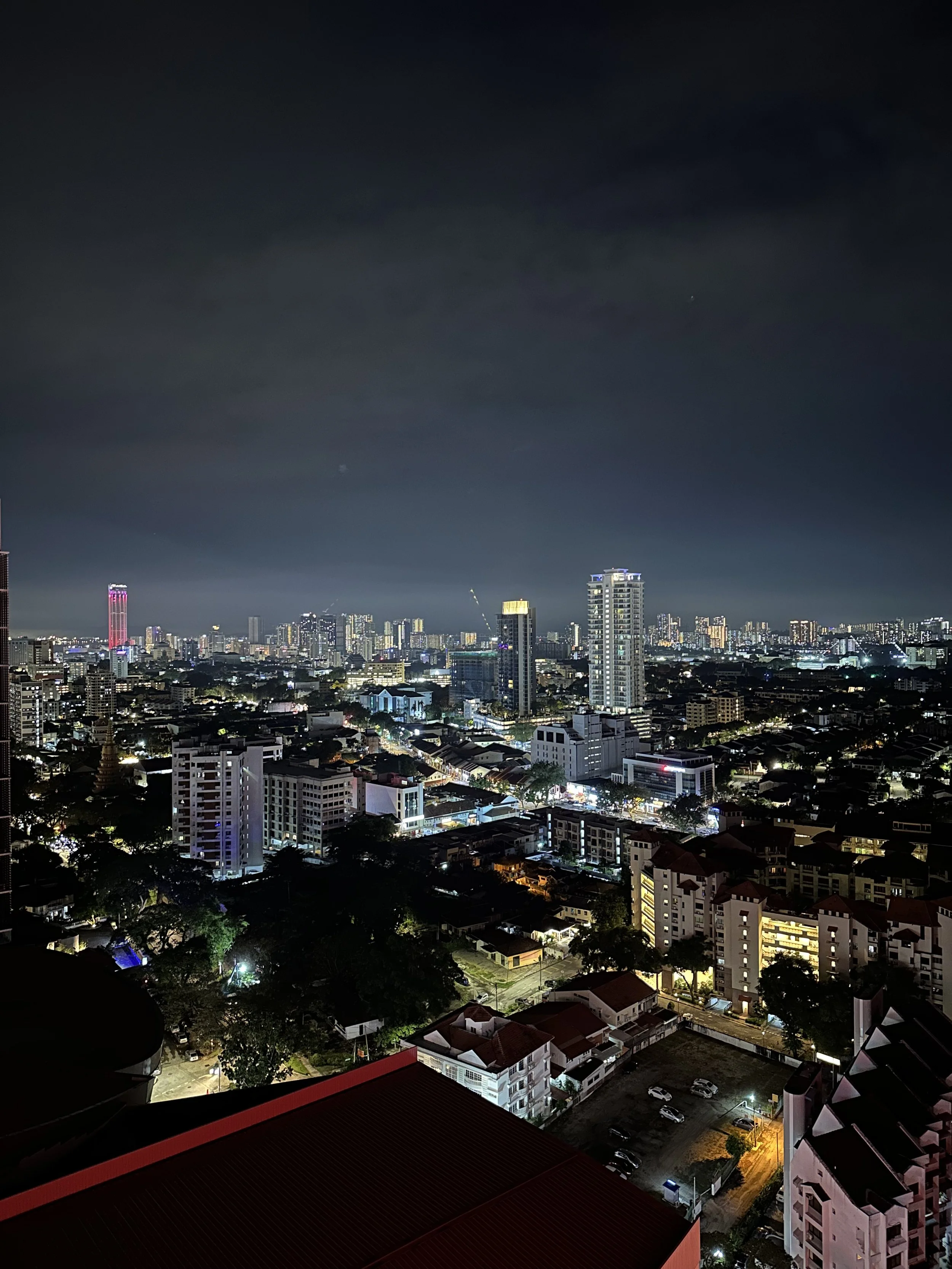
After weeks of jungle, beaches and wildlife: a city stop that turned out to be the most culturally rich part of the entire trip.
We almost skipped George Town. Two days felt like a brief stop rather than a destination in its own right, and after Borneo and the Perhentians, a city visit felt like a step down in excitement.
We were wrong.
George Town is unlike anywhere else we visited in Malaysia, or in Southeast Asia, for that matter. Within a few square kilometres, you have Chinese clan houses that have stood for over a century, Hindu temples next to colonial-era shophouses, murals painted by a Lithuanian artist that have become icons of the city, and a food scene that locals across Malaysia point to as the best in the country. It's dense, walkable, and endlessly interesting.
Two days was enough to see the highlights. It wasn't enough to feel like we'd seen everything.
Is George Town Worth Visiting?
Yes. especially if you've been spending the rest of your Malaysia trip in nature. George Town offers a completely different kind of experience: cultural depth, history, incredible food, and a UNESCO-listed old town that rewards slow exploration on foot. It's not an obvious choice for a Southeast Asia beach trip, which is exactly why it tends to surprise people.
How Many Days Do You Need in George Town?
2 days is enough for the main highlights: Kek Lok Si Temple, the street art trail, Little India, and the heritage shophouse streets. If you're a serious food enthusiast or want to go deeper into the history, three days would suit you better. For us, two nights felt right.
Where to Stay in George Town
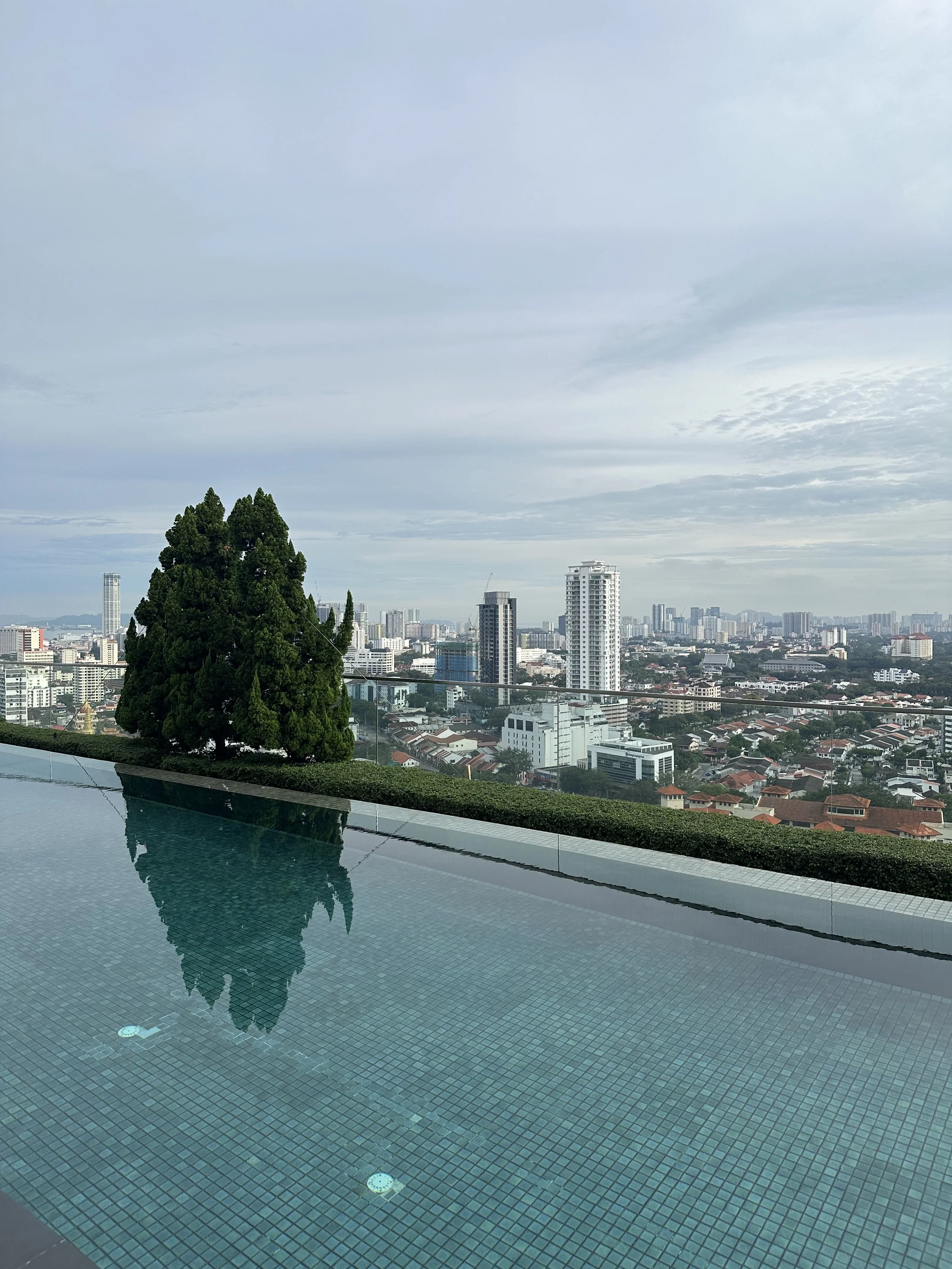
We stayed at the G Hotel Kelawai, and it was the most comfortable hotel of our Malaysia trip. After weeks of jungle lodges and island resorts, the step up to a rooftop pool, large modern rooms, and genuinely good air conditioning felt like a reward.
The location works well: central enough to walk to most of the old town highlights, next to a shopping mall, and surrounded by restaurants covering every cuisine imaginable. For the final stretch of a long trip, it was exactly the right base.
Why George Town Is Different from the Rest of Malaysia
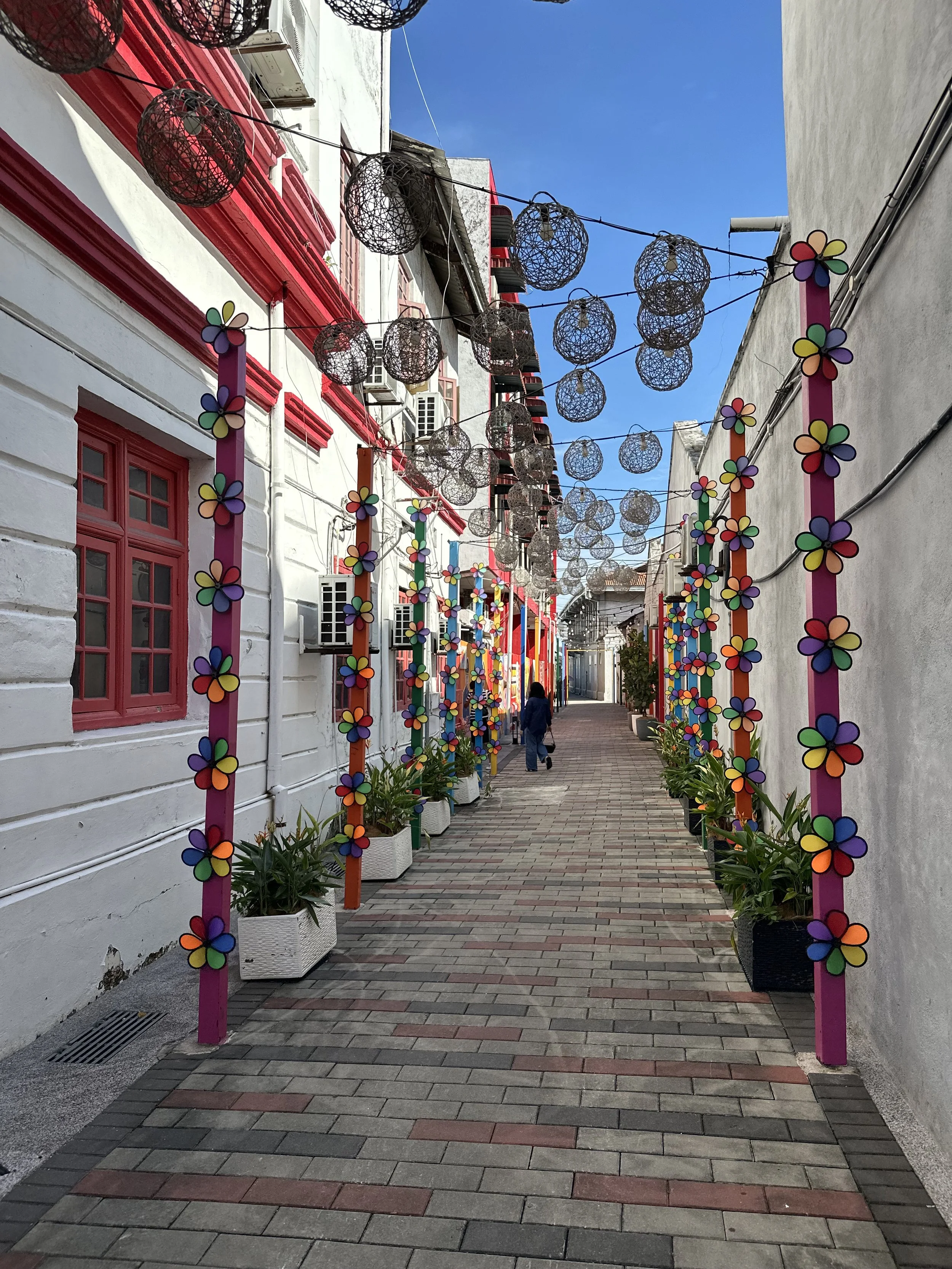
George Town became a UNESCO World Heritage Site for a reason: it's one of the best-preserved examples of a multicultural trading port city in Southeast Asia. The architecture alone tells the story: colonial-era British buildings next to Chinese clan houses next to Indian temples next to Malay mosques, all within a short walk of each other.
The reason for this mix is history. George Town was a major trading hub, and over centuries, waves of Chinese, Indian, and Malay immigrants each left their mark on the city's architecture, food culture, and religious life. Today that layering is what makes it so visually interesting, and so good to eat in.
The ethnic Chinese community in particular has shaped George Town profoundly. Many of the old town's most distinctive buildings, temples, and traditions trace back to Hokkien and Cantonese immigrants who arrived in the 18th and 19th centuries.
Kek Lok Si Temple
The Kek Lok Si Temple is one of the largest Buddhist temples in Malaysia, and one of the most visually impressive religious sites we visited anywhere on the trip.
The temple complex is built into a hillside, which means it unfolds in layers as you walk up through it: colourful prayer halls, ornate pagodas, lanterns strung across covered walkways, gardens at different elevations, and eventually panoramic views over Penang from the top. The centrepiece is an enormous bronze statue of Guanyin, the Goddess of Mercy, visible from much of the city below.
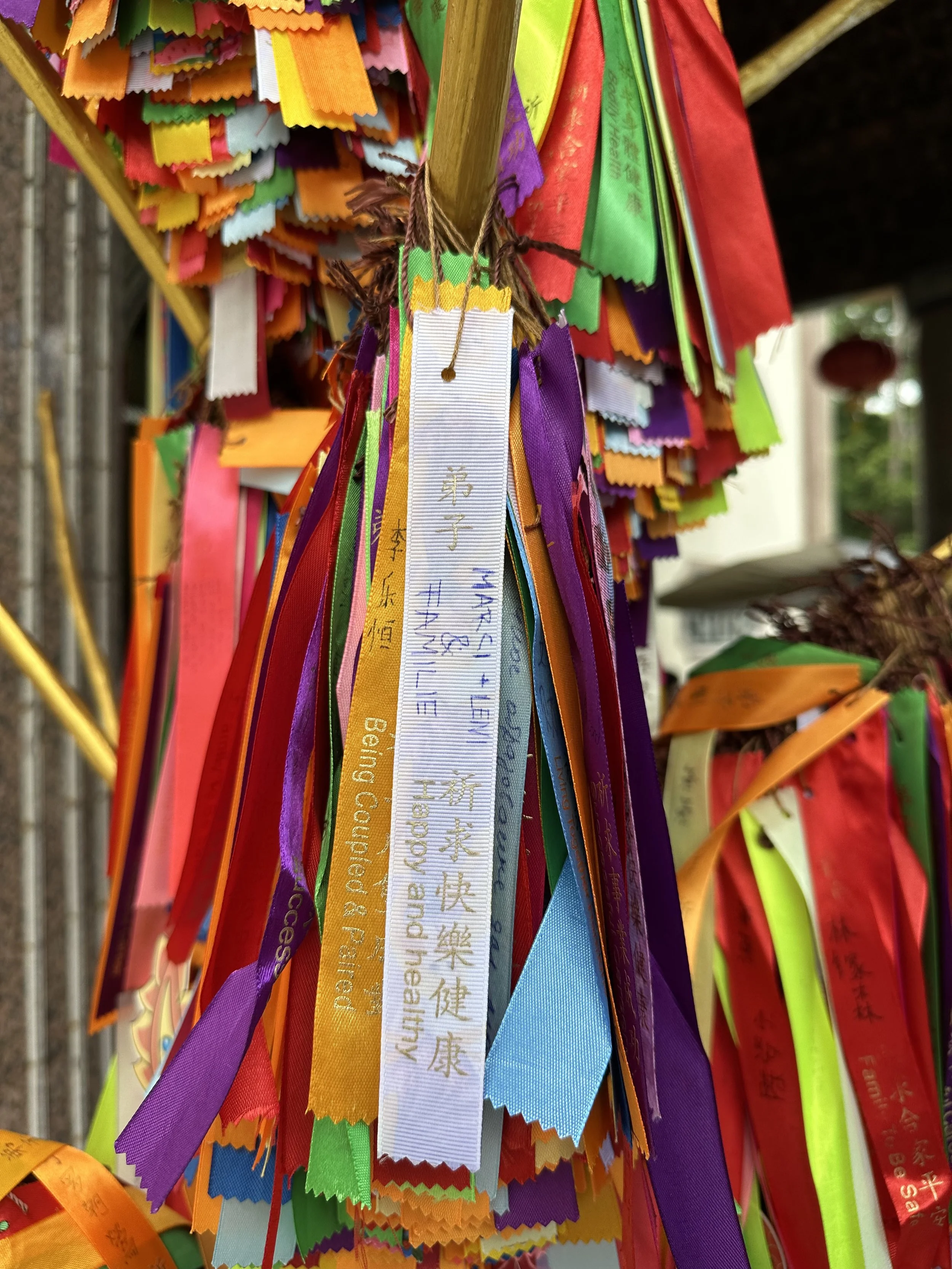
What made our visit particularly memorable was a local tradition we hadn't expected: visitors write wishes, for health, happiness, longevity, family, on small ribbons or banners and hang them on sacred trees within the temple grounds. We wrote wishes for our family and tied them alongside hundreds of others. It was a small gesture, but it made the visit feel genuinely personal rather than just sightseeing.
Practical note: Go in the morning before it gets busy and before the heat peaks. The walk up through the complex is beautiful but the exposed sections are hot by midday.
George Town Street Art
After the temple, we spent most of the afternoon walking the street art trail through the old town, and it was one of the best ways we've experienced a city anywhere.
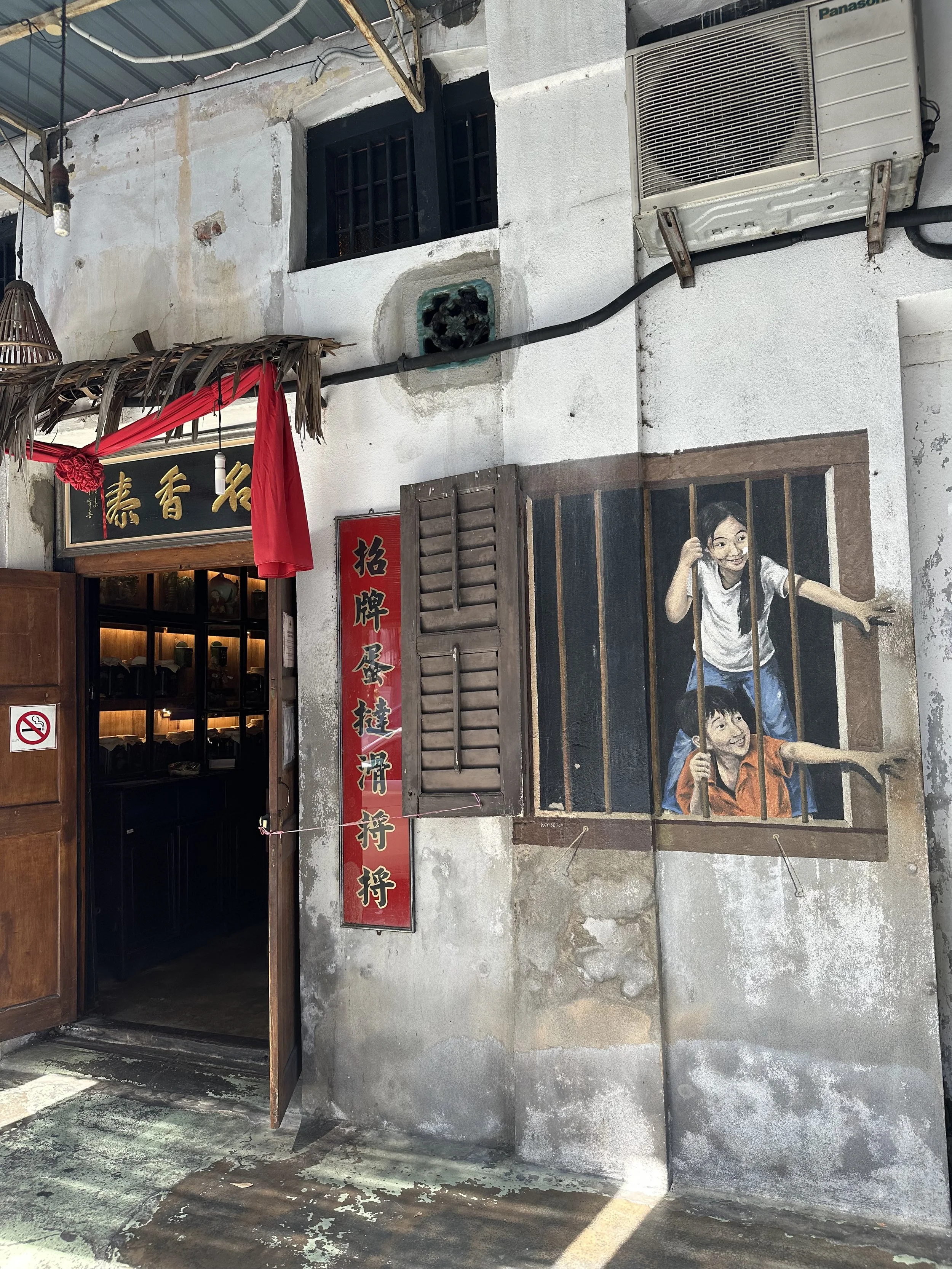
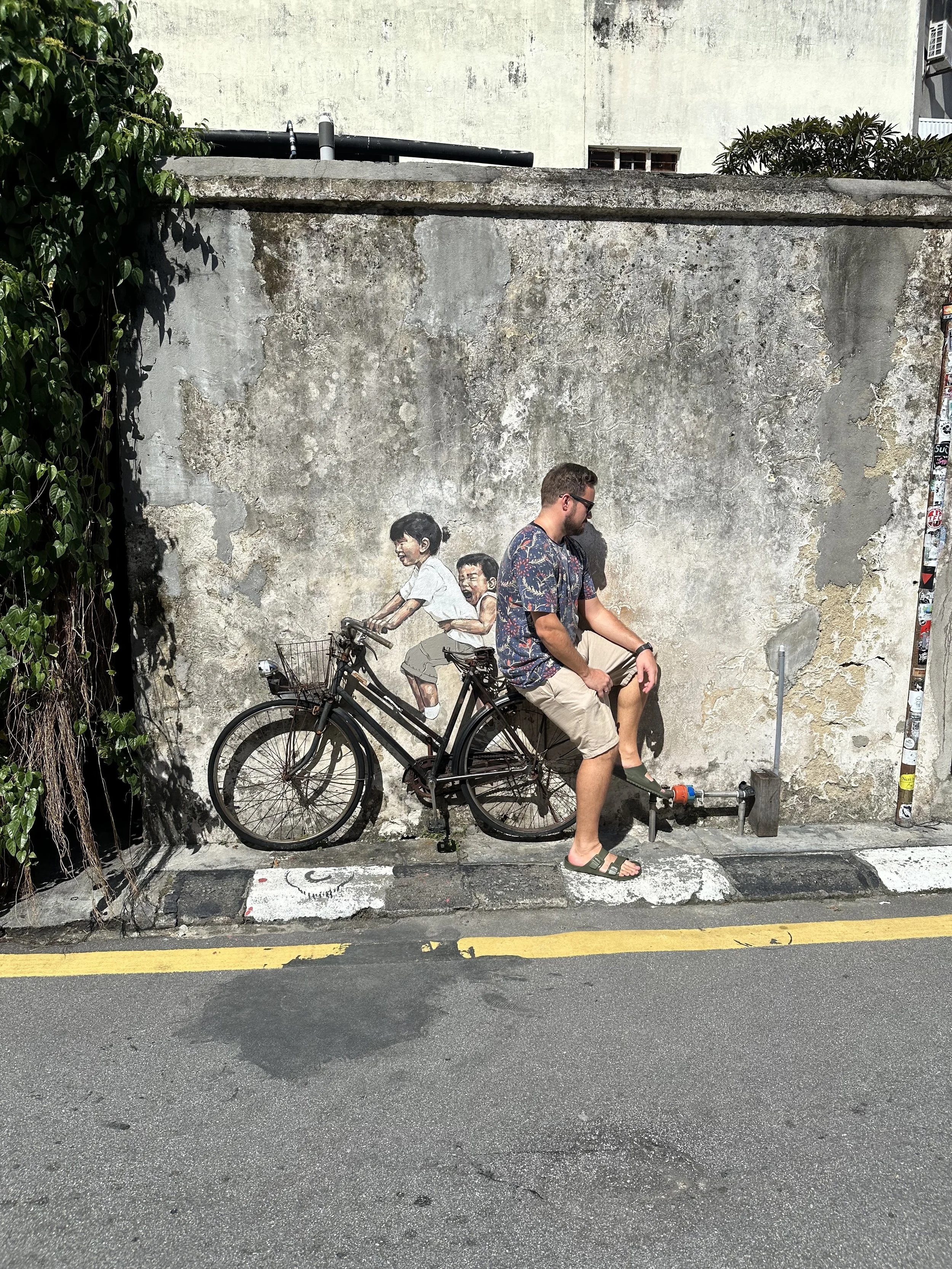
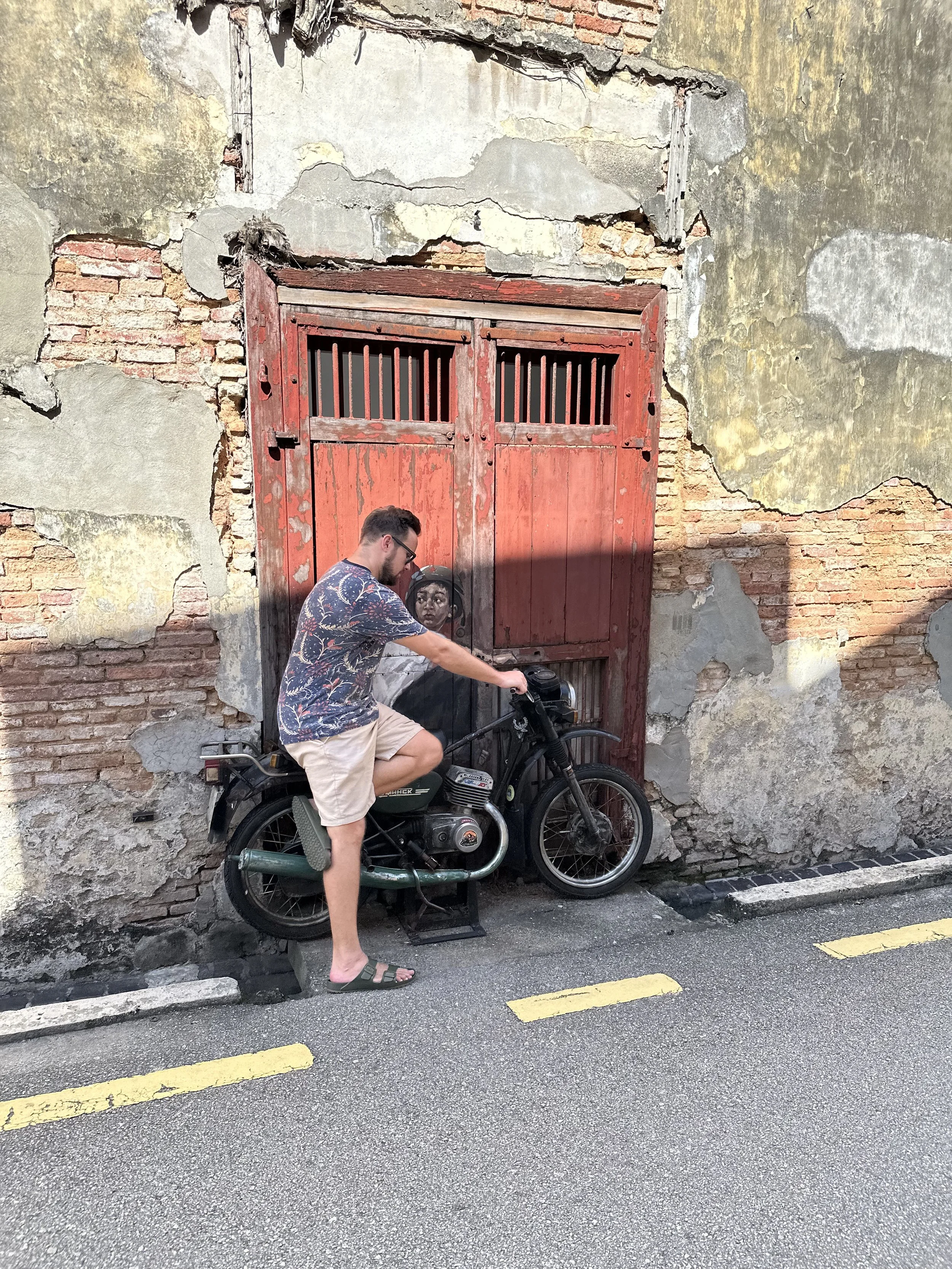
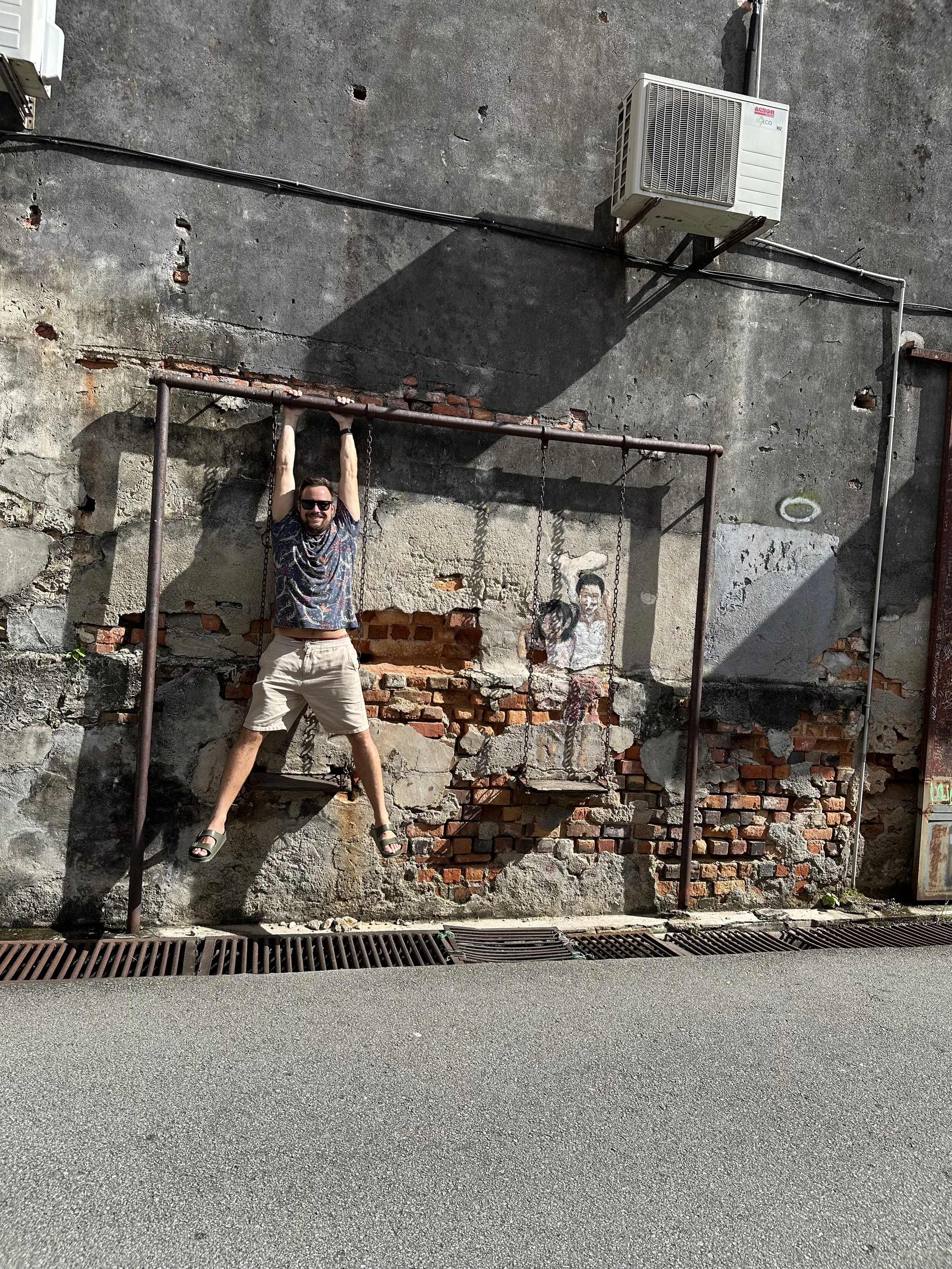
The murals were created largely by Lithuanian artist Ernest Zacharevic, who painted them as part of a 2012 arts festival. They've since become some of the most photographed sights in Malaysia. What makes them work is the way they interact with their surroundings: painted onto the walls of actual buildings, often incorporating real objects (a real bicycle, a real window frame) as part of the composition.
The most famous pieces include:
- "Children on Bicycle": two kids sharing a bike, painted on a heritage shophouse wall
- "Boy on Motorcycle": a child on a real motorbike attached to the wall
- "Swing Girl": a girl on a swing, painted to look like she's swinging from a real window
The best approach is to download a street art map (Google Maps has most of them pinned) and walk without a rigid route. The old town is compact and navigable, and the best discoveries often happen in the streets between the famous pieces.
Little India & the Harbor Area
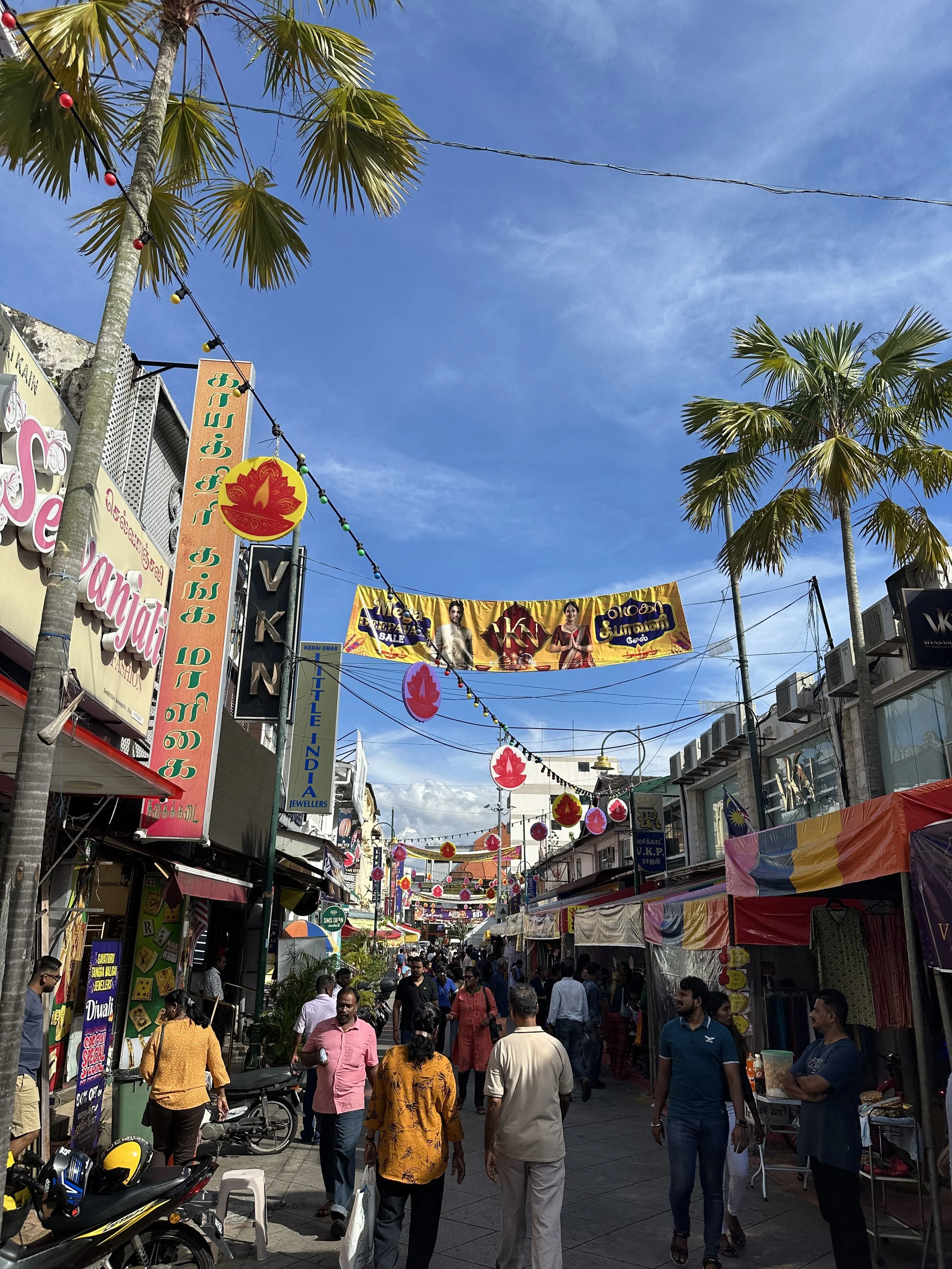
We spent part of one afternoon in Little India, the stretch of streets around Penang Street and Masjid Kapitan Keling, and the contrast with the Chinese heritage streets is striking.
Spice shops, garland sellers, the smell of incense and cooking, Indian music from open doorways, sari fabric in every colour. It's vivid and sensory in a way that demands you slow down. Alongside the Chinese and colonial heritage, Little India is one of the clearest reminders of just how many cultures have shaped this city.
We also walked down to the harbor area: worth doing for the views back toward the old town and the general atmosphere, even if there's not a single specific sight that draws you there.
Final Night in Kuala Lumpur: The Perfect Ending
From George Town we flew back to Kuala Lumpur for one last night before flying home. We made a deliberate choice with the hotel for this final stop: the Platinum Suites, almost entirely because of the rooftop pool with direct views of the Petronas Twin Towers.
It delivered. Sitting at the edge of that pool in the evening with the towers lit up against the night sky was exactly the kind of ending a trip like this deserves.
For dinner we went to Cielo Rooftop Restaurant: a multi-course meal with the KL skyline as the backdrop. More expensive than anywhere else we ate in Malaysia, and worth every ringgit for a final night.
[INSERT IMAGE BLOCK: Platinum Suites photo] [BUTTON: "Book Now" → link to https://www.booking.com/hotel/my/platinum-suites-klcc or hotel's direct website]
George Town Travel Tips
- Walk everywhere in the old town: it's compact and most street art is only discoverable on foot
- Download a street art map before you go: Google Maps has most pieces pinned
- Visit Kek Lok Si early morning to avoid crowds and midday heat
- George Town has arguably the best food scene in Malaysia: don't waste meals at the hotel
- Grab works well here for getting to and from the airport or further-out attractions
- Two full days is enough; three is ideal if food is a priority for you
Frequently Asked Questions: George Town & Penang
What is George Town known for? George Town is famous for its UNESCO-listed heritage architecture, street art, multicultural atmosphere, and food scene: widely considered the best in Malaysia. The city's layered Chinese, Indian, Malay, and colonial British history is visible in its buildings, temples, and streets.
Is George Town worth visiting? Yes. particularly for travellers interested in culture, food, history, and photography. It offers a completely different experience from Malaysia's beach and nature destinations and is one of the most distinctive cities in Southeast Asia.
How many days should you spend in George Town? 2 days covers the highlights at a comfortable pace. 3 days is better if you want to explore the food scene properly or go deeper into the heritage neighbourhoods.
Is George Town walkable? Very: the UNESCO heritage zone is compact and most of the key attractions are within easy walking distance of each other. It's one of the few places in Malaysia where you genuinely don't need transport for most of the day.
What is the most famous temple in Penang? Kek Lok Si Temple is the most famous: one of the largest Buddhist temples in Malaysia, built into a hillside with a massive statue of Guanyin at the top.
Is George Town or Langkawi better? They serve completely different purposes. Langkawi is for beaches, nature, and outdoor activities. George Town is for culture, food, history, and street art. Both are worth doing: ideally in the same trip, which is exactly how we approached it.
And that was Malaysia: three weeks, six destinations, more wildlife than we expected and better food than we had any right to hope for. If you're planning the same route, start here: 👉 Back to our full Malaysia 3-week itinerary →
All recommendations are based on our own experience. We link directly to the hotels, tours and services we used ourselves.