Malaysia
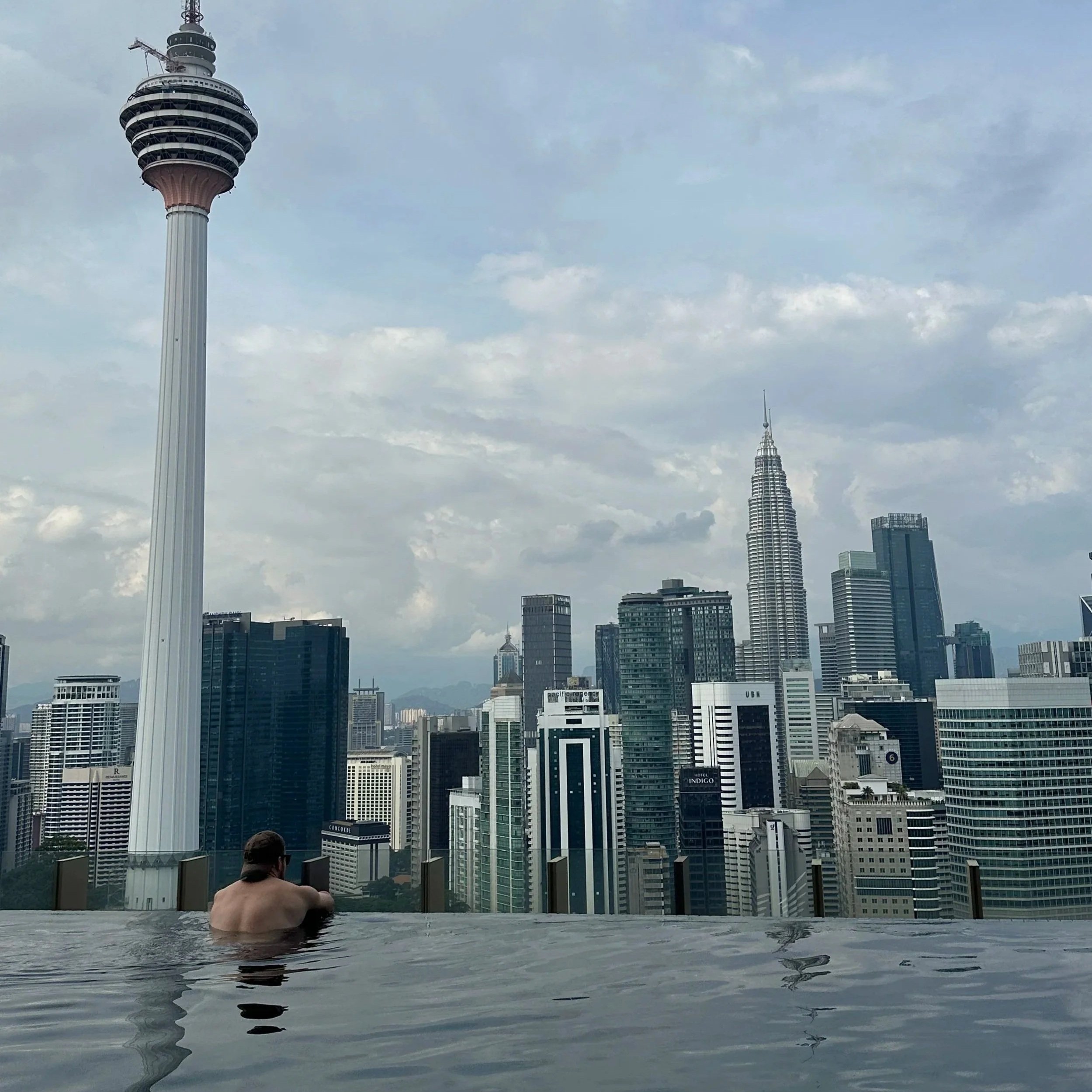
The rooftop pool view from our hotel in the city center of Kuala Lumpur
Malaysia 3-Week Itinerary: Kuala Lumpur, Borneo, Perhentian Islands & More
The complete honest guide — from orangutan jungle treks to turquoise island beaches, planned by someone who actually did it.
We almost didn't book Malaysia. It felt complicated — too spread out, too many regions, too much planning. We spent weeks figuring out the right route, the right timing, the right islands. Then we went. Three weeks later, standing knee-deep in the South China Sea on the Perhentian Islands, sunburned and still smiling from a morning spent watching wild orangutans in Borneo — we couldn't believe we'd hesitated.
Malaysia turned out to be one of the most diverse countries we've ever travelled through. Within a single trip, we went from the glass towers of Kuala Lumpur to silent rainforest trails in Borneo, from the colonial streets of George Town to some of the clearest water we've ever snorkelled in. No two days looked the same.
This guide is everything we learned — the route, the timing, the practical stuff, and the honest details nobody tells you beforehand. So you can skip the weeks of planning and just go.
Our 3-Week Malaysia Route at a Glance
Here's exactly how we structured the trip — and why it worked:
- Day 1–4 — Kuala Lumpur — Petronas Towers, street food, Batu Caves
- Day 4–10 — Borneo (Kuching) — Semenggoh orangutans, Bako National Park
- Day 10 — Kota Bharu — Overnight stop & transit
- Day 11–15 — Perhentian Islands — Snorkelling, beach, total switch-off
- Day 15–19 — Langkawi — Island landscapes, mangroves, cable car
- Day 19–21 — George Town — Street art, Penang food scene
- Day 21–22 — Kuala Lumpur — Final night, depart
Each destination gets its own detailed guide — links below. But first, the essentials.
Why Malaysia Should Be on Your Radar
Malaysia rarely gets the spotlight that Thailand or Bali do — and honestly, that's part of what makes it so good. Less crowded beaches. More genuine experiences. A food culture that genuinely rivals anywhere in the world. And wildlife encounters in Borneo that are in a completely different league to anything else in Southeast Asia.
If you're looking for a trip that gives you real variety — city, jungle, beach, culture — without burning three countries' worth of budget, Malaysia delivers.
Best Time to Visit Malaysia
This is the question that took us the longest to figure out, because Malaysia doesn't have one monsoon season — it has two, on opposite coasts. Get the timing wrong and you could land on a closed island or in a week of heavy rain.
Here's how to think about it:
West Coast (Kuala Lumpur, Langkawi, Penang / George Town)
Best months: November to April
The west coast is at its driest and sunniest during this window. Humidity is lower, beaches are calm, and sightseeing conditions are ideal. If your trip centres around KL, Langkawi, and Penang, this is your window.
East Coast (Perhentian Islands, Redang, Tioman)
Best months: March to October
The east coast is hit hard by the northeast monsoon from November to February — so hard that most island resorts and boat services shut down completely during this period. The Perhentians are genuinely closed. Don't risk it.
We visited in September and October, which turned out to be the sweet spot: the east coast was fully open with clear water and calm seas, while the west coast was warm and dry. It's one of the few times in the year where both sides align.
Our honest take: If you're doing a route like ours that combines east coast islands with west coast destinations, September–October or March–May are your best bets.
Borneo (Kuching, Bako, Semenggoh)
Best months: March to October
Borneo is tropical year-round — some rain is always possible — but the drier months make a genuine difference for jungle trekking and wildlife visibility. We visited in this window and found trails accessible and wildlife activity noticeably higher.
Practical Travel Information for Malaysia
Getting Around: Domestic Flights Are the Move
Malaysia is large, and the regions are far apart. Trying to do this trip overland would eat a week of your time. We took 6 domestic flights — and it was by far the best decision we made. Air Asia dominates domestic routes and prices are genuinely cheap, often €20–40 per leg if you book in advance.
For getting around within Kuala Lumpur specifically: download the Grab app before you land. It's the Southeast Asian equivalent of Uber, works everywhere in the city, and eliminates any awkward taxi haggling. We used it constantly.
Currency
Malaysia uses the Malaysian Ringgit (MYR). At the time of our trip, roughly 5 MYR to 1 EUR. Cash is useful for markets and smaller restaurants; cards are widely accepted in cities and larger hotels.
Language
The official language is Malay, but English is very widely spoken — in cities, tourist areas, hotels, and most restaurants. We never had a communication issue anywhere on this trip.
Is Malaysia Expensive?
Compared to Singapore or Western Europe, Malaysia is very affordable. Here's a rough guide based on our experience:
- Budget traveller: €40–60/day (hostels, street food, local transport)
- Mid-range: €80–120/day (comfortable hotels, sit-down restaurants, activities)
- Higher comfort: €150+/day (boutique resorts, private tours)
The Perhentian Islands and Langkawi tend to be slightly pricier than the mainland, but still very reasonable by European standards.
Internet & eSIM
Mobile coverage in Malaysia is generally excellent — even in areas that surprised us, like parts of Borneo. Instead of buying a local SIM card at the airport, we used a Holafly travel eSIM, which we'd recommend for the convenience alone: instant activation before you leave home, unlimited data, no physical card to swap, and it worked from the moment we landed.
👉 Check current prices and get a discount here (insert Holafly affiliate link)
Culture & Religion
Malaysia is one of Southeast Asia's most culturally layered countries — Malay, Chinese, and Indian influences are all present in the food, architecture, festivals, and daily life. It's genuinely part of what makes the country so interesting.
A few things worth knowing:
- Dress respectfully when visiting mosques or Hindu temples — covered shoulders and knees
- Remove shoes before entering religious sites
- Ramadan is observed widely — be mindful of eating and drinking in public during daylight hours if your trip coincides
George Town on Penang island is probably the best single place to experience this cultural mix — the food scene alone is worth the trip.
Wildlife
Borneo is the main event for wildlife in Malaysia, but remarkable encounters are possible across the country. On our trip we saw:
- Wild orangutans at Semenggoh Wildlife Centre, Kuching
- Proboscis monkeys in Bako National Park
- Sea turtles snorkelling in the Perhentian Islands
- Abundant reef fish and coral throughout the islands
Malaysian Borneo in particular is one of the few places on earth where you can still see wild orangutans at reasonably close range. It was one of the most memorable moments of the whole trip.
How Long Do You Need in Malaysia?
Our honest recommendation: 3 weeks minimum if you want to combine cities, islands, wildlife, and rainforest without feeling rushed. Two weeks is doable but means making real sacrifices — either cutting Borneo (don't) or cutting one of the islands.
If you only have 10–14 days, we'd suggest focusing on either the Borneo + KL combination, or the island + George Town route, rather than trying to squeeze everything in.
Detailed Guides for Each Destination
Ready to go deeper? Here's everything we wrote for each stop:
- 📍 Kuala Lumpur — City Guide & What to Do
- 📍 Borneo — Orangutans, Bako & the Jungle
- 📍 Perhentian Islands — The Complete Beach Guide
- 📍 Langkawi — Island Life & What to See
- 📍 George Town — Food, Street Art & Culture
Frequently Asked Questions About Travelling Malaysia
Is Malaysia safe to travel? Yes — Malaysia is one of the safer destinations in Southeast Asia. Normal city precautions apply in KL (watch your belongings in crowded areas), but we never felt unsafe at any point during the trip.
Do I need a visa for Malaysia? Most European, US, Australian, and UK passport holders can enter Malaysia visa-free for up to 90 days. Always check the current requirements for your specific nationality before travelling.
Can I do Malaysia on a budget? Absolutely. Street food is exceptional and costs almost nothing, domestic transport is cheap, and budget accommodation is widely available. It's very possible to travel comfortably for €50–60/day.
Is Malaysia good for solo travellers? Yes — English is widely spoken, transport links are good, and the country is generally easy to navigate independently. The Perhentian Islands in particular have a relaxed, social atmosphere that's great for solo travel.
What vaccinations do I need for Malaysia? Consult your doctor, but commonly recommended: Hepatitis A, Typhoid, and being up to date on routine vaccinations. For Borneo specifically, some travellers also consider Rabies vaccination depending on activities planned. Check with a travel health clinic before departure.
All recommendations in this guide are based on our own experience. Some links may be affiliate links — if you book through them, we earn a small commission at no extra cost to you. We only recommend things we actually used.