Kuala Lumpur
3 Days in Kuala Lumpur: Honest Itinerary, Best Areas & Travel Tips
Our firsthand guide to KL — what's worth it, what's overhyped, and why this city made a better first impression than we expected.
We landed in Kuala Lumpur with low expectations and left genuinely impressed. KL doesn't always get the credit it deserves — overshadowed by Bangkok or Singapore in most Southeast Asia conversations — but it turned out to be the perfect place to ease into Malaysia. Three days, a rooftop pool with a skyline view, incredible food at every corner, and a city that somehow blends glass towers with Hindu temples and Chinese street markets without missing a beat.
We spent 3 nights here before flying to Borneo, and looking back, it was exactly the right amount of time. Here's how we'd structure it.
Is 3 Days in Kuala Lumpur Enough?
Yes — 3 days in Kuala Lumpur is enough to hit all the main highlights without feeling rushed. You'll have time for the Petronas Towers, Batu Caves, KL Tower, Chinatown, and some proper exploration of the city's neighborhoods. If you only have 2 days, it's still doable — but you'll need to prioritise.
Day 1 — Skyline & Iconic Landmarks
Start your first day with the two landmarks that define the KL skyline.
KL Tower (Menara Kuala Lumpur)
Head here in the morning before the crowds build. The tower offers a full 360° panoramic view over the city — on a clear day you can see for miles. It's within easy walking distance from the Bukit Ceylon area, which is also where we'd recommend staying (more on that below).
Petronas Twin Towers — Go at Night
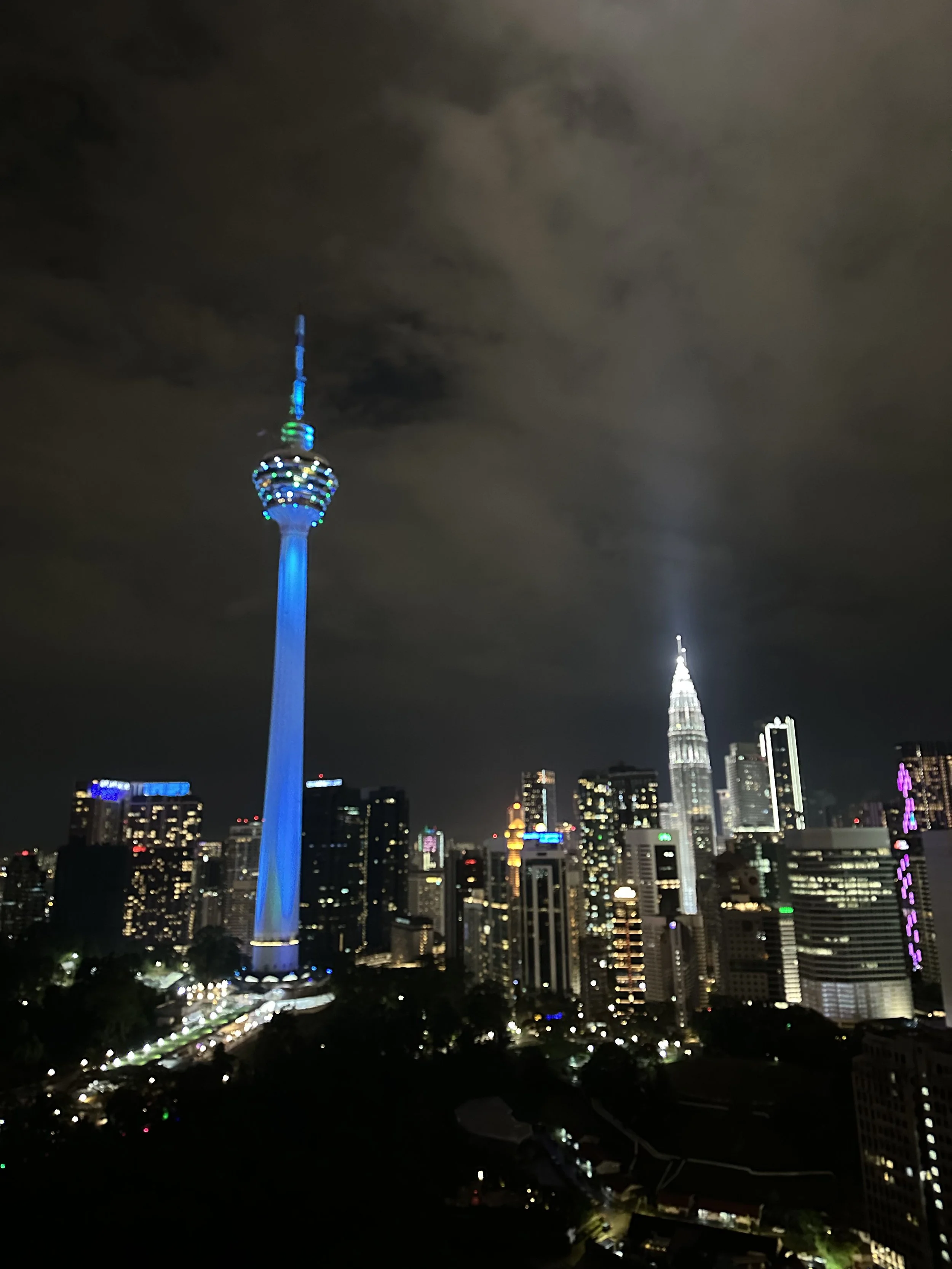
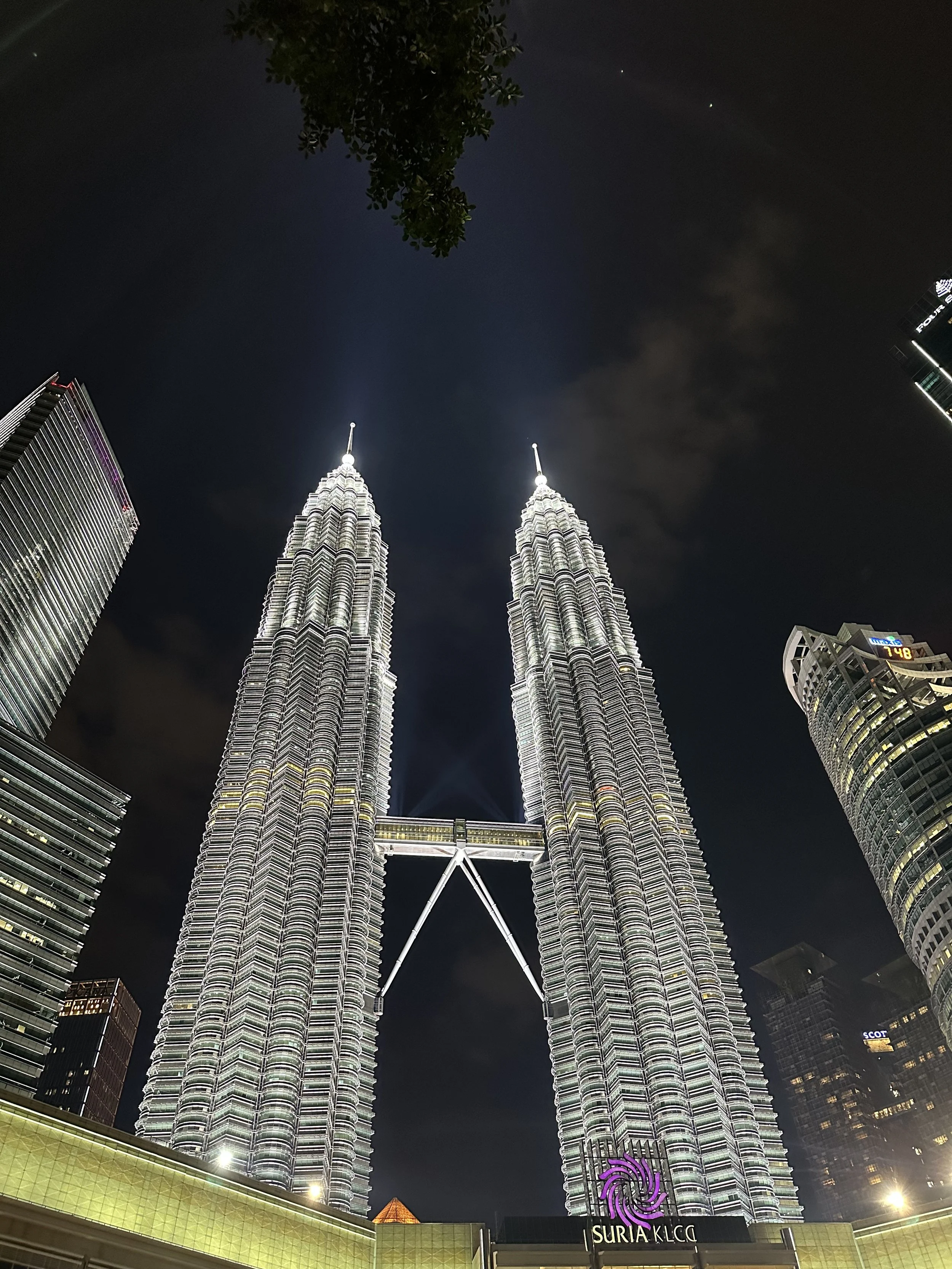
Save the Petronas Towers for the evening. The towers are impressive during the day, but at night they're something else — lit up against the dark sky, with a light and music show that turns the surrounding park into one of the best free photo spots in Southeast Asia. We spent nearly two hours here without noticing.
Our honest take: Skip the paid observation deck unless it's a bucket list item for you. The view from outside at night is better than anything you'd see from inside.
Day 2 — Culture, Temples & Street Food
Batu Caves — Half Day Trip
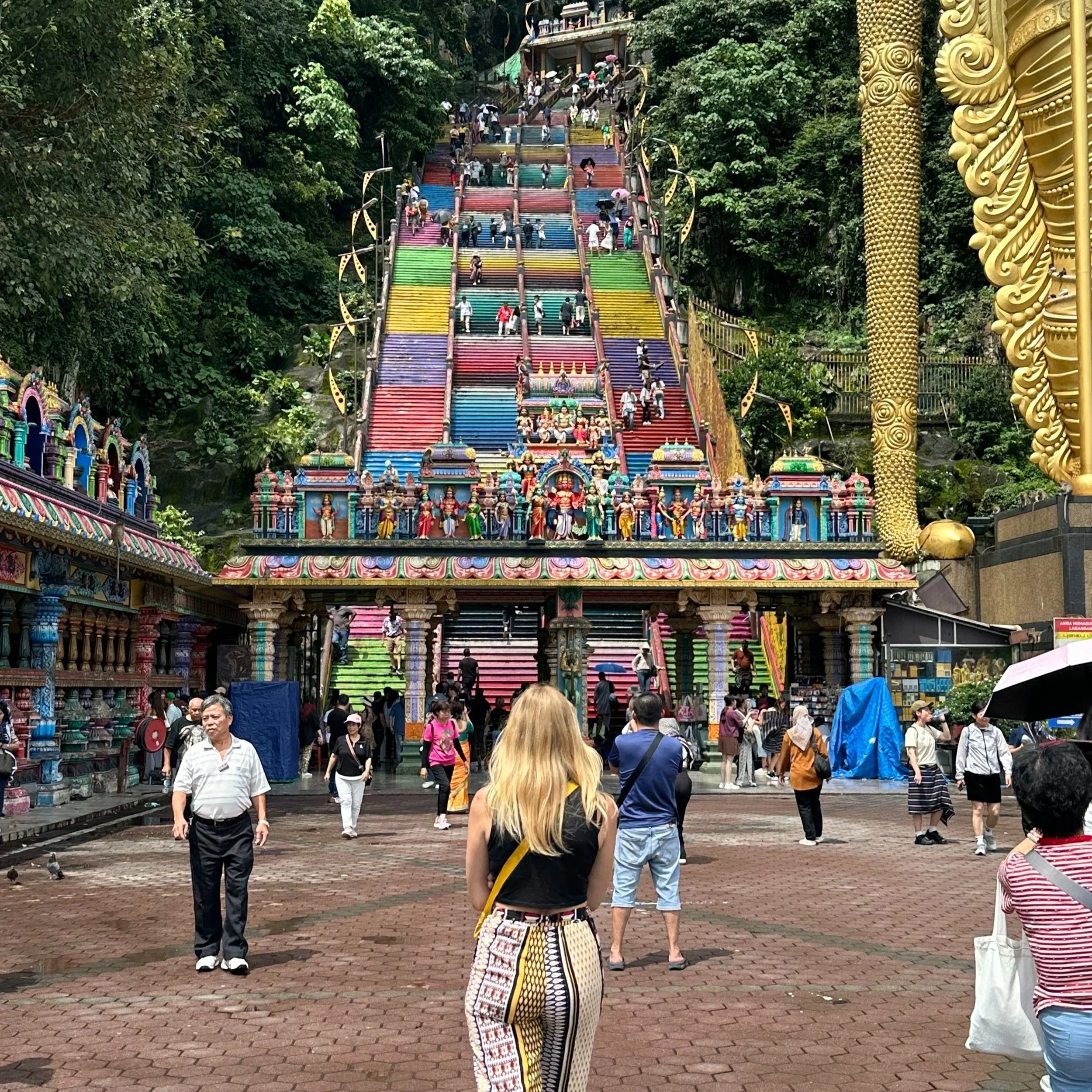
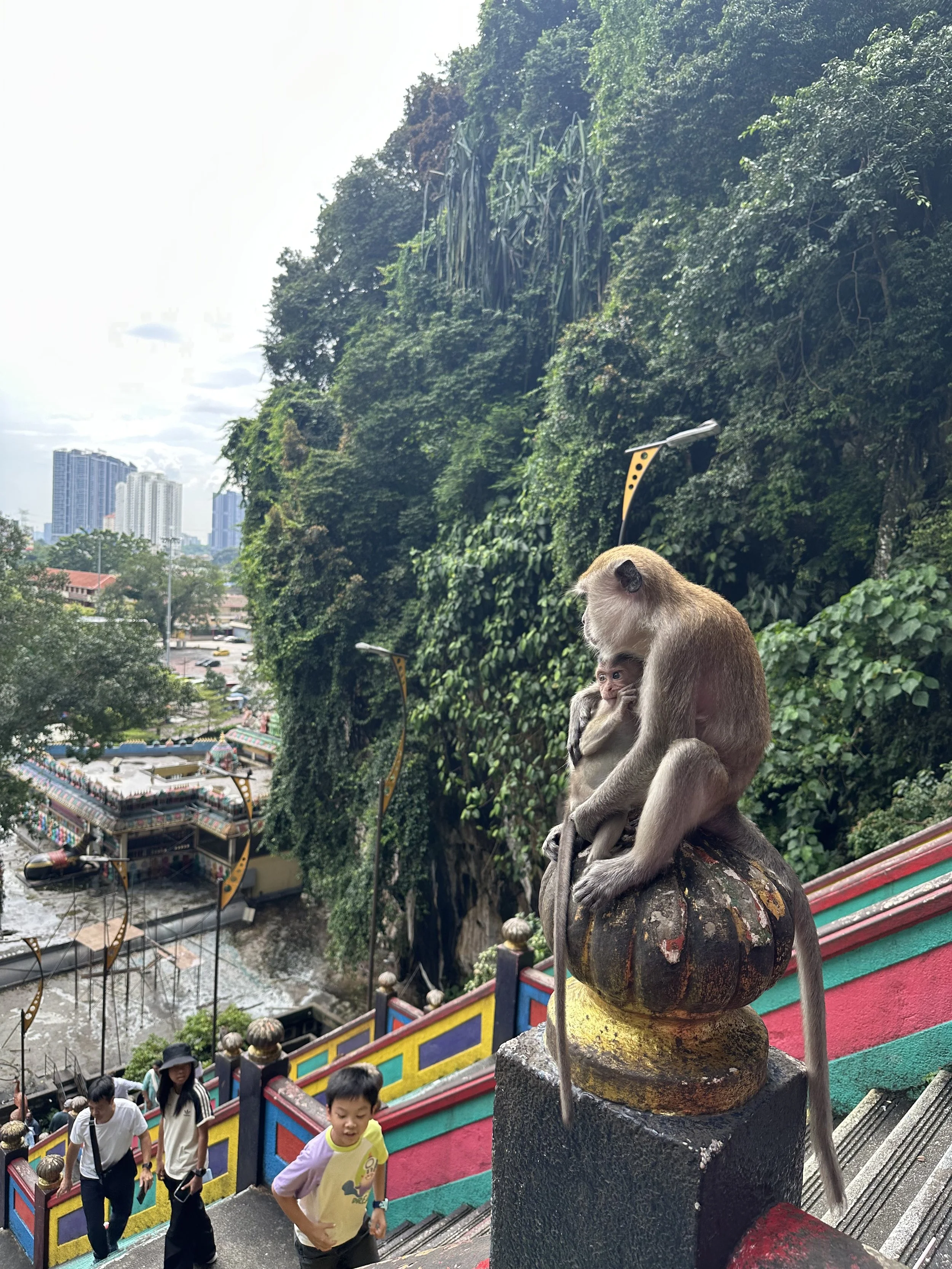
About 30 minutes from the city centre by Grab, the Batu Caves are one of Malaysia's most visited attractions — and they earn it. The 272 rainbow-coloured steps lead up to a series of Hindu temples built inside a massive limestone cave. It's visually striking, genuinely impressive, and free to enter.
Go early — by 10am it gets busy and the heat on the steps becomes unpleasant. We were there by 8:30am and had the place almost to ourselves for the first hour.
Chinatown (Petaling Street)
Back in the city, spend your afternoon in Chinatown. It's loud, colourful, and packed with market stalls, street food, and old shophouses. Good for a wander, picking up cheap souvenirs, and getting a feel for a different side of KL.
Jalan Alor — Street Food Street
Jalan Alor is KL's most famous street food strip and worth at least a walk-through in the evening. We'll be honest — we skipped eating here at the start of our trip and don't regret it. The food is fine but it's very touristy. If you want the real street food experience, wander into the side streets around Chinatown instead.
Day 3 — Malls, Hidden Streets & the Merdeka 118
Malls as an Experience (Not Just Shopping)
KL's malls are not like European shopping centres — they're air-conditioned cities unto themselves, and on a 35°C day they're genuinely a relief. The best ones worth visiting:
- Suria KLCC — directly below the Petronas Towers, great food court
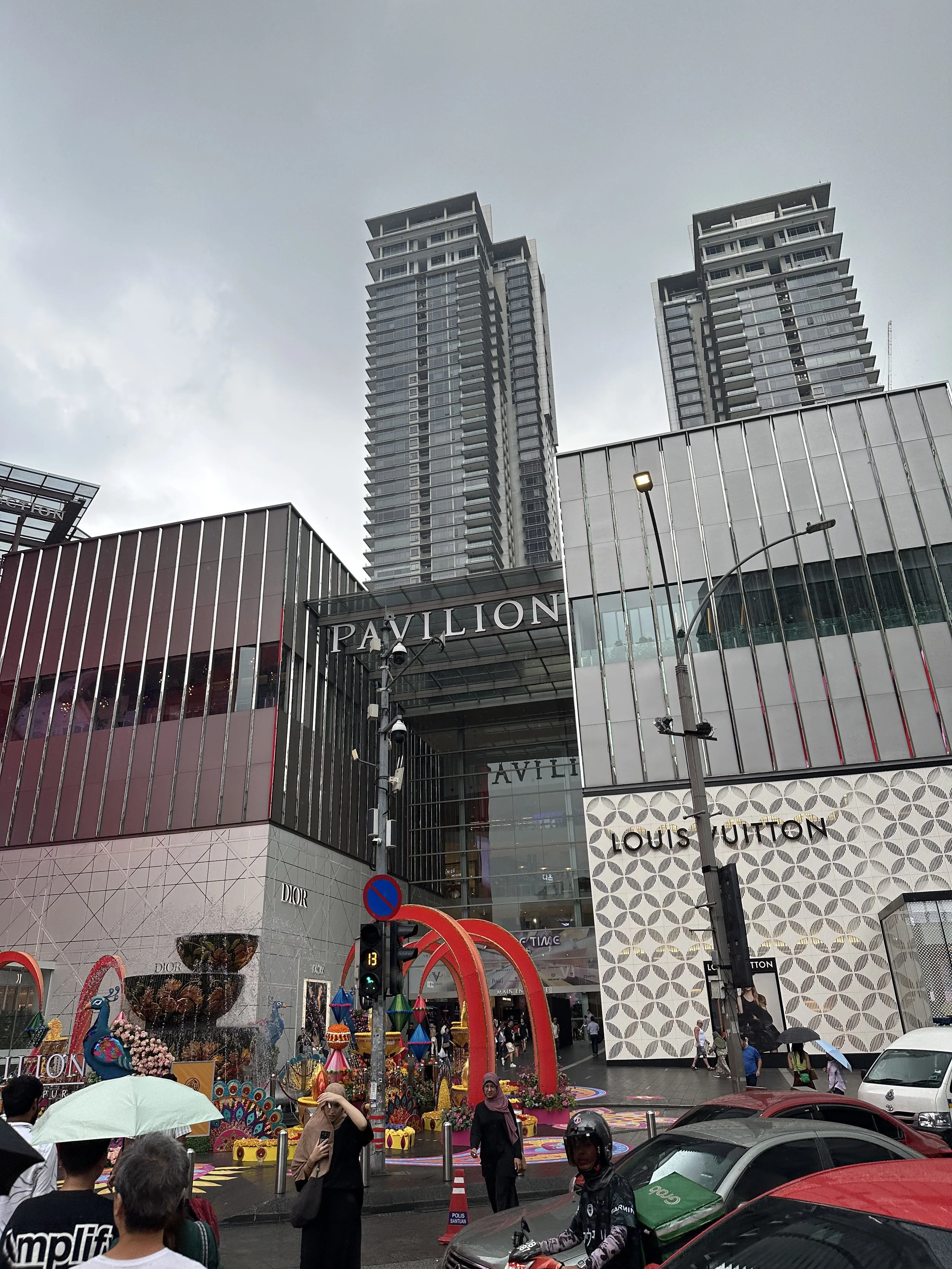
- Pavilion Kuala Lumpur — upscale, good for a browse
- Berjaya Times Square — huge, more local crowd
- Mid Valley Megamall — slightly out of centre but enormous
Merdeka 118
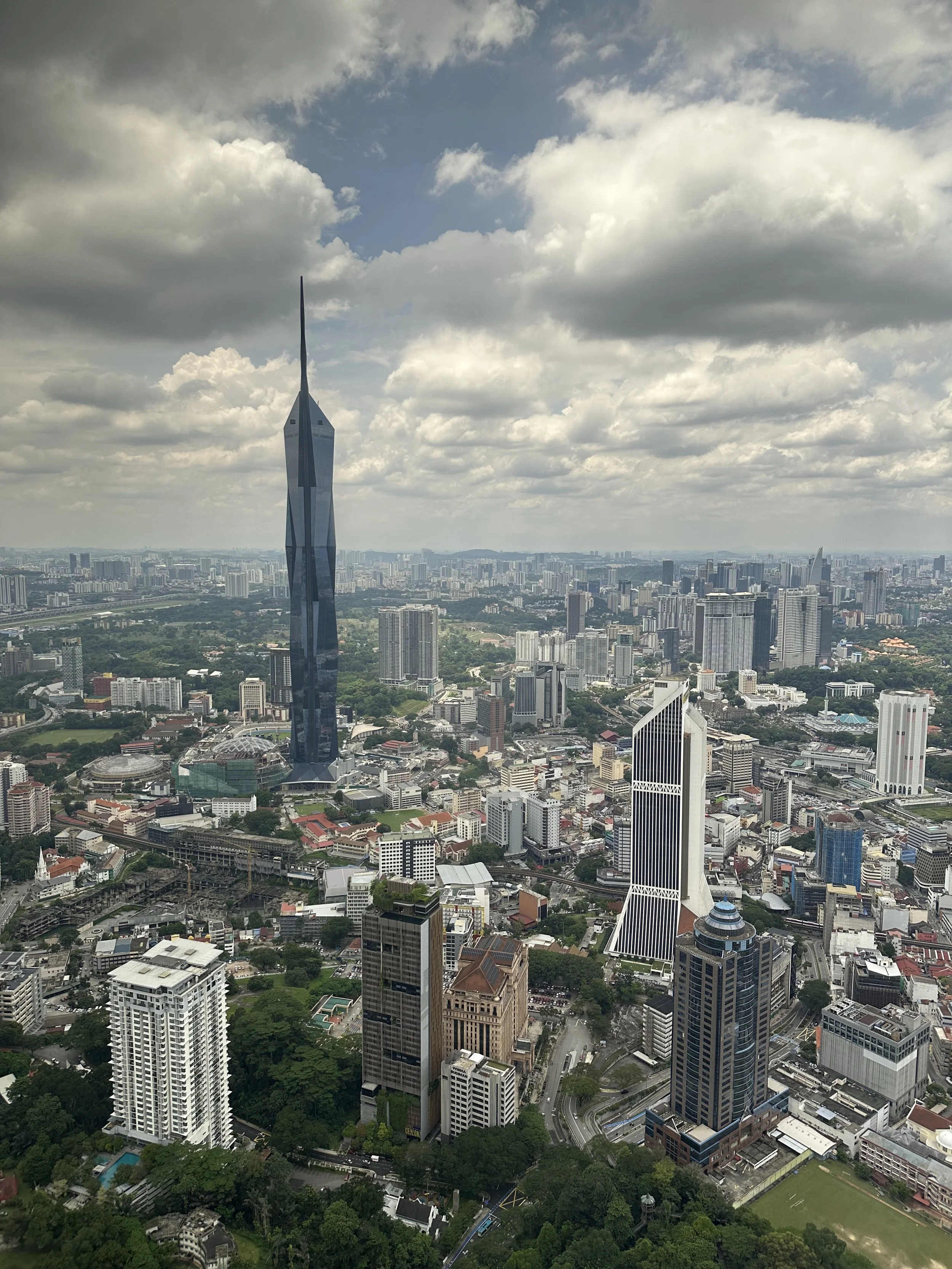
The Merdeka 118 is the second tallest building in the world — and it's right in KL. During our visit it was still not fully open to the public, but even from the outside it's one of the most striking things in the city skyline. Worth walking past and checking what's open at the time of your visit.
Street Art & Local Neighbourhoods
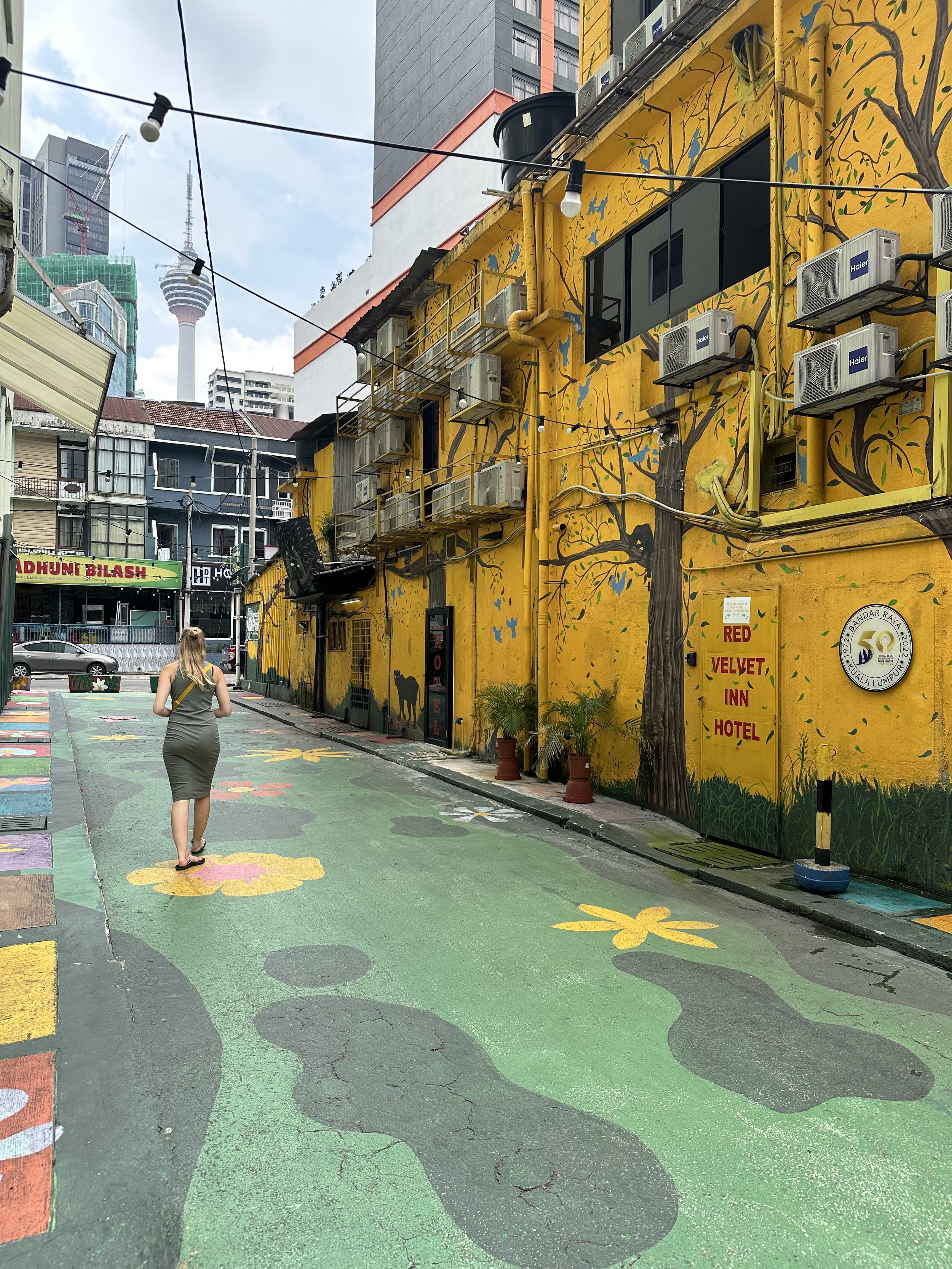
Between the big landmarks, KL rewards slow exploration. The streets around Bukit Bintang and Chow Kit have murals, independent cafes, and a local atmosphere that's completely different from the mall-and-tower version of the city. Build in at least an hour with no agenda.
Where to Stay in Kuala Lumpur
We stayed at Ceylonz Suites in Bukit Ceylon — and we'd stay there again.
Bukit Ceylon is the sweet spot for location: central, walkable to the KL Tower and most of the main attractions, and well-connected by Grab to everything else. The apartment-style rooms are simple and clean rather than luxurious, but for 2–3 nights it's completely practical — and the rooftop pool with its night skyline view is genuinely one of the highlights of staying there. From our room on the 17th floor we had skyline views from the window too.
It's not a luxury hotel. But for the price and location, it's hard to beat.
Other good areas to stay:
- KLCC — right next to the Petronas Towers, premium pricing
- Bukit Bintang — great nightlife and food access, slightly more budget options
Getting Around Kuala Lumpur
One thing to know before you land: download the Grab app. It's the Southeast Asian equivalent of Uber, works everywhere in KL, and prices are very reasonable. We used it for every journey that wasn't walkable — no negotiating, no confusion, just reliable point-to-point transport.
The MRT and monorail are also good options for longer distances, but Grab is faster and easier for most trips.
How to Get from Kuala Lumpur to Kuching (Borneo)
After KL, we flew directly to Kuching — the gateway to Malaysian Borneo. It's a domestic flight of about 1.5 hours, with multiple departures daily. AirAsia dominates this route and prices are cheap if you book in advance — we paid around €25–35 per person.
Kuala Lumpur Travel Tips
- Visit the Petronas Towers at night — the light show is free and unmissable
- Get to Batu Caves before 9am to beat the heat and crowds
- Use Grab for all transport — don't bother with taxis
- Use the malls strategically — they're genuinely good for cooling down midday
- Stay in Bukit Ceylon or KLCC for the best central access
- The street food around Chinatown beats Jalan Alor for authenticity
Frequently Asked Questions — Kuala Lumpur
Is Kuala Lumpur worth visiting? Yes — it's one of the most underrated cities in Southeast Asia. The mix of modern architecture, multicultural neighbourhoods, and food culture makes it genuinely interesting, not just a transit stop.
How many days do you need in Kuala Lumpur? 2–3 days is the sweet spot. Three days gives you enough time to see the main sights without rushing and still have time to explore neighbourhoods at a slower pace.
What is the best area to stay in Kuala Lumpur? Bukit Ceylon and KLCC are the best areas for first-time visitors — central location, walkable to major attractions, and well-connected by Grab.
What are the top things to do in Kuala Lumpur? Petronas Twin Towers (at night), KL Tower, Batu Caves, Chinatown, Merdeka 118, and exploring the city's mall culture are the highlights.
Is Kuala Lumpur safe for tourists? Yes — KL is generally safe. Standard city precautions apply: watch your belongings in crowded markets and at night. We felt comfortable throughout the trip.
How expensive is Kuala Lumpur? Very affordable by European standards. Grab rides cost €1–3, street food meals €2–5, and mid-range restaurants €8–15 per person. Budget travellers can get by on €40–50/day including accommodation.
All recommendations are based on our own experience. Some links may be affiliate links — we earn a small commission at no extra cost to you. We only recommend things we actually used.