Borneo
5 Days in Kuching, Borneo: Orangutans, Bako National Park & Honest Travel Guide
We saw 12 wild orangutans in a single morning. Here's everything you need to know to have the same experience.
We didn't know what to expect from Borneo. We knew there were orangutans. We knew there was rainforest. But nothing quite prepares you for the moment the trees start shaking in the distance, the entire group falls silent, and a wild orangutan emerges from the jungle and walks directly between you and the next visitor.
Kuching turned out to be the most memorable stop of our entire Malaysia trip — and we almost didn't include it. If you're planning a Malaysia itinerary and wondering whether Borneo is worth the detour, the answer is yes. Unequivocally.
Here's exactly how we spent 5 days, what we'd do differently, and what you absolutely cannot miss.
Is 5 Days in Kuching Too Long?
Honestly — yes, slightly. Five days felt a little long if you're focusing purely on the Kuching region. In our case, flight availability to our next destination (the Perhentian Islands) meant we didn't have much choice. But if you're flexible, 3–4 days is the sweet spot — enough for Bako National Park, Semenggoh Wildlife Centre, and some time in the city itself without padding the itinerary.
Where to Stay in Kuching
We stayed at the Waterfront Hotel, a local 5* Hotel and it was the right call. The location is hard to beat: right on the waterfront, directly connected to a shopping mall, surrounded by restaurants, and perfectly positioned for early morning departures to both Bako and Semenggoh. Every day trip started with a pickup from the hotel — having a central, well-connected base made the logistics significantly easier.
The hotel felt modern and comfortable — not luxury, but genuinely good value for what it is.
Day 1–2 — Bako National Park
Bako National Park was our first full day and it set the tone for everything that followed. We booked the tour directly through our hotel, which handled all the logistics: an early morning driver, a guide, and a private boat into the park.
The logistics: It's about 1 hour from the hotel to the port, then a 25-minute boat ride to the park entrance. You register at the ranger's office on arrival — they also sell drinks, snacks, and basic food there. Start early. Some of the best wildlife, including the proboscis monkeys, is only active in the morning hours. By midday the heat and humidity make the trails noticeably harder.
Wildlife We Spotted
Within the first hour of arriving we'd already seen more wildlife than expected:
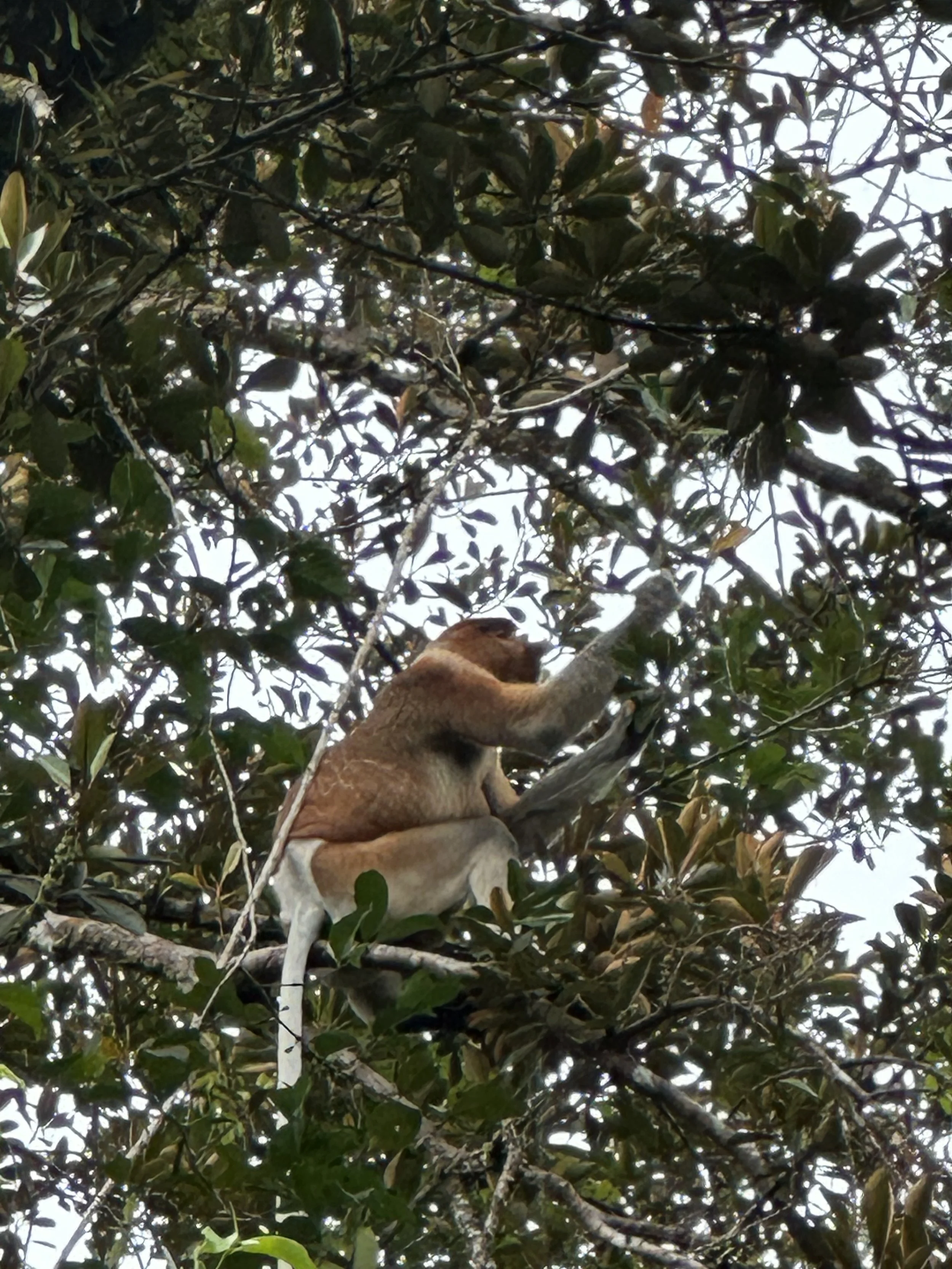
- Proboscis monkeys — the strange, bulbous-nosed monkeys endemic to Borneo, sitting in the trees right at the water's edge
- Dusky leaf monkeys
- Flying lemur
- Wild boars wandering through the ranger station area
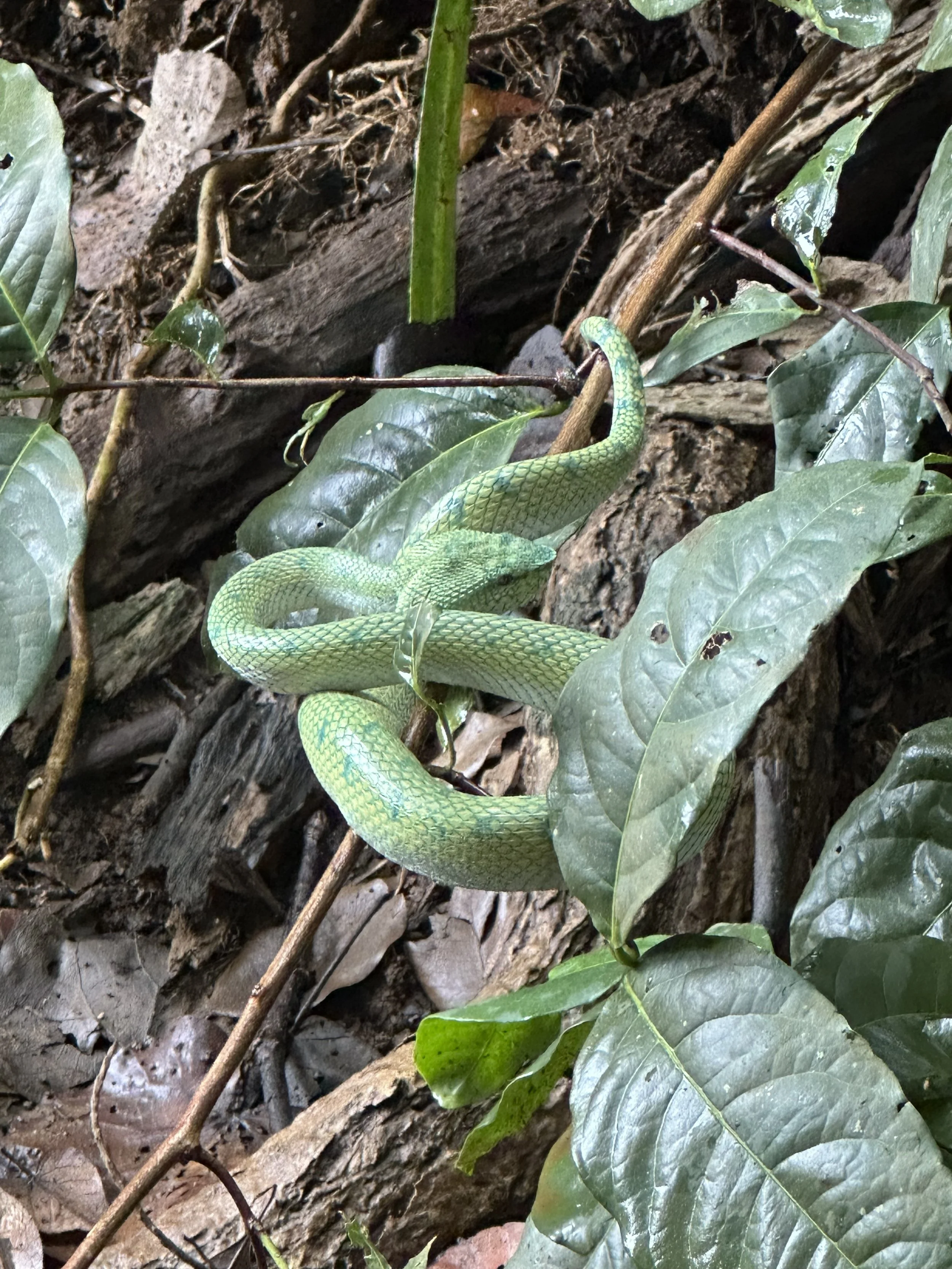
- Small green snakes on the trail
Bako is also known for monitor lizards, macaques, hornbills, bearded pigs, and kingfishers — the wildlife density here is genuinely remarkable for a day trip.
The Trails & Coastline
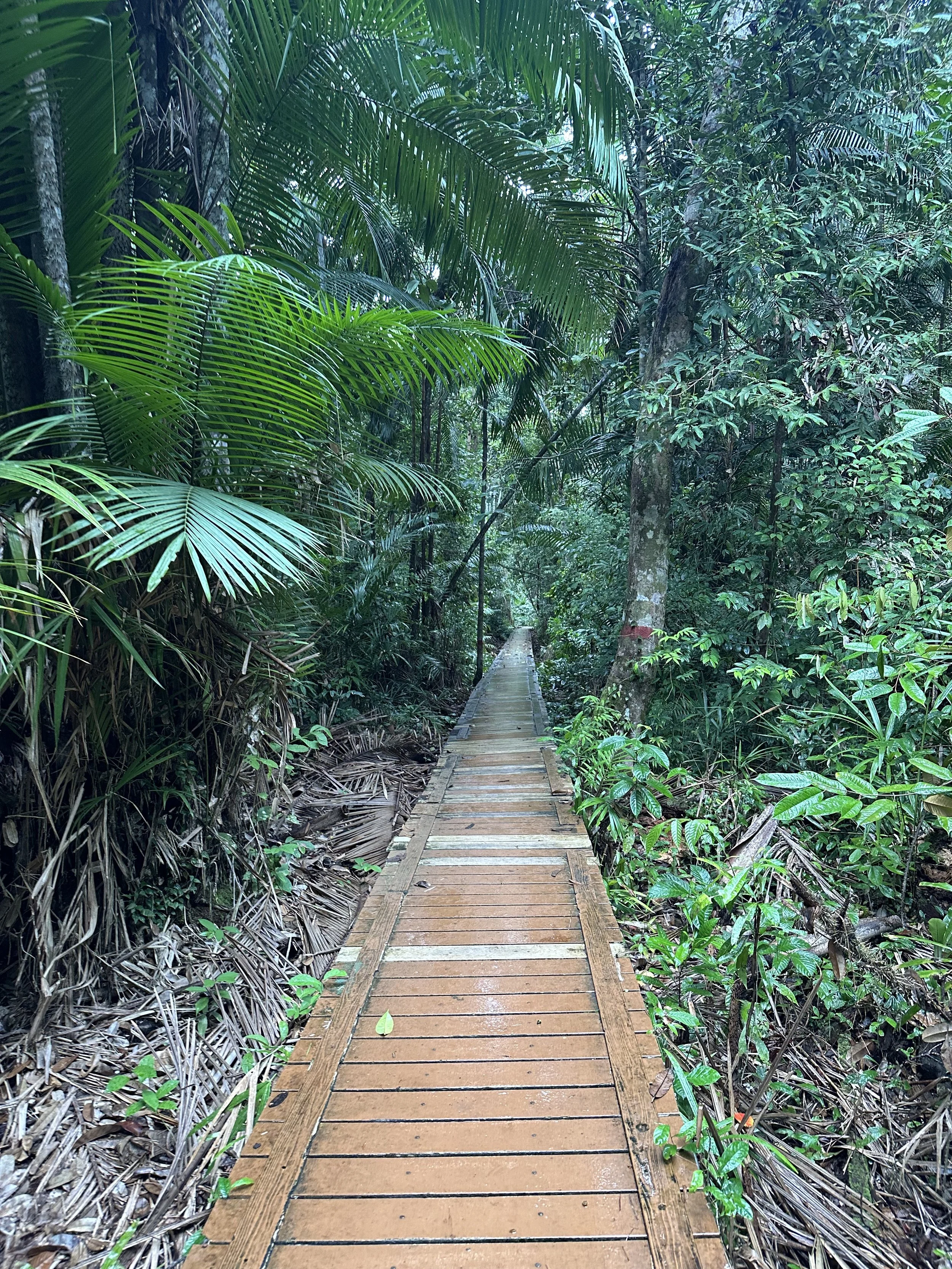
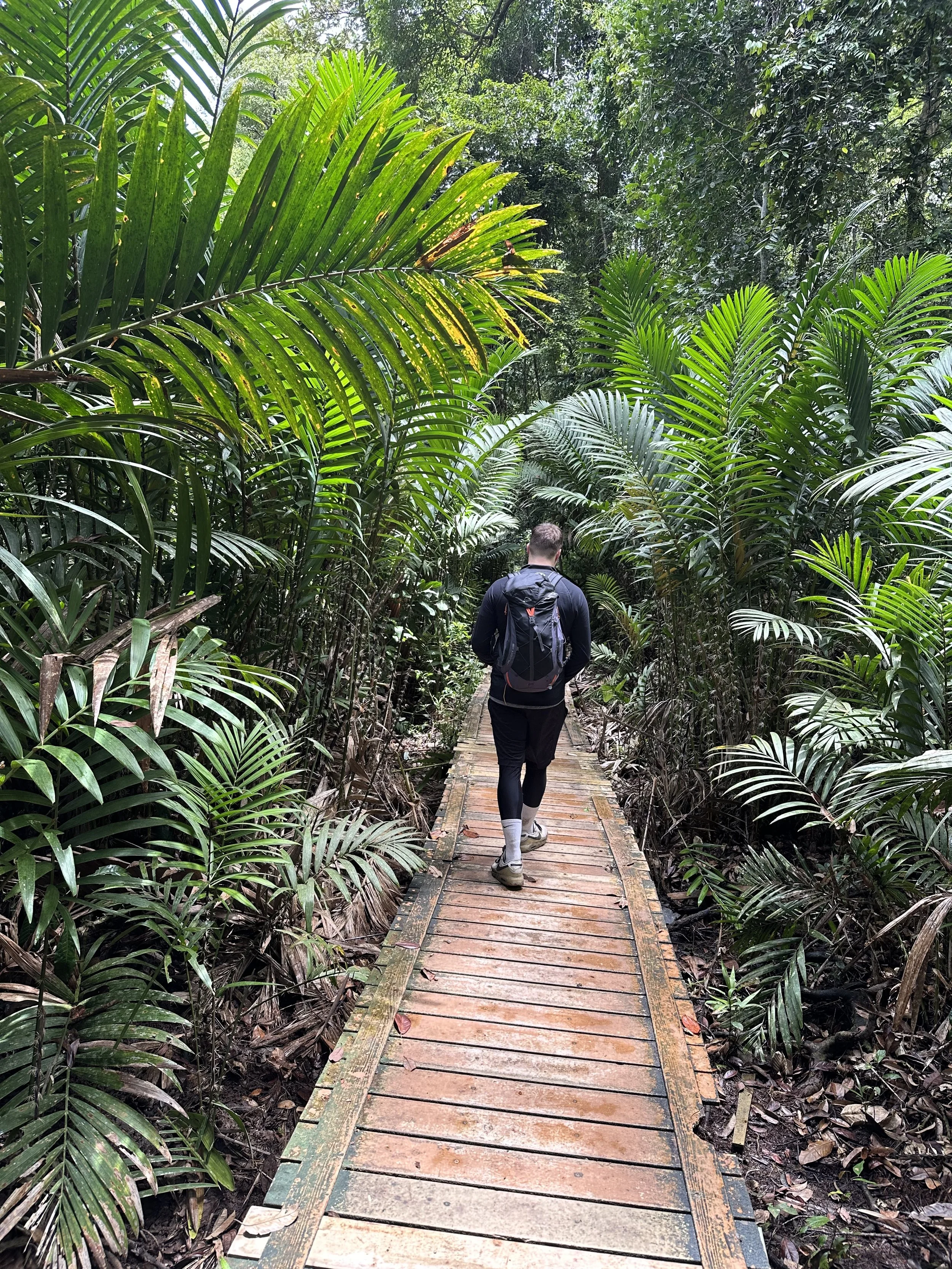
What surprised us most about Bako was how accessible the trails were. Much of the trail system uses raised wooden walkways through the jungle, which makes hiking manageable even in the heat and humidity. Eventually the trails open out onto the coastline — dramatic cliffs, quiet beaches, mangroves, and dense rainforest meeting the sea. The scenery was beautiful and it turned out to be perfect for our first drone shots of the trip.
Note: Drones are not permitted inside the national park. Save the aerial shots for the coastline approach by boat.
What to Bring to Bako National Park
- Lightweight clothes that cover arms and legs (mosquitoes are serious here)
- Strong mosquito repellent
- Sunscreen
- Rain jacket — weather can change fast
- Plenty of water
- Snacks
- Camera with good zoom for wildlife
- Cash for the ranger office
Day 3 — Semenggoh Wildlife Centre & Wild Orangutans
This was the day that made Borneo unforgettable.
Semenggoh Wildlife Centre is about 20 minutes from Kuching by Grab. We arranged with the driver to wait for us and bring us back — it worked perfectly and avoided any transport stress.
What Semenggoh Actually Is
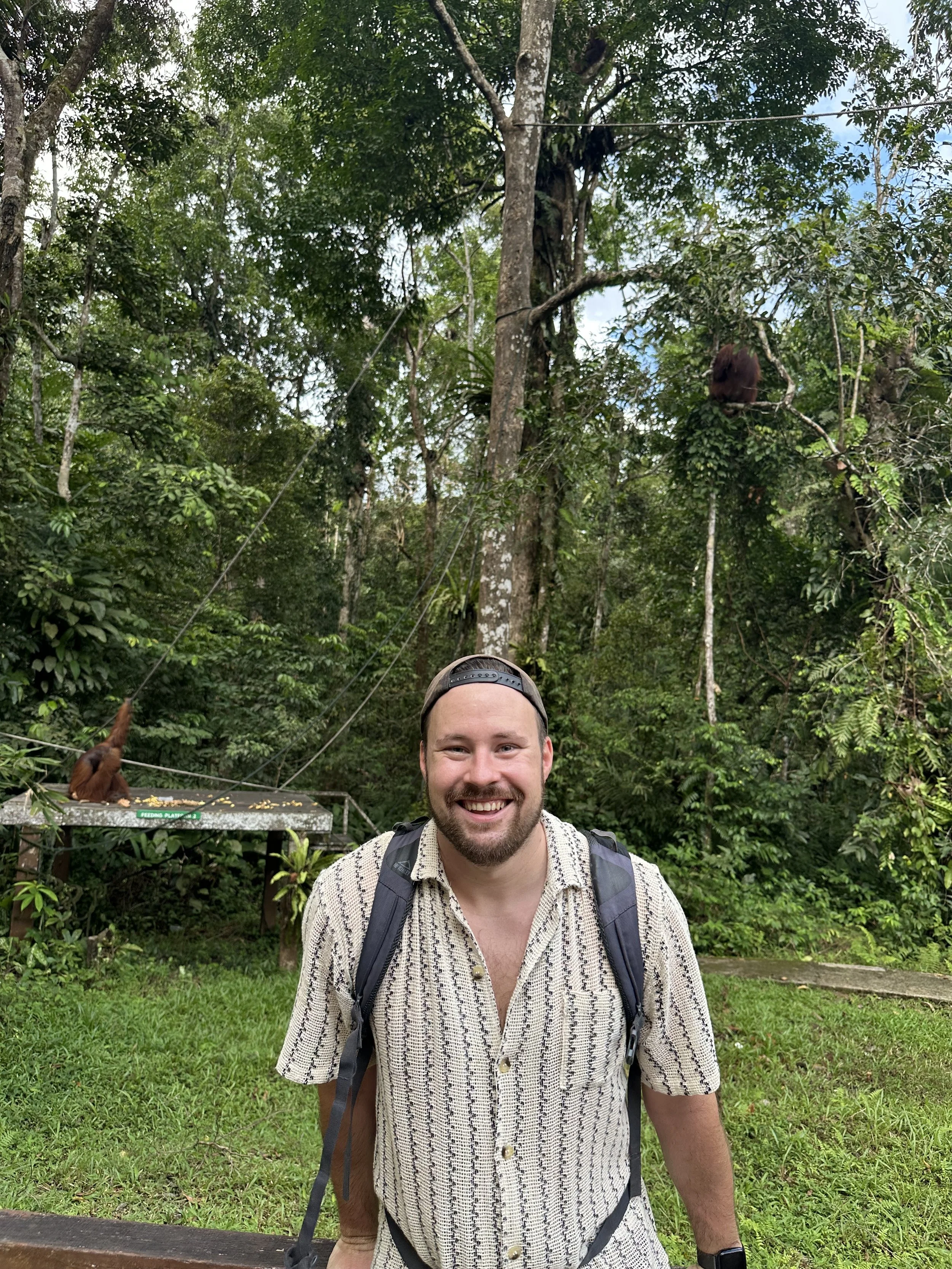
This is not a zoo. Semenggoh is a wildlife rehabilitation centre for rescued and previously orphaned orangutans that have been trained to survive in the rainforest again. The orangutans live freely in the surrounding forest — no cages, no enclosures. Twice a day, rangers set up feeding platforms where the orangutans can come if they want additional food. Because they're genuinely free to roam, sightings are never guaranteed — which is exactly what makes it feel so special when it happens.
Seeing 12 Orangutans in One Morning
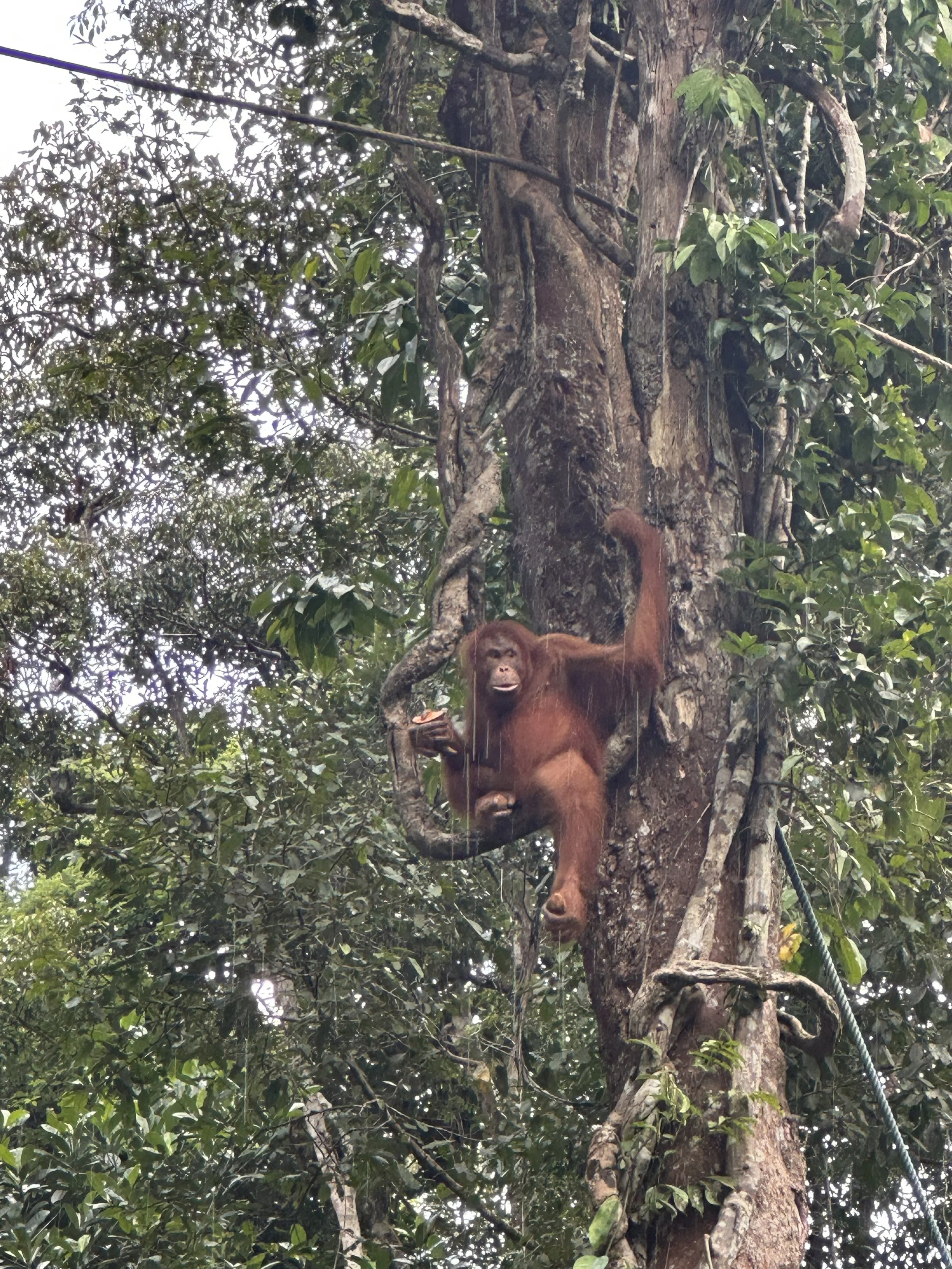
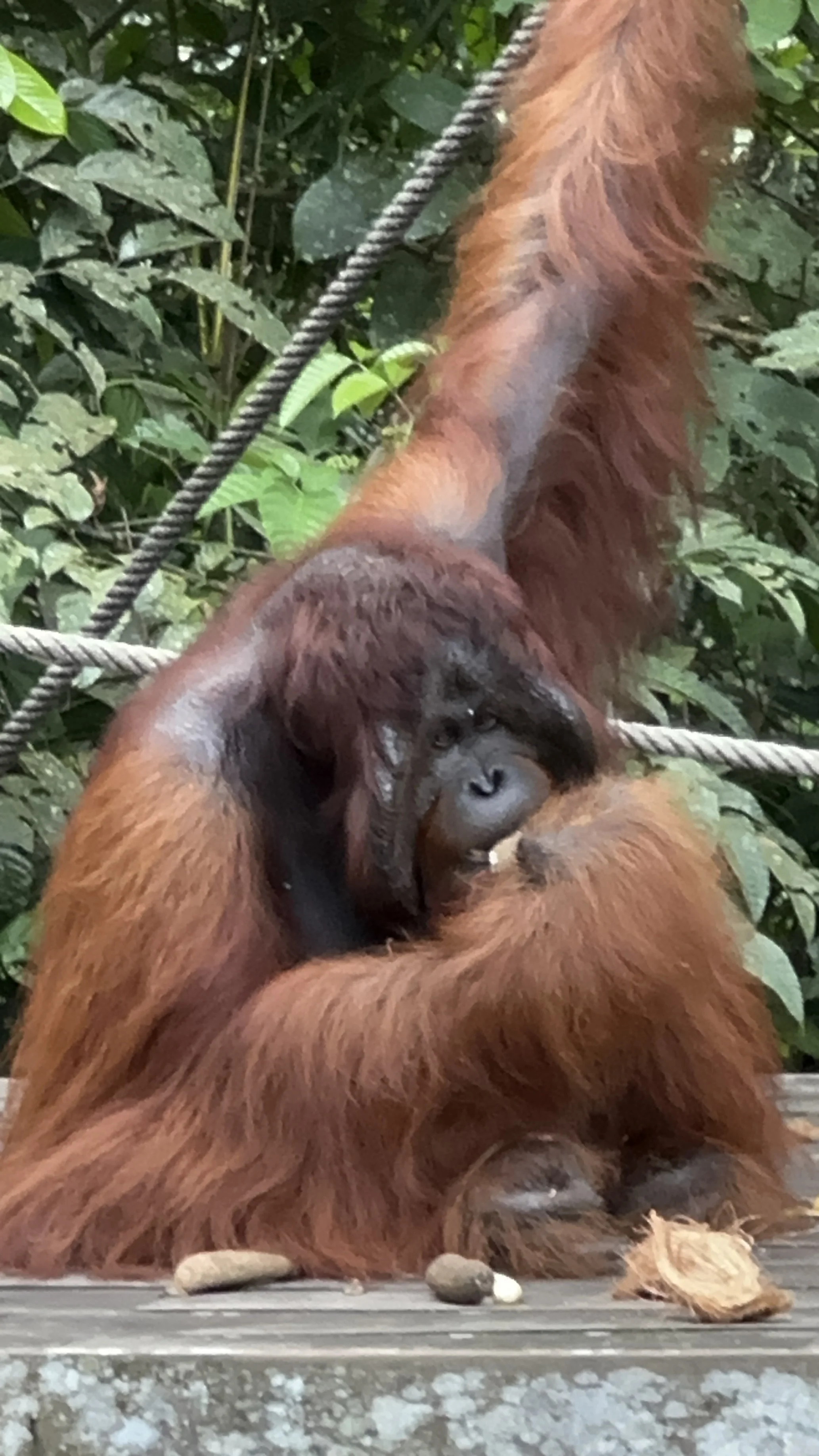
We were lucky. Very lucky. We saw around 12 orangutans during our visit — some moving through the canopy above, others walking directly between visitors on the ground.
But the moment we'll remember longest happened before we even saw the first one. The forest went quiet. Then the trees in the distance started shaking — loudly, violently almost — and everyone instinctively stopped talking. A few seconds of silence. Then the first orangutan stepped out of the jungle.
It was one of the most spectacular wildlife moments either of us has ever experienced.
We spent around 2 hours at Semenggoh before heading back to Kuching. It was more than enough — and we left feeling like we'd seen something genuinely rare.
Our honest take: Go to the morning session (usually around 9am) rather than the afternoon one. Wildlife activity is higher and the light is better for photos.
Day 4 — Sunset River Cruise & Rest Day
After two intense days in the jungle, we deliberately kept Day 4 relaxed. We explored the mall connected to our hotel in the afternoon — useful for picking up supplies and escaping the midday heat — and joined a sunset boat tour on the Kuching River in the evening.
The river cruise was a calm, unhurried experience — a completely different pace from the national park days. The city looks different from the water, especially at dusk, and it was a good way to decompress before the last day.
Day 5 — Kuching City, Food & Departure Prep
Our last day was slow by design. We explored the waterfront area on foot, got a massage (highly recommended after days of jungle hiking), and had dinner at the Ceylonese Restaurant near the hotel.
We ate there twice. The second visit wasn't planned — we just couldn't think of anywhere we'd rather go. The food was exceptional, and the cheese naan is something we still talk about. One practical note: bring enough cash. The restaurant doesn't take cards and the nearest ATM is a short walk away at one of the nearby hotels.
How to Get to Kuching
The easiest and most practical way is a domestic flight from Kuala Lumpur. The flight takes around 1 hour 45 minutes, AirAsia runs the route multiple times daily, and prices are very reasonable if booked in advance — we paid around €25–35 per person.
Why Borneo Belongs on Your Malaysia Itinerary
We'll be direct: if you're planning a Malaysia trip and considering whether to include Borneo, include it. The wildlife here is unlike anything else in Southeast Asia — or frankly, most of the world.
Wild orangutans exist only on Borneo and Sumatra. Proboscis monkeys are endemic to Borneo. The rainforest in Bako is ancient, dense, and genuinely wild. These aren't zoo experiences or staged encounters — they're the real thing, and they're accessible within a short trip from Kuching.
It's the part of the trip people ask us about most when we talk about Malaysia. That tells you everything.
Kuching & Borneo Travel Tips
- Book Bako through your hotel — they handle all logistics and it's worth the convenience
- Arrive at Semenggoh for the morning feeding session, not the afternoon
- Arrange your Grab driver to wait at Semenggoh — it saves a lot of time
- Bring cash everywhere — card acceptance outside the city is limited
- Pack light clothes that cover skin for jungle days — mosquitoes are aggressive
- The Ceylonese Restaurant near the waterfront: go, order the cheese naan, bring cash
Frequently Asked Questions — Kuching & Borneo
Is Kuching worth visiting? Yes — particularly for wildlife. Kuching is one of the best and most accessible places in the world to see wild orangutans and proboscis monkeys. For nature lovers it's a highlight of any Malaysia trip.
How many days do you need in Kuching? 3–4 days is ideal. That gives you a full day in Bako National Park, a morning at Semenggoh, and time to explore the city. Five days felt slightly long for us, though flight connections may dictate your schedule.
Can you see orangutans in Kuching? Yes — Semenggoh Wildlife Centre is about 20 minutes from the city centre and offers one of the most authentic wild orangutan experiences in Malaysia. Sightings aren't guaranteed, but the visit is worthwhile regardless.
Is Bako National Park worth visiting? Absolutely. Bako offers a combination of accessible jungle trails, dramatic coastal scenery, and remarkable wildlife density. It's one of the best day trips in Malaysian Borneo.
What animals can you see in Borneo? On our trip alone we encountered orangutans, proboscis monkeys, dusky leaf monkeys, flying lemurs, wild boars, and various snakes. Bako is also known for monitor lizards, hornbills, macaques, bearded pigs, and kingfishers.
Is Kuching safe for tourists? Yes — Kuching is widely considered one of the safest and most relaxed cities in Malaysia. We had no issues at any point during our stay.
All recommendations are based on our own experience. Some links may be affiliate links — we earn a small commission at no extra cost to you. We only recommend things we actually used.