Perhentian Islands Travel Guide: Snorkelling, Sea Turtles & How to Get There




Three days wasn't enough. Here's what we'd do differently, and everything you need to know before you go.
We knew the Perhentian Islands had good snorkelling. We didn't expect to be swimming alongside sea turtles within 24 hours of arriving.
The Perhentians sit on Malaysia's east coast, close to the Thai border, and they're the kind of place that stops you mid-sentence when you try to describe them. Turquoise water so clear you can see the coral from the boat. White sand that actually squeaks underfoot. Reef sharks gliding past you like it's completely ordinary. And sea turtles: slow, enormous, completely unbothered by the snorkellers floating a metre above them.
We spent three days here and left wishing we'd stayed longer. If you're planning a Malaysia itinerary and wondering whether the Perhentians are worth the effort of getting there: they are. Here's everything you need to know.
Where Are the Perhentian Islands?
The Perhentian Islands are located on the east coast of Malaysia in the South China Sea, near the Thai border in Terengganu state. There are two main islands: Perhentian Besar (the larger, quieter one) and Perhentian Kecil (smaller, more backpacker-oriented). We stayed on Perhentian Besar.
Best Time to Visit the Perhentian Islands
This is critical to get right. The east coast of Malaysia is heavily affected by the northeast monsoon from November to February: during this period, most hotels close completely and boat services stop running. The islands are genuinely inaccessible.
Best months: March to October. We visited in October and had perfect conditions: calm seas, clear water, and excellent visibility for snorkelling. If you're planning a Malaysia route that combines the east coast islands with west coast destinations like Langkawi or Penang, September–October is one of the few windows where both sides align well.
How to Get to the Perhentian Islands
Getting there takes a bit of planning, but it's straightforward once you know the steps.
Step 1: Fly to Kota Bharu
The closest airport to the Perhentians is Kota Bharu (KBR). We flew there from Kuching: one important thing to know: flights to Kota Bharu don't operate every day, so check the schedule carefully when planning your route.
Our flight arrived later in the afternoon, so we stayed one night at the Holiday Inn Kota Bharu before heading to the islands the next morning. It's a perfectly comfortable overnight stop and takes the pressure off an early connection.
Step 2: Transfer to Kuala Besut Jetty
From Kota Bharu, it's roughly one hour by taxi to Kuala Besut Jetty, the departure point for all boats to the Perhentians. We arranged our taxi transfer directly through our island hotel, which made the whole thing seamless: they coordinated the timing and met us at the jetty.
Step 3: Speedboat to the Islands
From the jetty, you take a speedboat across. The ride takes about 45 minutes, and the moment the islands appear on the horizon, with that first glimpse of turquoise water and jungle-covered hills, is genuinely exciting.
Our honest tip: Arrange your transfers through your island hotel if possible. They handle the logistics end-to-end and it's worth it for the convenience alone.
Which Perhentian Island Should You Stay On?
There are two main options:
Perhentian Kecil is the backpacker island: more budget accommodation, a livelier atmosphere, some nightlife. Good if you're travelling solo or on a tight budget.
Perhentian Besar is quieter: more resorts, a more relaxed pace, better suited to couples or anyone who wants to genuinely switch off. This is where we stayed and it suited us perfectly.
Where We Stayed: Tuna Bay Island Resort
We booked the Tuna Bay Island Resort on Perhentian Besar, and it was the right choice for us: though it comes with an honest caveat.
Tuna Bay is on the pricier end for the Perhentians. In general, the islands are more expensive than the Malaysian mainland: they're remote, supply chains are limited, and accommodation options are few. Book several months in advance, especially for peak season. We left it fairly late and had limited options by the time we searched.
What made Tuna Bay worth it beyond the rooms: the resort organised everything. Our transfer from Kota Bharu, the boat to the island, and all our snorkelling trips were arranged through them: no stress, no logistics, just show up. For a short stay that's genuinely valuable.
The rooms were simple and clean rather than luxurious: exactly what you'd expect from an island resort at this price point. Everything worked, nothing was fancy.
The food was the unexpected highlight. We ended up eating almost every meal at the resort restaurant, not because we had to but because it was genuinely that good. The staff were warm and welcoming throughout: the kind of place where people remember your name by day two.
Snorkelling the Perhentian Islands
The snorkelling here is the best we've experienced in Malaysia, and among the best either of us has done anywhere.
We booked a half-day snorkelling trip through the hotel. After breakfast, a boat picked us up and took us to three different spots over about 3–4 hours.
Stop 1: Rawa Island Beach
Our first stop had crystal clear water, healthy coral reefs, and schools of tropical fish within minutes of entering the water. We spotted clownfish darting between anemones and a small blue stingray resting on the sandy bottom: calm, unhurried, completely in its element.
Stop 2: Tokong Kemudi
The second spot was a step up. Tokong Kemudi is one of the most well-known snorkelling locations around the islands, and the reef sharks here were the highlight. Small, completely harmless, gliding through the water with that effortless calm that makes you forget to breathe for a second. Large schools of fish moved around us in shifting formations. The coral here was some of the most vibrant we saw all trip.
For anyone nervous about sharks: these are small reef sharks, typically less than a metre long, and they are entirely uninterested in snorkellers. Everyone in our group was in the water within seconds of seeing them.
Stop 3: Sea Turtles at Perhentian Besar
The final stop was the one we'll remember. Back near Perhentian Besar, we encountered several sea turtles moving through the reef: large, slow, completely at ease. We snorkelled alongside them for a while, keeping a respectful distance, watching them rise to the surface for air and dive back down again.
It was one of those moments that's difficult to describe accurately. Quietly extraordinary.
Marine Life We Encountered
- Sea turtles
- Reef sharks
- Small blue stingray
- Clownfish
- Large schools of tropical fish
- Vibrant, healthy coral reefs
The reefs around the Perhentians are in noticeably good condition: the marine life density here is exceptional.
Drone Photography Over the Islands
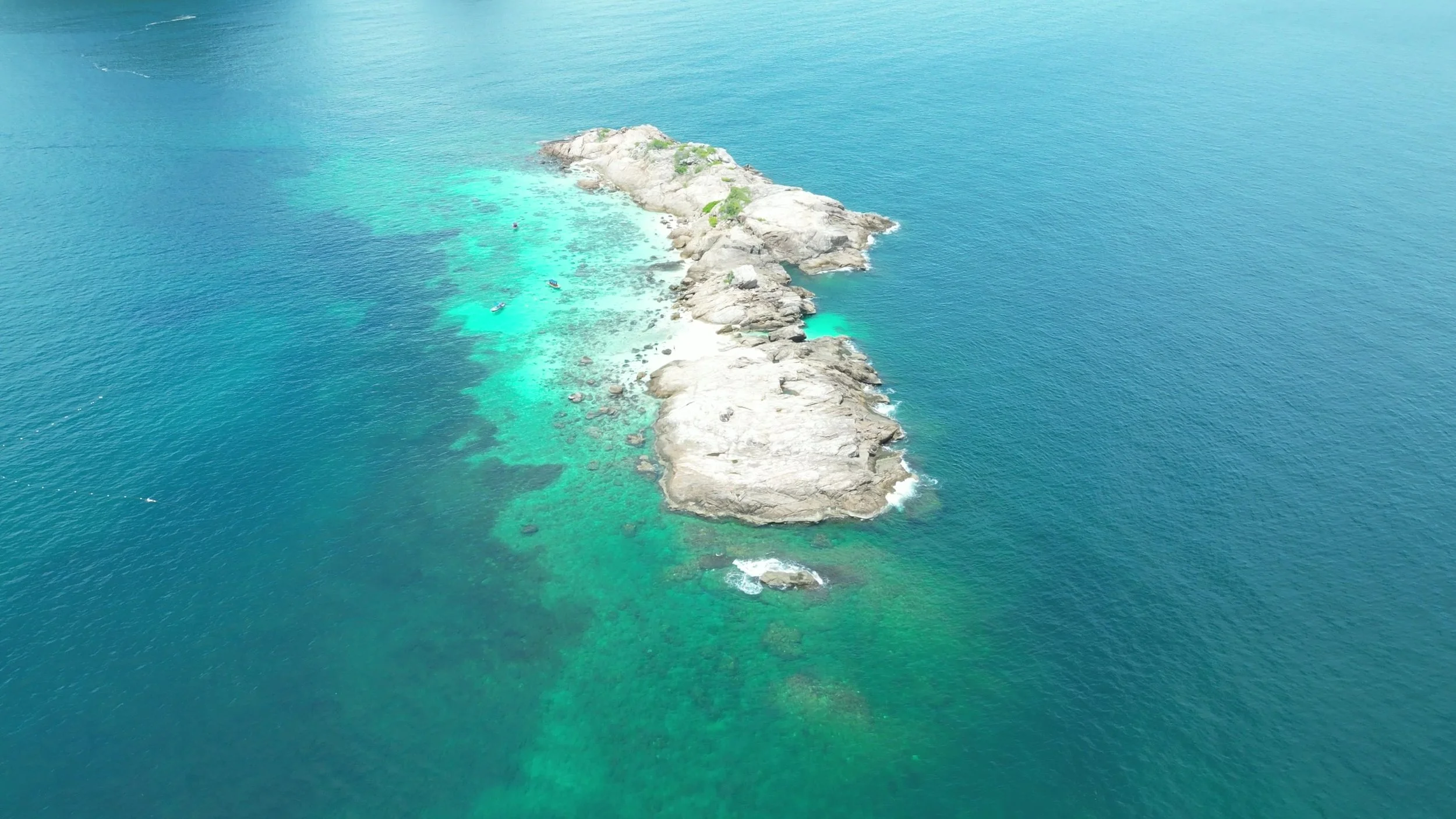
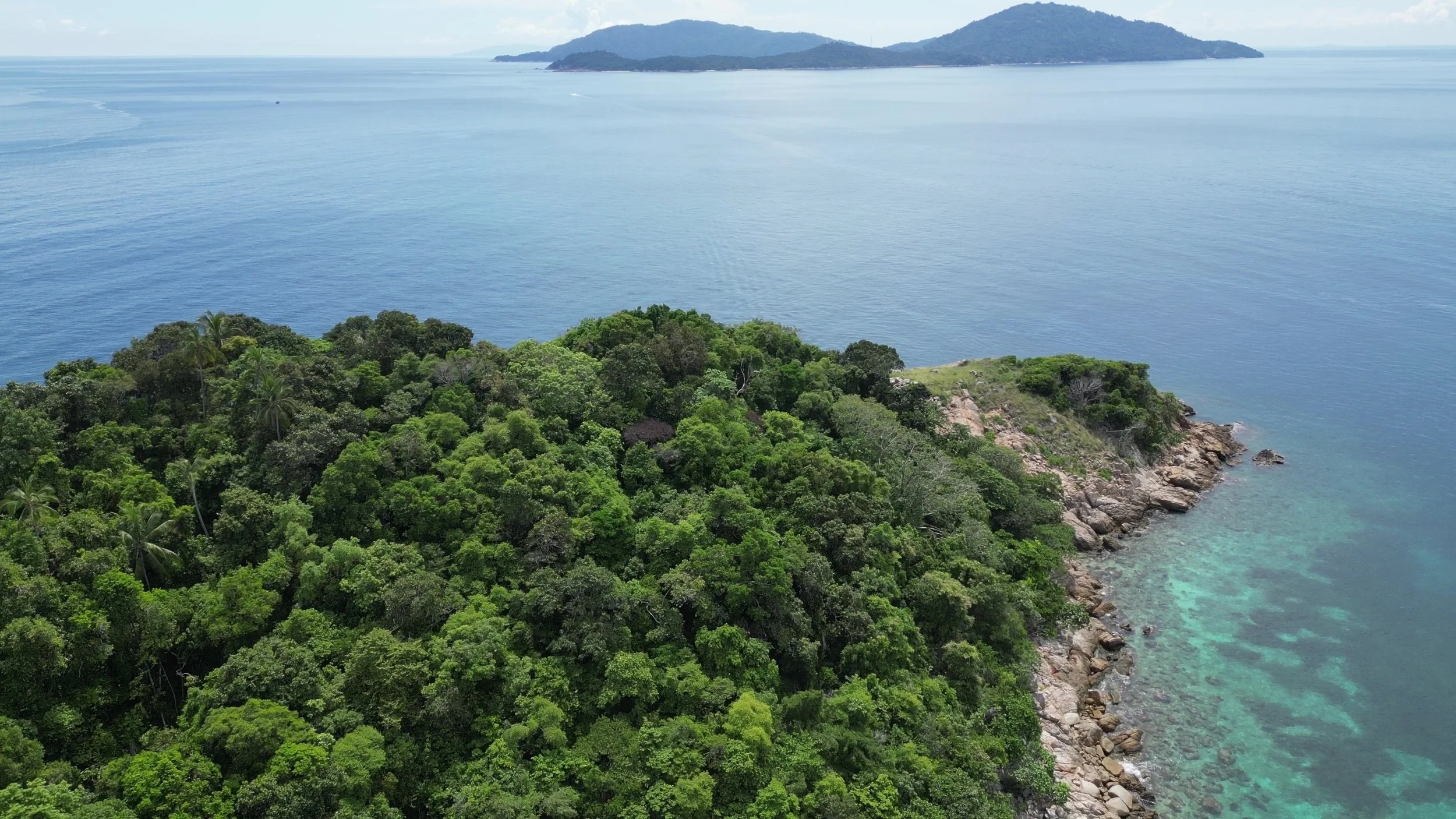
The Perhentians are as beautiful from above as they are underwater. The contrast between the deep blue of the open ocean, the bright turquoise of the shallows over the coral, and the dense jungle covering the islands is the kind of scene that makes drone footage feel effortless. Some of the best aerial shots from our entire Malaysia trip came from here.
How Many Days Do You Need on the Perhentian Islands?
We spent three days and left wishing we'd stayed longer. Our honest recommendation: 4–5 days minimum.
Three days is enough to go snorkelling and spend time on the beach, but the Perhentians are a place built for slowing down, and three days doesn't quite give you enough time to do that properly. There's not a lot to "do" in the traditional tourist sense, no temples, no city sights, no itinerary to follow. That's the point. You swim, you eat, you read, you watch the water change colour at sunset. For that kind of trip, give yourself more time than you think you need.
Practical Tips for the Perhentian Islands
- Book accommodation several months in advance: options are limited and fill up fast
- Arrange transfers through your hotel: it simplifies the whole journey significantly
- Check Kota Bharu flight schedules carefully: they don't run daily
- Bring enough cash: card facilities on the islands are very limited
- Respect the marine life while snorkelling: keep distance from turtles and don't touch the coral
- Bring reef-safe sunscreen: the reefs here are healthy and worth keeping that way
Frequently Asked Questions: Perhentian Islands
What is the best time to visit the Perhentian Islands? March to October. The islands are effectively closed during the northeast monsoon season from November to February: most hotels shut down and boats stop running.
Can you see sea turtles on the Perhentian Islands? Yes. turtle sightings are very common, particularly around Perhentian Besar. We saw multiple turtles on a single snorkelling trip. It's one of the most reliable places in Malaysia for turtle encounters.
Which Perhentian Island is better: Besar or Kecil? It depends on what you're looking for. Perhentian Kecil suits budget travellers and those who want more of a social atmosphere. Perhentian Besar is quieter, better for couples and relaxation, and has more resort-style accommodation.
How do you get to the Perhentian Islands? Fly to Kota Bharu, transfer by taxi to Kuala Besut Jetty (about 1 hour), then take a speedboat to the islands (about 45 minutes). The easiest approach is to arrange transfers through your island hotel.
How many days should you spend on the Perhentian Islands? We'd recommend 4–5 days minimum. Three days is doable but feels rushed: the islands reward slower travel.
Are the Perhentian Islands expensive? More expensive than the Malaysian mainland, yes. The remote location means accommodation and food costs more. Budget for more than you would elsewhere in Malaysia, and book early.
Next stop: Langkawi: cable cars, mangroves, and island landscapes on the west coast. 👉 Read our Langkawi guide →
All recommendations are based on our own experience. We link directly to the hotels, tours and services we used ourselves.